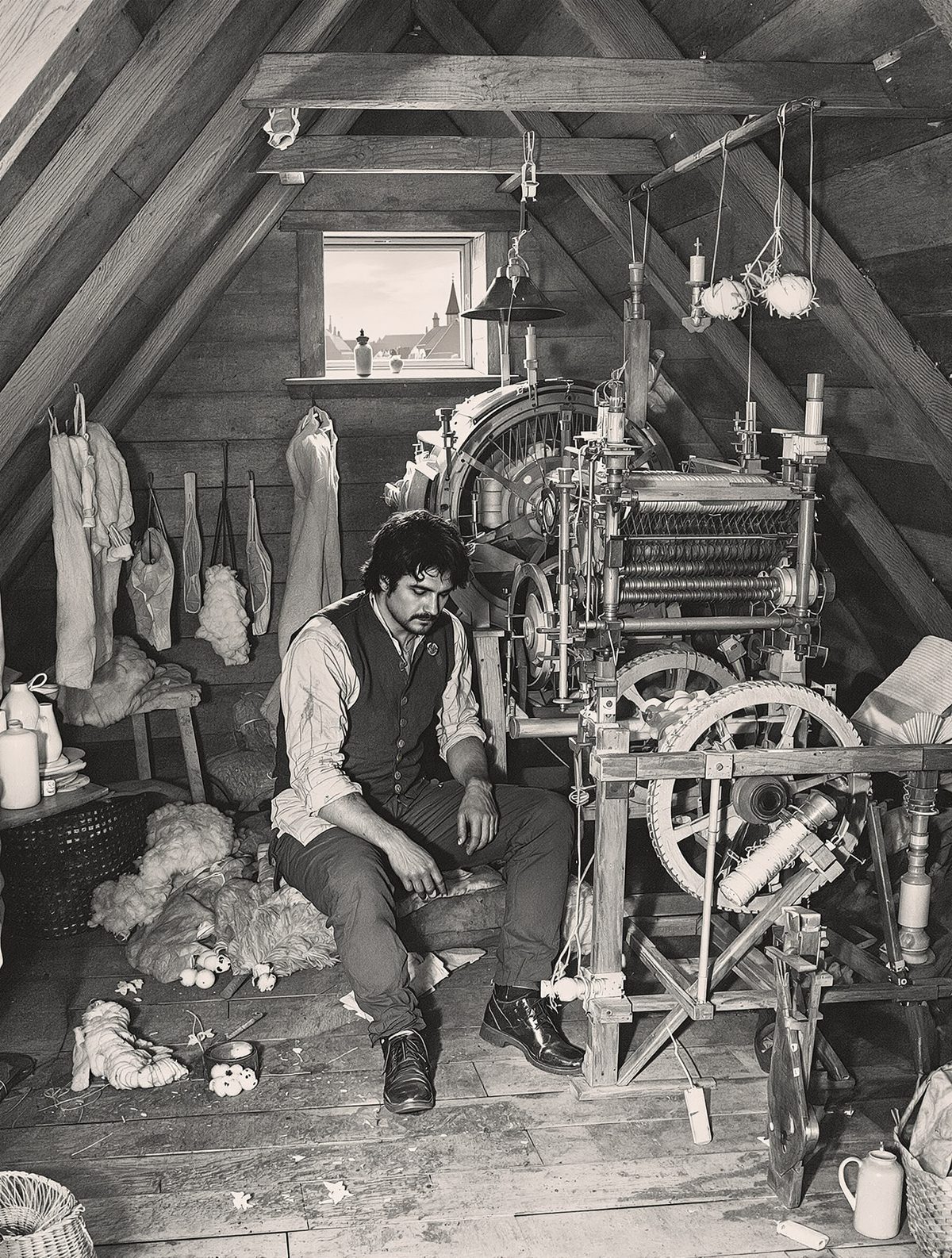
In the dim confines of a Bolton attic, amidst the quiet hum of the Industrial Revolution, a solitary figure toiled with relentless determination. Samuel Crompton, a name not often coming to mind when recalling the monumental transformations of Britain, was about to touch history. Little was known about the weaver's experiment, which he guarded as one might guard a crown jewel — with secrecy and immense personal sacrifice. Yet, what he crafted in seclusion would soon unravel into a tale of triumph marred by heartbreak — and ultimately remind us of forgotten inventors' true grit and grace.
The Birth of an Altered Future
It was a time known for the clanging of machines and the rise of smoke-darkened skylines. In 1779, amidst the cacophony of progress, Samuel Crompton carved a sanctuary of innovation in his family's attic. The young weaver, possessing no formal education in mechanics, had embarked on an audacious quest. After five years of painstaking experimentation, driven by the keen insight that necessity begets invention, Crompton unveiled his magnum opus: the spinning mule.
This contraption was no ordinary achievement. Melding together the strengths of James Hargreaves' spinning jenny and Richard Arkwright's water frame, Crompton's mule could spin cotton thread finer than any other machine available. It boasted an unprecedented versatility — an unheralded blend of strength and silken finesse — ideal for the burgeoning demands of the textile industry. Bolton, a burgeoning nucleus of cotton production, would seemingly owe its forthcoming prominence to Crompton's ingenuity.
The Shadows of Silent Sacrifice
For Crompton, composed in the shadows of his masterpiece, sacrifice came not only by personal resources depleted but borne by dreams deferred. The attic where his genius had thrived was not merely his lone laboratory; it was a space of continued hardships, beset by financial strain. While the Industrial Revolution burgeoned around him, wealth and recognition remained elusive to Crompton.
Read next: The Day a Mill Owner Walked Into Parliament for His Children
Unbeknownst to many, Crompton's family lived hand-to-mouth, with each coin carefully stretched. His dedication had implications not simply in economic terms but in relationships as well. A singular footnote often forgotten: Crompton's ability to innovate was, at heart, a testament to his mother's unyielding support. Following his father's untimely passing, Betty Crompton nurtured both her son's talent and resilience amid trying circumstances.
The Act of Ingenious Betrayal
It was a fateful moment, casting long shadows upon the future. In 1780, hopeful yet with reticence, Crompton decided to demonstrate his invention to local industrialists, a strategy meant to secure his financial salvation. Among the roughened features of mill owners, competing factories, and fellow weavers, whispers of potential fortune abounded as they marvelled at the spinning mule’s aptitude.
Yet enthusiasm and opportunity careened into betrayal. Promised with a payment for his innovation, the naive Crompton soon watched as his invention was replicated shamelessly. His initial visitor, stretching to witness the mule's unparalleled performance, extended not hands of gratitude but ones marking a quiet injustice. Crompton received not a single farthing from this transaction — an act echoing avarice and the era's harsh, unforgiving proprieties.
The Resilience of an Overlooked Icon
But the heart of Samuel Crompton, though racked by disappointment, defied despair. His subsequent years were taught with industry — not in patents but in spinning rooms, where his mule thrived under another's name. By 1812, his machinery had colonized Britain's industrial landscapes, numbering over 360 mills utilizing his design. Still, material spoils were alien as Corton eked out a living, silently challenged by the unkindness of fate.
It was not until 1812 that peers, stirred by the plight of the man behind the mule, rallied efforts to raise funds for Crompton. Despite receiving partial recompense, amounting to £5,000, the payment merely addressed what was already lost. Yet, tantalizing notes of enduring respect emerged from unexpected quarters. In Glasgow, Edinburgh, and Manchester, discernment aligned across distance, intention, and time, honouring Crompton's indelible contribution.
Reflections on Invention and Integrity
As history pages recount figures like James Watt and George Stephenson, who became synonymous with Industrial Britain's dawn, Samuel Crompton stands quietly in their peripheral glimmer. Yet, his journey resonates profoundly, providing us with contemplation of themes that defy the confines of an era. In Samuel Crompton’s story, we encounter an ideal of creativity unmarred by opportunism — a testament echoing integrity, sacrifice, and forgotten perseverance.
The wheel of time spins forward, much like Crompton's creation, reminding us of icons unsung and voices nearly vanquished. In a world enamored by invention, we are summoned to dwell upon the ethical breath within progress — to remember Samuel Crompton not as a footnote, but a luminary guiding through the remnants of histories quietly untold.