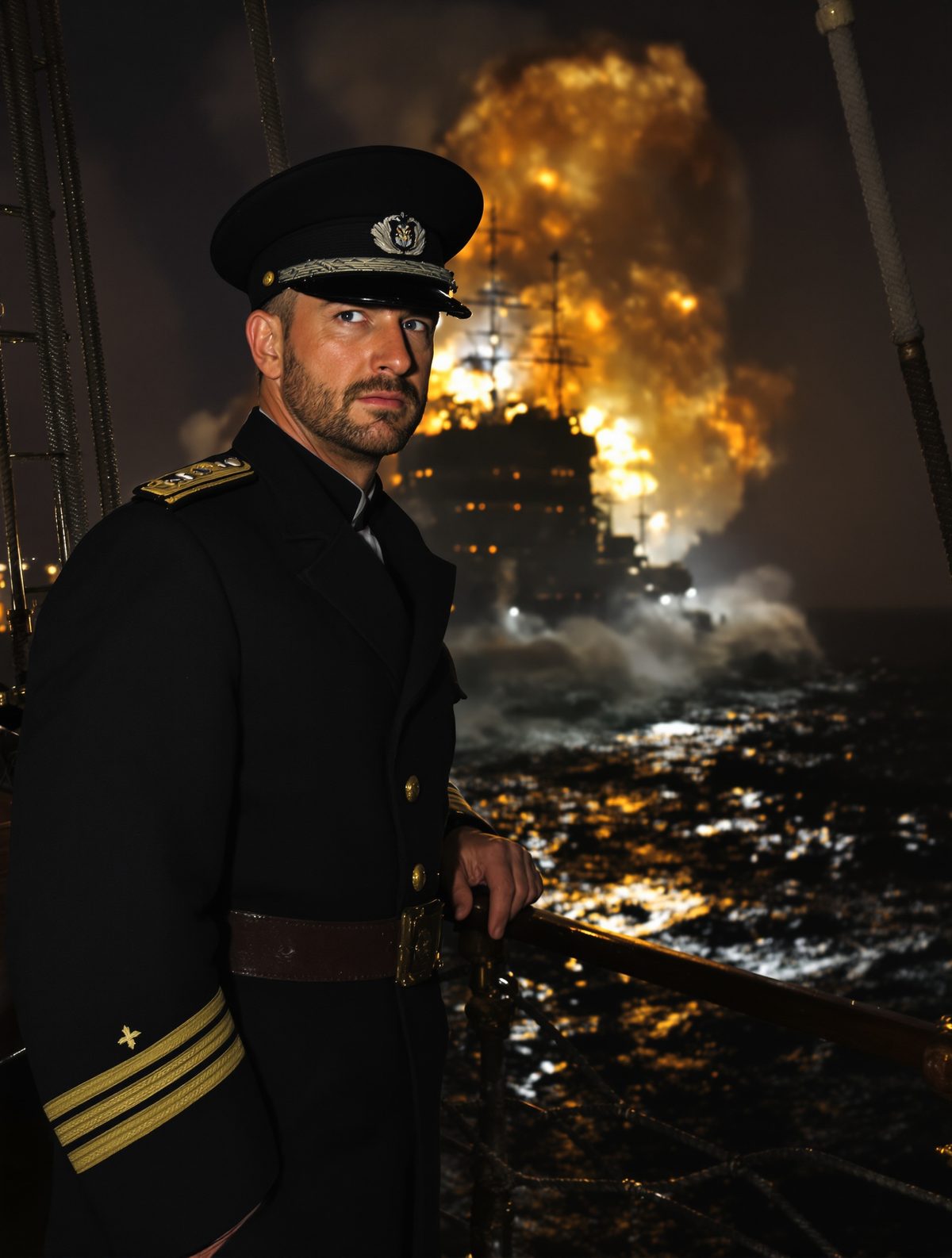
The moon hung heavy in the Belgian sky, casting an eerie silver glow over the churning waters of Zeebrugge harbour. It was April 23, 1918—a date seared into the annals of naval bravery. In the predawn darkness, the rusting outline of HMS Vindictive emerged like a specter, her mission a testament to the madness and valor of war. Her crew knew they were sailing into the lion’s den, their fate uncertain. Yet, they pressed on, steeled by the camaraderie of men bound by duty and courage. This is the story of their daring raid—a tale of audacity that left the Kaiser's admirals questioning the very fabric of naval warfare.
The Prelude to Armageddon
Tension brewed as the war raged on, with Zeebrugge and Ostend—the twin ports on the Belgian coast—serving as critical U-boat bases for the German Kaiserliche Marine. These harbours were a thorn in the side of the Allied powers, facilitating the deadly underwater blockade that threatened to starve Britain into submission. As the spring of 1918 unfolded, Admiral Sir Roger Keyes concocted a brazen plan to seal these harbours’ entrances, crippling the German war effort and tipping the scales of fortune in favour of the Allies.
Keyes envisioned a diversionary assault—a fleet of obsolete ships would storm Zeebrugge, distracting the German defenders, while three blockships, HMS Thetis, Intrepid, and Iphigenia, would scuttle themselves in the canal entrance, bottling it up against enemy submarines. The tipping point of this plan rested on HMS Vindictive, a relic cruiser retrofitted with additional armour and heavy weaponry—her purpose was simple yet deadly: to spearhead the attack, drawing fire away from the flotilla.
The Gambit Begins
As the assault force prepared, anticipation and trepidation intermingled. Chatter of "St George's Day" ran rampant through the ranks, invoking the slayer of dragons and the protector of England. The night before the assault, young men wrote letters home, some surely sensing the finality of their words. Unbeknownst to many, this raid would become the most decorated single action of the war, but the cost would be staggering.
Read next: The Night a Teenage Gunner Held the Bridge at Arnhem
On the gloomy night of April 22, the contingent set sail. The raiders were a peculiar mix of ships—a floating menagerie that included HMS Vindictive, two Mersey ferries renamed Daffodil and Iris II, and several other auxiliary vessels. As they carved their path through darkness, the wind howled like a banshee, nudging them ever closer to Zeebrugge—and to destiny.
The Maelstrom of Zeebrugge
As Vindictive drew near Zeebrugge's formidable pier, chaos erupted. German defenders, seasoned and ruthless, unleashed a torrent of withering fire. Naval artillery and machine-gun nests lined the mole—a massive breakwater—as tracer rounds crisscrossed the sky, echoing the pandemonium of Hell itself.
The assault was underway. Vindictive hit the pier with a thunderous crash, her smoke smothering the searchlights, casting ghostly plumes interspersed with sniper fire. The commandos stormed from her deck, sprinting into gunfire and fortified positions. With them raced the sturdy Daffodil, trying to keep Vindictive pressed against the mole, and Iris II, braving the maelstrom to deliver reinforcements over rough seas.
Silhouettes of bravery unfolded amid the chaos. Lieutenant Richard Sandford piloted a submarine packed with explosives underneath the sea wall, achieving his goal at a terrible cost. Sergeant Thomas Durrant displayed unyielding courage as he manned the machine guns on Daffodil despite gunshot wounds. Tales of gallantry spread like wildfire, each more extraordinary in its testament to human tenacity.
From the Grapes of War
As dawn broke, the morning mist hovered like spectres over the harbour. The remaining defenders watched in astonishment as the plumes of smoke began to settle. The blockships had partially succeeded in their mission—positioned imperfectly, they narrowed, but did not fully close, the canal. It was not the decisive victory Keyes had hoped for, but the message was clear—impudence and ingenuity could prevail against steel and fortifications.
The raid bore heavy losses: of the 1,700 men who embarked, nearly 350 were killed or wounded, yet their resolve was not extinguished. The operation’s daring nature inspired all who heard of it, rejuvenating Allied spirits. Admiral Keyes would later say, “It reverberated through the Fleet, for it made men feel that they were warriors.”
Remembrance and Reverence
What was achieved that St George's Day in 1918 resonates far beyond the battlefield. The indomitable heroism displayed at Zeebrugge is a beacon through time, illustrating how courage can transcend rationale and shift the tides of despair. High casualties garnered 11 Victoria Crosses—an unmatched commendation in a single action, affirming these men’s dedication as legends not lost to the sands of time.
Tales like those of Zeebrugge occupy a perpetual corner of memory, echoing throughout history's corridors. In classrooms and barracks, on fields and ships, the unsung tales of those who ventured into the crucible of fire evoke pride and a sense of unity. For in the maw of calamity, the crew of HMS Vindictive discovered a transcendent spirit, reminding us that in the act of remembrance, they are never truly gone.