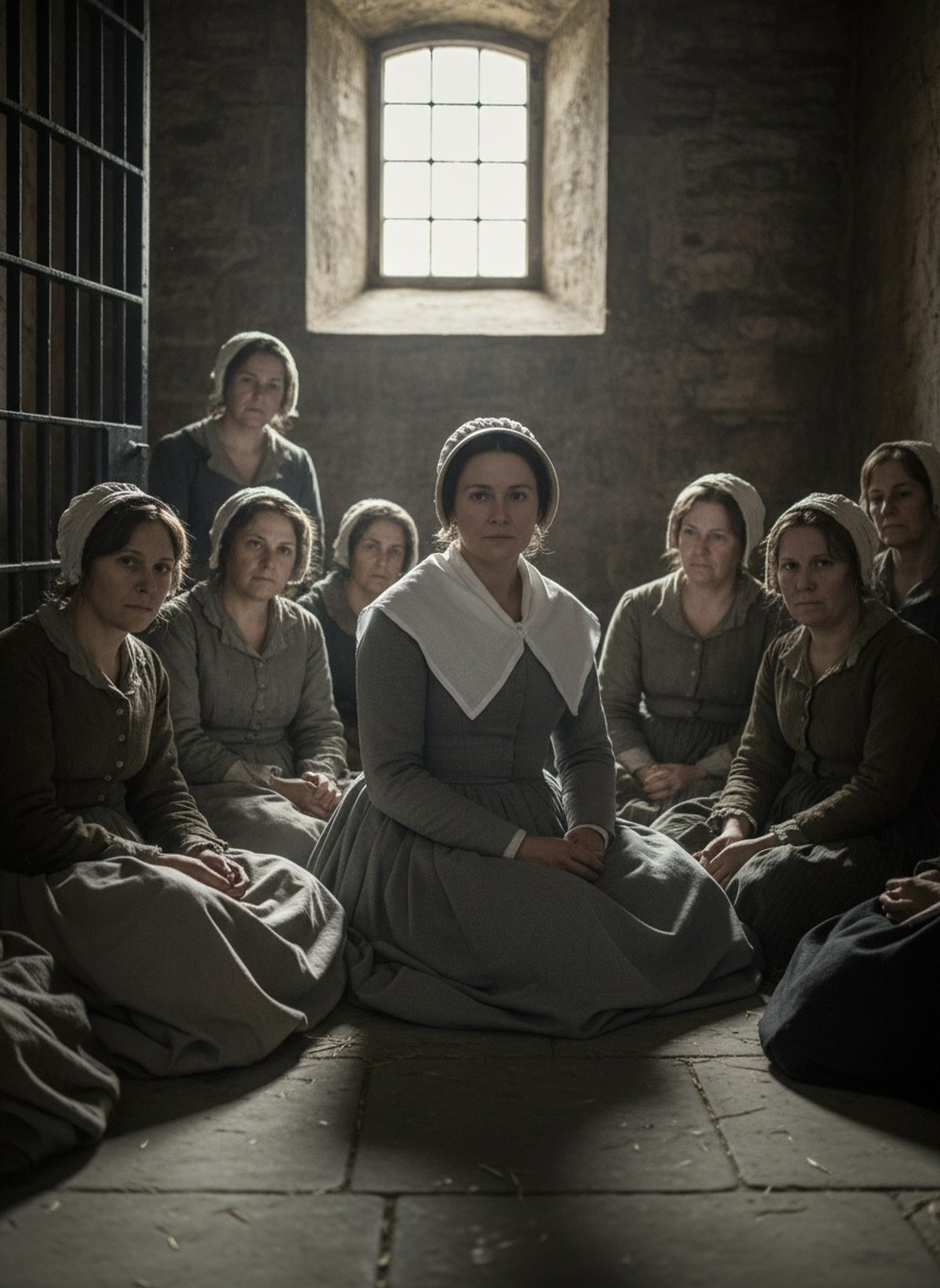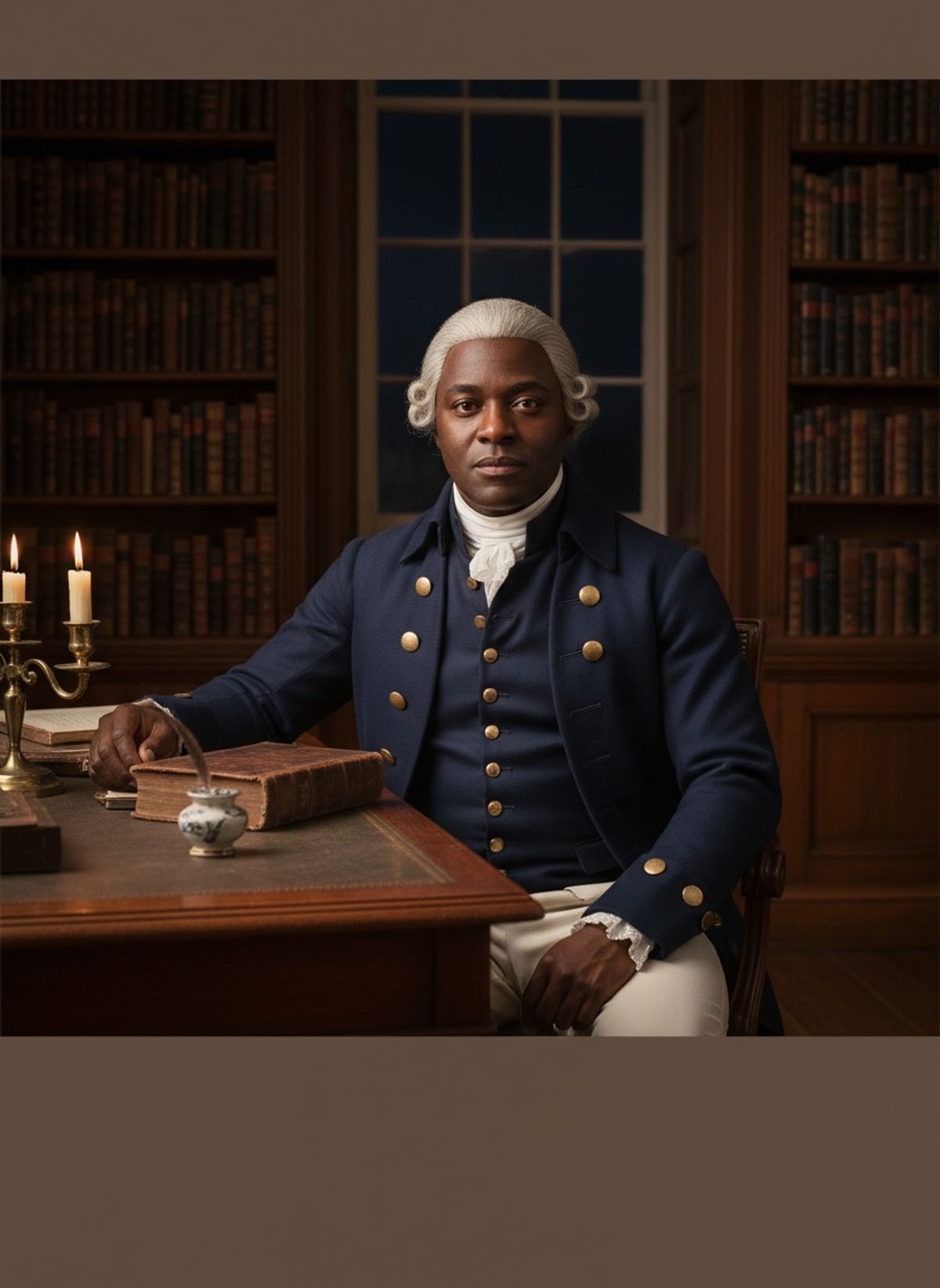
The quill scratched against parchment for the final time as Samuel Johnson, exhausted and nearly blind from years of candlelit labor, completed his last dictionary entry. It was April 1755, and in the cramped garret at 17 Gough Square, London, one man had just accomplished what the entire French Academy had taken forty scholars four decades to achieve. With ink-stained fingers trembling from fatigue, Johnson set down his pen and whispered a prayer of gratitude. He had no idea he had just changed the English language forever.
The Impossible Promise
Nine years earlier, in 1746, a consortium of London booksellers had approached Johnson with what seemed like literary suicide: create a comprehensive dictionary of the English language. Alone. The French Academy's Dictionnaire was the gold standard—a magnificent work that had required an army of scholars and the backing of the French crown. Johnson, a struggling writer who had pawned his shoes for food, boldly declared he could do it single-handedly in just three years.
The booksellers, led by Robert Dodsley, offered him the princely sum of 1,575 guineas—roughly £300,000 in today's money. It was a fortune to Johnson, but spread across nearly a decade of grinding work, it would prove barely enough to survive. What drove this decision wasn't arrogance, but desperation and an almost mystical belief in the power of words to civilize society.
English in 1746 was a linguistic Wild West. Spelling was anarchic—Shakespeare had spelled his own name six different ways. There was no agreed-upon standard for pronunciation, grammar, or meaning. Educated gentlemen wrote "musick" while others preferred "music." "Lamp" competed with "lampe." The language that would one day span the globe was, in Johnson's own words, "copious without order, and energetick without rules."
Read next: The Day a Surgeon Walked Into a Prison and Freed a Madman
The Scholar's Prison
Johnson's headquarters became the top floor of his rented house in Gough Square, a maze of crooked streets near Fleet Street. Here, he created what can only be described as an 18th-century word factory. The main room was dominated by a massive table surrounded by towering piles of books—over 2,000 volumes that Johnson and his team would systematically cannibalize for examples.
His workforce was equally extraordinary: six Scottish assistants, most of them ministers or teachers who had fled the Jacobite uprisings. Alexander Macbean, his chief assistant, had been educated at Aberdeen University but was so poor he lived on four shillings a week. They worked like scribes in a medieval monastery, copying out quotations onto slips of paper that would illustrate how words were actually used by great writers.
The method was revolutionary. Instead of simply defining words, Johnson insisted on showing how Shakespeare, Milton, Dryden, and Pope had employed them. Each definition was supported by literary examples—a practice so innovative that it remains the gold standard for lexicography today. Johnson personally read every book twice: once for pleasure, once to mark quotations with a black lead pencil.
The physical toll was staggering. Johnson, who suffered from what we now recognize as Tourette's syndrome and severe depression, would rock back and forth as he worked, muttering definitions to himself. His eyesight deteriorated from squinting at manuscripts by candlelight. Some days, wracked by what he called "the black dog" of melancholy, he couldn't work at all.
Words as Weapons
Johnson's definitions reveal a mischievous personality trapped within scholarly rigor. His political biases shine through in entries that have become legendary. "Oats," he wrote with characteristic wit, is "a grain, which in England is generally given to horses, but in Scotland supports the people." His definition of "pension" as "an allowance made to anyone without an equivalent. In England it is generally understood to mean pay given to a state hireling for treason to his country" was a deliberate jab at government corruption.
When he defined "patron" as "one who countenances, supports, or protects. Commonly a wretch who supports with insolence, and is paid with flattery," he was settling scores with Lord Chesterfield, who had promised support for the dictionary but delivered only empty words. The definition was Johnson's revenge, served cold and in print.
But beyond the famous witticisms lay serious linguistic archaeology. Johnson was documenting a language in flux, capturing words that were already becoming obsolete alongside new coinages. He included "to wobble" (meaning to roll unsteadily) and "budge" (to stir or move) while preserving archaic gems like "kickshaw" (something fantastical or delicate).
The Race Against Ruin
By 1752, Johnson was drowning in debt despite his initial payment. The project had already taken six years—double his original estimate. His wife Elizabeth, twenty years his senior and his emotional anchor, lay dying in their house while he worked frantically upstairs. Her death in March 1752 nearly broke him. For weeks, he couldn't write a word.
Creditors circled like vultures. Johnson pawned his books, then his furniture. One of his assistants, William Shiels, collapsed from exhaustion and malnutrition. The great dictionary project teetered on the edge of failure, another victim of 18th-century publishing economics. Johnson later wrote that he had been "lost in lexicography" and feared he might never emerge.
What saved the project was Johnson's obsessive perfectionism combined with mounting desperation. He began working eighteen-hour days, driving himself and his assistants to the breaking point. They developed an assembly-line system: assistants would copy quotations, Johnson would write definitions, then everything would be checked and rechecked. The garret in Gough Square hummed with activity as the deadline loomed.
42,773 Words That Changed History
When A Dictionary of the English Language was finally published on April 15, 1755, it was immediately recognized as a masterpiece. Two massive folio volumes containing 42,773 definitions supported by 114,000 quotations—the most comprehensive English dictionary ever attempted. The first edition sold for four pounds and ten shillings, equivalent to several hundred pounds today.
The impact was seismic and immediate. For the first time, writers across Britain and its growing empire had a standard reference for spelling, meaning, and usage. Johnson's spellings became the template: "music" triumphed over "musick," "center" over "centre" (though Americans would later reverse this particular decision). Schools adopted the dictionary as their authority. Legal documents began citing Johnson's definitions to settle disputes over word meanings.
The dictionary's influence spread far beyond Britain's shores. American colonial schools used Johnson's work, embedding his spellings and definitions deep in the developing American consciousness. When Noah Webster later created his American dictionary, he was essentially revising Johnson, not replacing him.
Perhaps most remarkably, Johnson's dictionary remained the definitive English reference for over a century. The Oxford English Dictionary, begun in 1857, was conceived explicitly as a successor to Johnson's work. Many of his definitions and examples survived into the modern era.
The Last Word
Samuel Johnson's nine-year ordeal in that Gough Square garret represents one of the most extraordinary intellectual achievements in British history. Working with primitive tools and facing constant financial ruin, he created a work that shaped how millions of people would write, speak, and think in English for generations.
Today, as artificial intelligence promises to revolutionize language processing, Johnson's human achievement seems even more remarkable. He didn't just define words—he captured the soul of a language at a pivotal moment in its history. Every time we consult a dictionary, every time we expect consistent spelling across different texts, every time we assume words have agreed-upon meanings, we're benefiting from the lonely labor of one obsessive genius in a London garret.
In an age of instant everything, Johnson's dictionary reminds us that some achievements require not just intelligence, but the kind of grinding persistence that transforms one man's private obsession into civilization's public treasure. The English language may have conquered the world, but first, it had to be conquered by Samuel Johnson.