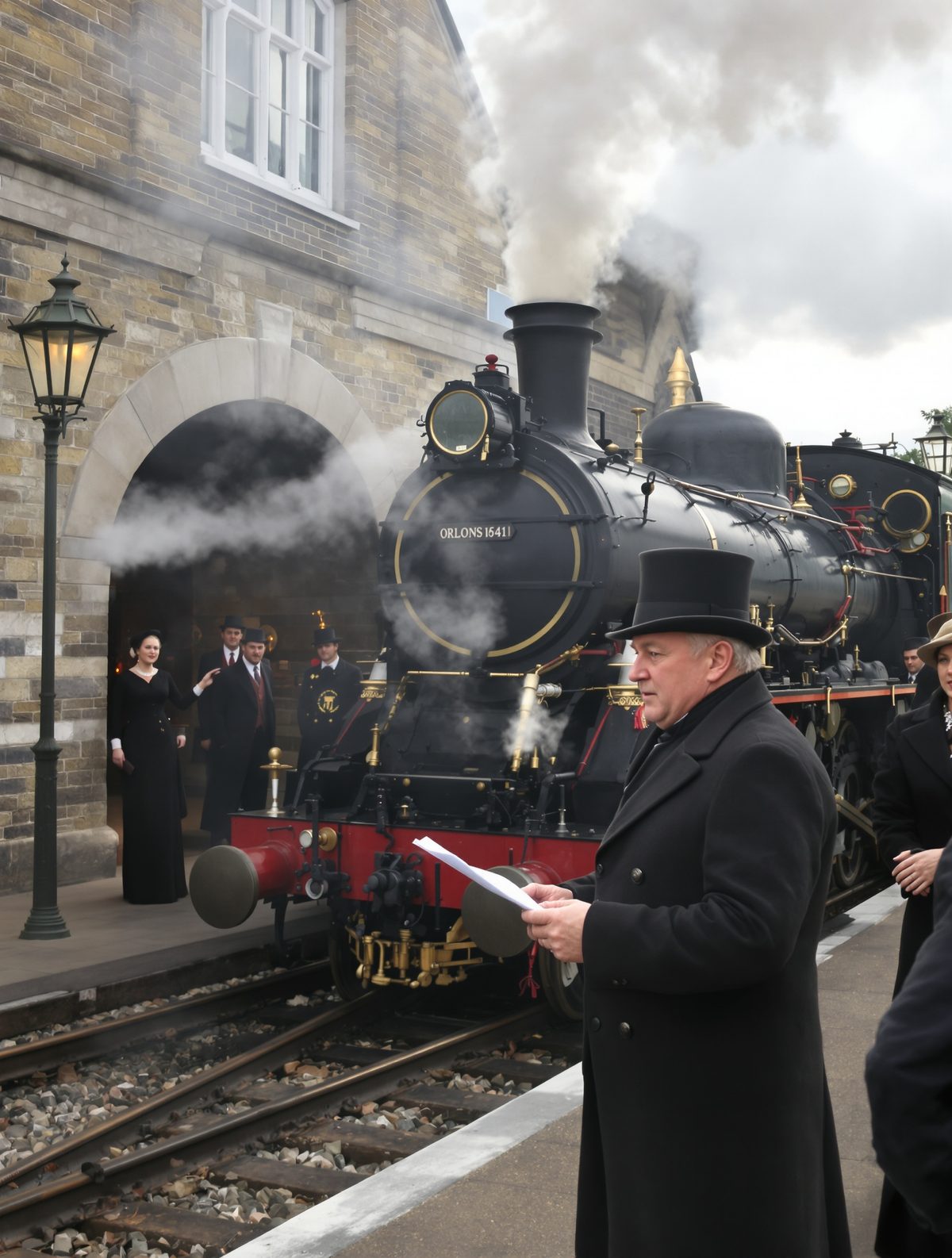
The morning mist hung low over Leicester as Thomas Cook paced nervously outside the railway station, pocket watch in hand. It was July 5th, 1841, and the 32-year-old Baptist preacher was about to embark on what his friends called "Cook's folly." He had done something unprecedented—hired an entire train. Not just a carriage or two, but the whole locomotive and its carriages, to transport 570 temperance campaigners on an 11-mile journey to Loughborough. For one shilling, his passengers would get their ticket, food, entertainment, and a brass band. What Cook didn't realize as he watched the crowds gather was that he was about to accidentally invent the package holiday and change the way humanity would travel forever.
A Preacher's Peculiar Plan
Thomas Cook was no ordinary man of the cloth. Born into poverty in Melbourne, Derbyshire, he had worked as a wood-turner and cabinet maker before finding his calling as a Baptist minister. But Cook possessed something rare for his time—an unshakeable belief that travel could improve the human condition. In an era when most working-class people never ventured beyond their village boundaries, Cook saw railways as engines of moral and social transformation.
The inspiration struck him, legend has it, during a 15-mile walk from Market Harborough to Leicester. As he trudged along the dusty roads, he passed the gleaming new railway line and had his eureka moment. Why not use this marvel of modern engineering to transport fellow temperance supporters to a rally in Loughborough? But Cook didn't just want to arrange transport—he wanted to create an experience.
The Midland Counties Railway initially balked at his proposal. A preacher wanting to charter an entire train? For working people? The very idea seemed preposterous. Railways were still largely the preserve of the wealthy, with third-class carriages often nothing more than open cattle trucks. But Cook was persuasive, and perhaps more importantly, he had done his mathematics. He negotiated a rate that allowed him to sell tickets at one shilling each—roughly equivalent to £6 today—making it affordable for ordinary workers.
Read next: The Day a Surgeon's Son Chose Death Over Silence
The Revolutionary Shilling Ticket
What made Cook's venture truly groundbreaking wasn't just the group booking, but what that single shilling purchased. This wasn't merely a train ticket—it was the world's first all-inclusive travel package. Passengers received return railway transport, a meal, and entertainment in the form of a brass band and speakers at the temperance rally. Cook had essentially invented what we now call "value bundling" decades before the concept entered business vocabulary.
The social implications were staggering. That one shilling represented perhaps a day's wages for many passengers, but it bought them something previously unimaginable—escape from their daily routine, a taste of adventure, and proof that travel wasn't exclusively for the aristocracy. Among the 570 passengers were factory workers, domestic servants, shop clerks, and artisans—people who had never dreamed of taking what amounted to a leisure trip.
Cook's attention to detail was meticulous. He arranged for special carriages to be cleaned and prepared, coordinated the catering, and even organized entertainment for the journey itself. Passengers sang temperance songs, shared food, and marveled at the countryside flashing past at the breathtaking speed of 20 miles per hour. The return journey included a stop for tea and buns—perhaps history's first organized travel refreshment break.
When Leicester Became the Center of the Travel Universe
The success of that July morning was immediate and intoxicating. The 570 passengers returned to Leicester buzzing with excitement, and word spread like wildfire through the working-class districts. Here was proof that the railway—that symbol of industrial progress—could be democratized. Cook had shown that organized group travel could make the impossible affordable.
Newspapers of the day struggled to categorize what Cook had achieved. The Leicester Chronicle described it as a "novel experiment," while other publications focused on the temperance aspect, missing entirely the revolutionary travel model Cook had inadvertently created. But Cook himself recognized the significance immediately. Within weeks, he was planning longer excursions.
By 1845, Cook was organizing trips to Liverpool, and by 1846, he had arranged his first tour of Scotland, complete with printed itineraries and vouchers for meals and accommodation. These innovations—now standard features of package holidays—were radical departures from traditional travel, where each element required separate negotiation and payment.
The Accidental Empire Builder
What's remarkable about Cook's story is how quickly his "hobby" transformed into a business empire. The man who had started as a part-time preacher with a passion for temperance found himself becoming Britain's first professional travel agent. By the 1850s, "Cook's Tours" had become a household name, and Thomas Cook & Son was arranging elaborate expeditions to Egypt, the Holy Land, and eventually around the world.
Cook's innovations extended far beyond simple group bookings. He pioneered the use of hotel vouchers, created the first travel guidebooks designed for ordinary tourists, and established a network of agents across Europe and beyond. He introduced the concept of "circular notes"—essentially the predecessor to traveler's checks—and was among the first to offer travel insurance.
Perhaps most surprisingly, Cook's evangelical motivation never entirely disappeared. He genuinely believed that travel was morally improving, that seeing the world would make people better citizens. His tours often included educational elements—lectures on history, visits to museums, and meetings with local dignitaries. This wasn't just about leisure; it was about enlightenment through experience.
Read next: The Day a Chimney Sweep's Son Shamed a Whole Parliament
The Democracy of Distance
The long-term consequences of that summer morning in Leicester were profound and far-reaching. Cook had effectively democratized travel, proving that distance need not be a barrier for those with modest means. Within a generation, the idea of ordinary people taking holidays—previously an aristocratic privilege—became not just possible but expected.
Cook's model inspired countless imitators and evolved into the modern travel industry worth trillions of pounds today. The fundamental principles he established—bundled pricing, group economies of scale, and organized itineraries—remain the backbone of contemporary tourism. Every package holiday, cruise, or organized tour traces its DNA back to that 11-mile journey between Leicester and Loughborough.
Yet perhaps the most significant aspect of Cook's innovation was its social impact. His excursions created a new category of experience—leisure travel for the working classes. This contributed to the gradual erosion of rigid Victorian social hierarchies and helped establish the modern notion that certain pleasures should be universal rather than exclusive.
The Shilling That Changed Everything
Today, as we book flights on our smartphones and debate the environmental impact of mass tourism, it's worth remembering that it all began with a preacher's simple idea and a single shilling. Thomas Cook's legacy isn't just the travel company that still bears his name, but the fundamental shift in human expectations about mobility and leisure.
That July morning in 1841 marked the moment when travel began its transformation from necessity to pleasure, from privilege to right. In our age of budget airlines and gap years, weekend breaks and digital nomadism, we are all heirs to Thomas Cook's revolutionary vision. Every time we buy a package deal or join a group tour, we're participating in a tradition that began when 570 temperance campaigners decided to spend a shilling on something extraordinary—a day trip that would echo through history.
The next time you're standing in an airport departure lounge, surrounded by travelers from every walk of life, remember the Baptist preacher who believed that everyone deserved to see what lay beyond the next hill. Thomas Cook didn't just invent the package holiday; he invented the idea that the world belongs to all of us.