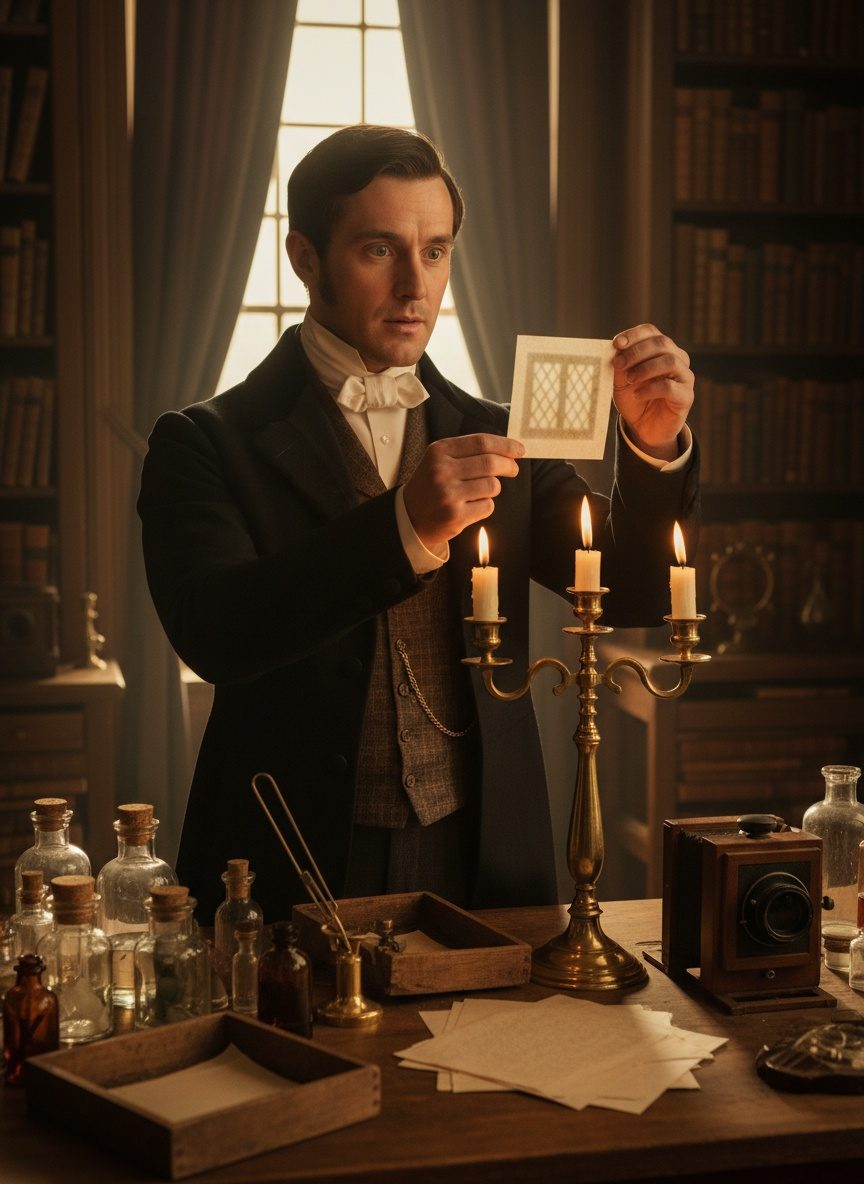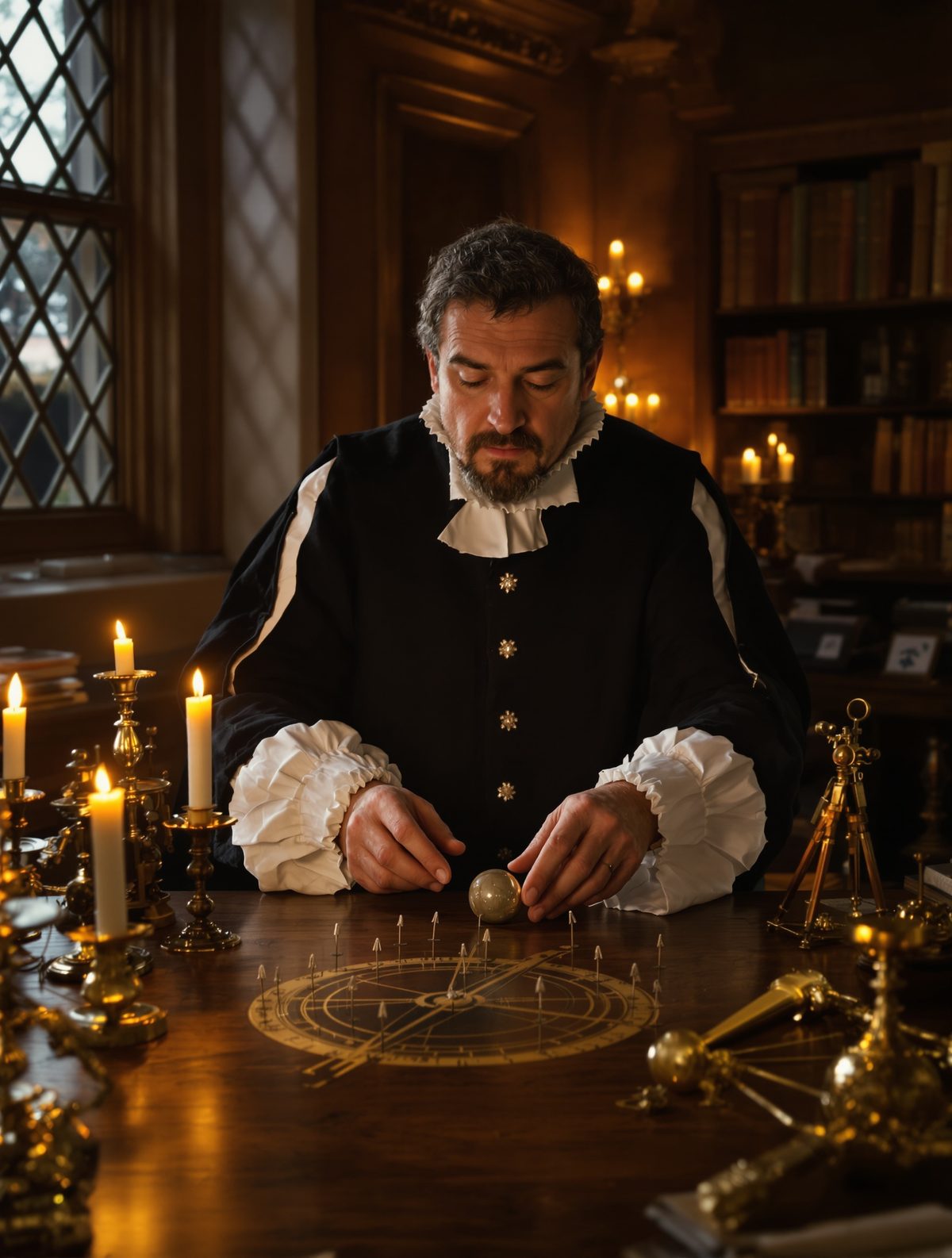
In a candlelit chamber at Colchester in the year 1600, Queen Elizabeth I's personal physician held something that would change how humanity understood our planet forever. Dr. William Gilbert cradled a small sphere carved from lodestone—a naturally magnetic rock—while compass needles danced around it like tiny metal courtiers bowing to their king. What he witnessed in that moment would solve one of navigation's greatest mysteries and prove that beneath our feet lay a force so vast it reached into the heavens themselves.
For centuries, sailors had trusted their lives to the mysterious northward pull of compass needles, never knowing why this invisible force existed. Some blamed it on magnetic mountains at the world's edge. Others credited celestial influences from Polaris, the North Star. But Gilbert's elegant experiment with his miniature Earth would reveal a truth both simpler and more profound: our entire planet was one colossal magnet.
The Mysterious Force That Guided Ships
Before Gilbert's revelation, magnetism was pure magic to most people. Chinese navigators had been using magnetic compasses since the 11th century, but even they couldn't explain the force that made their "south-pointing fish" needles align with the heavens. When the technology reached Europe in the 12th century, it transformed maritime exploration—suddenly, ships could navigate even when stars were hidden by clouds or storms.
Yet this revolutionary tool came wrapped in mystery. Why did compass needles point north? The prevailing theory, championed by scholars since medieval times, held that somewhere in the Arctic lay an enormous magnetic mountain called the "Rupes Nigra"—a black rock so magnetically powerful it could pull iron nails from distant ships. Others believed the North Star itself possessed magnetic properties, drawing metal toward it through celestial influence.
Read next: The Day a Deaf Man Gave the World Its First Electric Motor
These explanations satisfied philosophers but troubled practical men like Gilbert. As Queen Elizabeth's physician, he was trained to observe, experiment, and question. When not tending to the Virgin Queen's health at court, he conducted meticulous studies in his private laboratory, surrounded by loadstones, iron filings, and compass needles from across the known world.
The Doctor Who Dared to Question Everything
William Gilbert was no ordinary court physician. Born in Colchester in 1544 to a middle-class family, he had earned his medical degree from Cambridge and built a reputation as both a skilled healer and a natural philosopher. His patients included not only the Queen herself but also some of England's most influential nobles—men whose ships regularly braved the world's oceans guided by magnetic compasses they didn't understand.
Gilbert's obsession with magnetism began innocently enough. Like many educated men of his era, he collected curiosities: unusual stones, exotic minerals, and objects that demonstrated natural phenomena. But where others saw mere entertainment, Gilbert saw patterns begging for explanation. He noticed that iron objects became magnetized when touched to lodestone. He observed that magnets could attract iron through thin barriers. Most intriguingly, he realized that every magnet, no matter how it was shaped, possessed two distinct poles.
The breakthrough moment came when Gilbert acquired an unusually large piece of lodestone—a naturally occurring magnetic iron oxide that medieval Europeans called "leading stone" because it could lead ships home. Rather than simply adding it to his collection, Gilbert made a radical decision: he would carve it into a perfect sphere.
The Earth in Miniature
Picture Gilbert in his workshop, carefully shaping the lodestone with file and chisel, creating what he called a terrella—literally, "little earth." The sphere was roughly the size of a child's head, polished smooth and marked with lines representing the equator and meridians. To anyone else, it might have looked like an expensive toy. To Gilbert, it represented something revolutionary: a scale model of our planet.
The experiment itself was elegantly simple. Gilbert placed compass needles at various points around his magnetic sphere and observed their behavior. What he saw contradicted centuries of accepted wisdom. The needles didn't point toward some distant magnetic mountain or celestial body—they pointed toward the sphere's magnetic poles, just as compass needles on Earth pointed toward the geographic poles.
But Gilbert's terrella revealed even more secrets. When he placed a needle at the sphere's "equator," it lay flat. Move it toward either pole, and the needle would tilt increasingly downward, a phenomenon navigators called magnetic inclination or "dip." This perfectly matched observations from real voyages: compass needles behaved differently at different latitudes, tilting more dramatically as ships approached the polar regions.
The implications were staggering. Gilbert wasn't just observing the behavior of a magnetic rock—he was watching a perfect miniature replica of Earth's magnetic field in action.
Proving the Impossible
Gilbert's experiments extended far beyond his famous sphere. He discovered that heating a magnet destroyed its magnetic properties—explaining why iron objects lost their magnetism in fires. He found that magnetic force could pass through gold, silver, wood, and even water, but was blocked by iron. Most remarkably, he demonstrated that Earth's magnetic field had direction: compass needles didn't just point north, they pointed toward magnetic north specifically, which wasn't quite the same as geographic north.
This last discovery solved another navigational mystery. Sailors had long noticed that compass readings varied slightly depending on where they were in the world—a phenomenon called magnetic declination. Gilbert's work showed this wasn't instrument error but a fundamental property of Earth's magnetic field, which varied predictably across the globe.
In 1600, Gilbert published his findings in De Magnete (On Magnets), a groundbreaking work written in Latin that quickly spread across European intellectual circles. Unlike many scientific works of the era, which relied heavily on ancient authorities and theoretical speculation, De Magnete was based entirely on experimental evidence. Gilbert had performed over 600 experiments, documenting each one with meticulous precision.
The book's impact was immediate and profound. Galileo Galilei called Gilbert the founder of experimental philosophy. Johannes Kepler praised his empirical approach. Even the famously skeptical Francis Bacon acknowledged Gilbert's contributions to natural philosophy, though he criticized some of Gilbert's more speculative conclusions about celestial magnetism.
The Man Who Moved the World
Gilbert's revelation that Earth was magnetic didn't just satisfy intellectual curiosity—it had immediate practical applications. Navigators could now understand why their compasses behaved differently in different parts of the world. Mapmakers began incorporating magnetic declination data into their charts. Ships' officers started keeping detailed records of magnetic observations, contributing to a growing global database of Earth's magnetic field.
Perhaps most importantly, Gilbert's work established a new standard for scientific investigation. Instead of accepting ancient wisdom or relying on pure theory, he had used controlled experiments to test hypotheses about the natural world. This empirical approach would become the foundation of modern science, inspiring everyone from Isaac Newton to Charles Darwin.
Tragically, Gilbert didn't live to see the full impact of his discovery. He died in 1603, just three years after publishing De Magnete, possibly from plague. Queen Elizabeth herself had died earlier that year, ending an era of English cultural and intellectual flowering. But Gilbert's legacy was secure: he had proven that our planet possessed an invisible field of force extending far into space.
The Force That Shields Us Still
Today, we know that Gilbert's magnetic Earth does far more than guide compass needles. Earth's magnetic field deflects deadly solar radiation, protecting all life on our planet's surface. Without it, our atmosphere would have been stripped away eons ago, leaving us as barren as Mars. Every time the aurora borealis dances across polar skies, we're witnessing charged particles from the sun interacting with the same magnetic field Gilbert discovered in his Colchester laboratory.
Modern satellites and space stations rely on understanding Earth's magnetism to maintain their orbits and protect their electronics. GPS navigation systems, the spiritual descendants of Gilbert's compass needles, must account for magnetic variations across the globe. Even migrating animals—from sea turtles to Arctic terns—use Earth's magnetic field to navigate across vast distances, following invisible highways that Gilbert first mapped with his tiny sphere.
In an age when we take scientific explanation for granted, Gilbert's story reminds us that every fundamental truth about our world had to be discovered by someone brave enough to question what everyone else accepted as obvious. A court physician with an insatiable curiosity and a carefully carved stone sphere revealed that we live on a giant magnet spinning through space—a discovery that continues to guide us home.