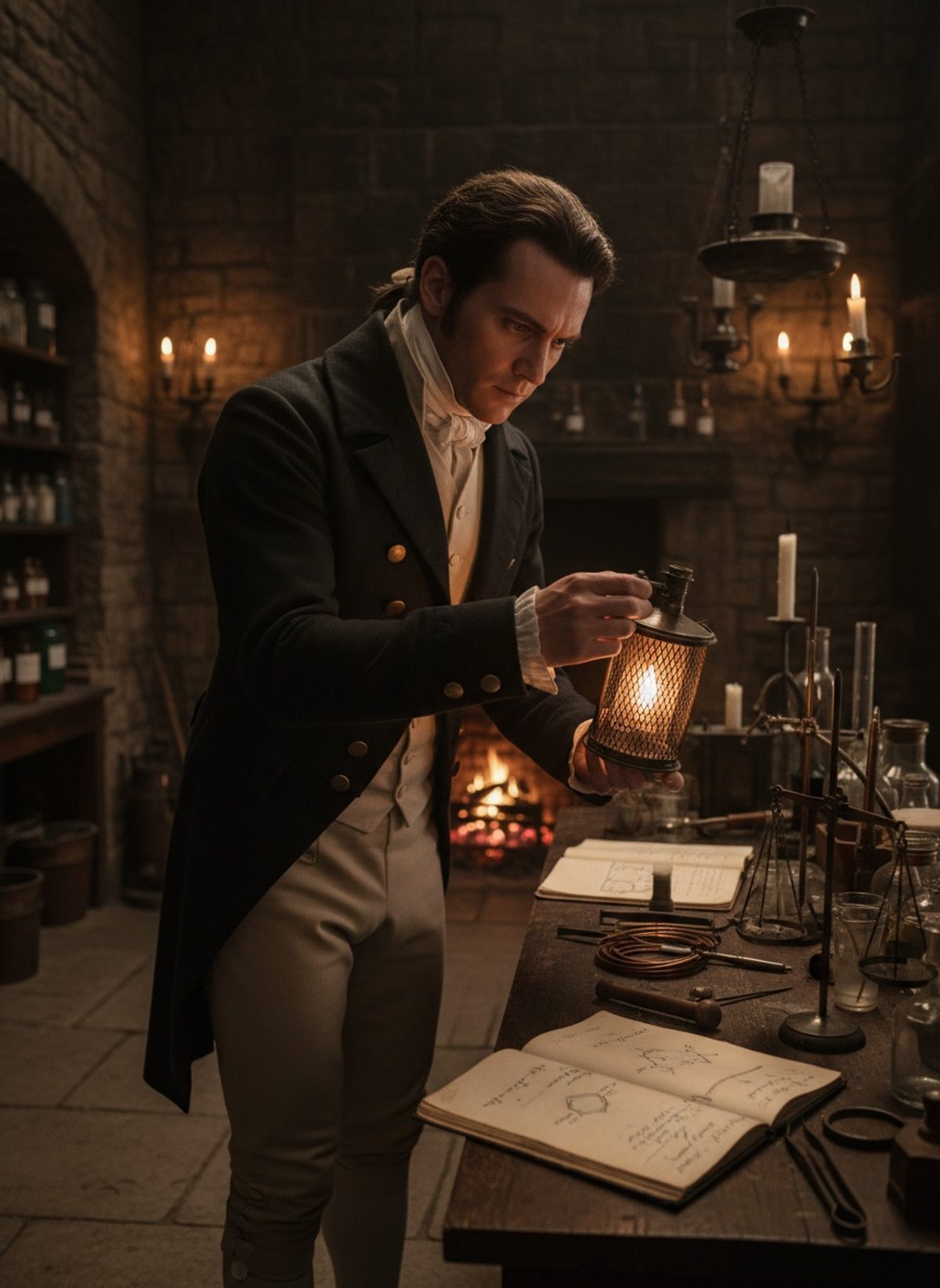
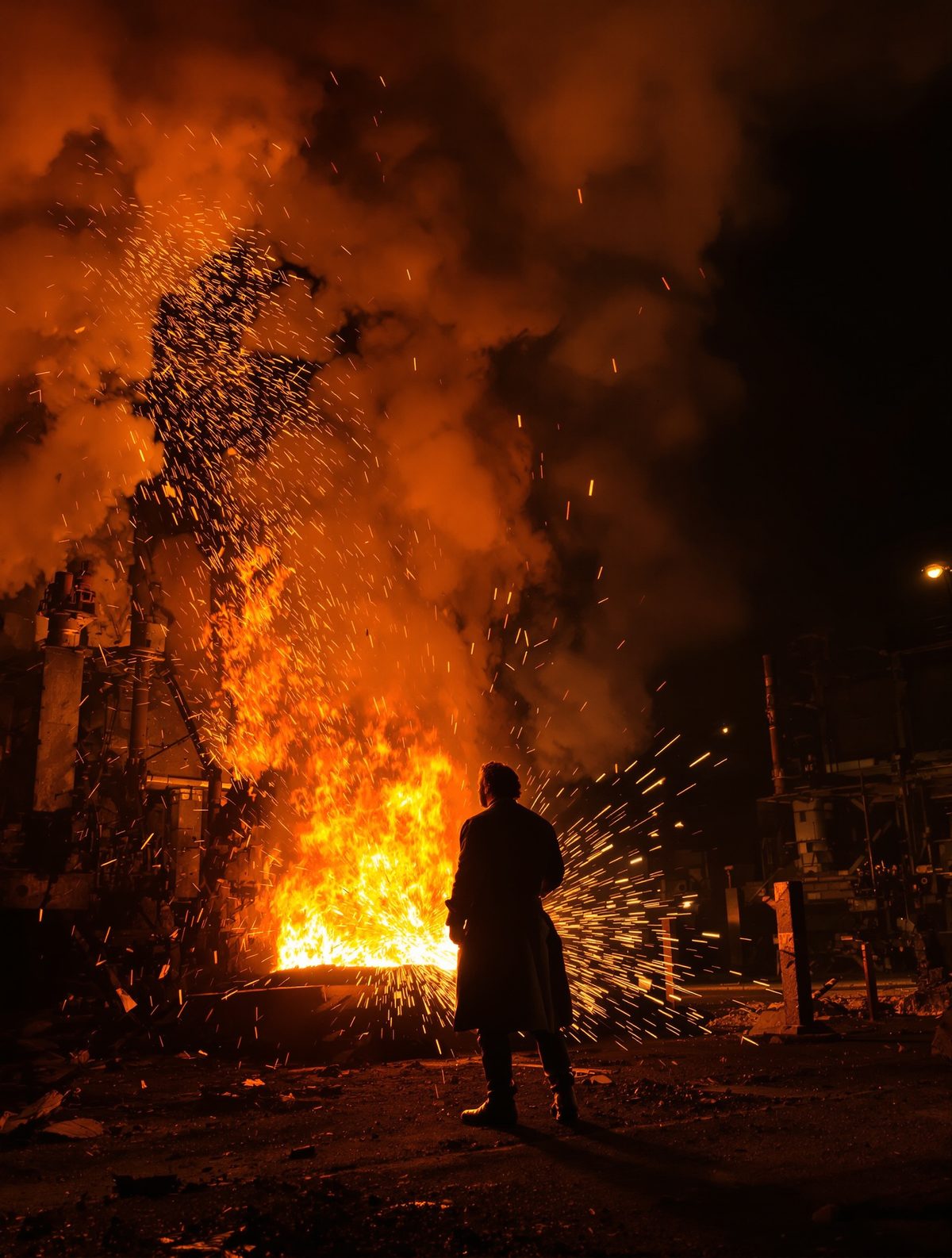
The orange glow pierced through the darkness of the Shropshire valley like a dragon's eye opening for the first time. It was past midnight on that fateful evening in 1709, and Abraham Darby stood transfixed before his experimental blast furnace at Coalbrookdale. The roar was different tonight—deeper, more powerful than anything he'd heard before. Where his competitors still fed their furnaces with precious charcoal, slowly bankrupting themselves as Britain's forests vanished, Darby had dared to try something radical: coal, transformed into coke through a process he'd perfected in secret.
As molten iron began to flow in quantities that would have seemed impossible just hours earlier, neither Darby nor anyone else in that remote valley could have imagined they were witnessing the birth of the modern world. This single moment would cascade into railways spanning continents, skyscrapers touching the clouds, and warships that would rule the waves for centuries. Britain's true Iron Age was about to begin.
The Charcoal Crisis That Changed Everything
By 1700, Britain faced an environmental catastrophe that threatened to strangle its economy in its cradle. The nation's forests were disappearing at an alarming rate, consumed by an insatiable demand for charcoal. Iron production, shipbuilding, glassmaking, and countless other industries devoured wood faster than nature could replenish it. A single blast furnace could consume the equivalent of 2,000 acres of woodland annually.
The statistics were staggering: Britain's woodland coverage had plummeted from 30% in medieval times to just 5% by the dawn of the 18th century. Iron production was actually declining as charcoal became prohibitively expensive and scarce. Swedish iron, smelted with their abundant forests, was flooding British markets. The nation that would soon become the workshop of the world was importing three-quarters of its iron from abroad.
Read next: The Day a Mill Owner Kept Paying Wages He Could Not Afford
Abraham Darby I—the first of three generations who would revolutionize metallurgy—understood this crisis better than most. Born into a Quaker family in 1678, he had trained as a maltster before becoming fascinated with metalworking. His religious background proved crucial: Quakers were barred from universities and many professions, forcing them into trade and industry where they developed a reputation for innovation and reliability.
The Maverick's Gamble in a Forgotten Valley
Coalbrookdale in 1708 was hardly the obvious birthplace of an industrial revolution. This narrow gorge carved by the River Severn in Shropshire was remote, accessible only by treacherous tracks that turned to mud in winter. But Darby saw what others missed: abundant coal deposits, limestone for flux, iron ore in the surrounding hills, and the river for transportation. Most importantly, it offered privacy.
Darby had spent years perfecting his technique in secret. The problem with coal wasn't just its sulfur content, which made iron brittle—it was the volatile compounds that interfered with the smelting process. His breakthrough came from adapting methods he'd learned in the brewing industry. By heating coal in sealed ovens until the impurities burned away, he created coke: pure carbon that burned hotter and cleaner than charcoal ever could.
The furnace Darby fired up that night in 1709 was modest by later standards—just 21 feet high with a crucible barely three feet across. But when the coke ignited and temperatures soared beyond anything achievable with charcoal, the transformation was immediate and dramatic. The furnace that had struggled to produce three tons of iron per week with charcoal was suddenly capable of five, six, even seven tons with coke.
The Secret That Almost Stayed Buried
Here's where the story takes a fascinating turn that most history books skip entirely: Darby's revolutionary breakthrough remained virtually unknown for fifty years. The Quaker ironmaster was so secretive about his methods that even his workers weren't fully aware of what made their furnace so productive. He filed no patents, published no papers, and spoke to no newspapers about his discovery.
This secrecy wasn't mere paranoia—it was shrewd business strategy. While competitors struggled with the charcoal crisis, Darby's Coalbrookdale Company quietly dominated local markets. They produced everything from cooking pots to fire-backs, but their specialty was casting: the superior consistency of coke-smelted iron made it perfect for intricate molded products.
The secret nearly died with Abraham Darby I in 1717. Fortunately, his son Abraham Darby II inherited both the business and the technique. It was only in the 1750s, when a third generation took charge, that the family began to share their methods—ironically, just as competitors were independently discovering similar processes.
When Iron Shaped an Empire
The numbers tell an extraordinary story of transformation. In 1700, Britain produced about 18,000 tons of iron annually. By 1800, that figure had exploded to 250,000 tons—and Britain was producing four times more iron than the rest of the world combined. The Coalbrookdale technique had spread across the nation, transforming landscapes and lives.
Abraham Darby III, the founder's grandson, understood the symbolic power of iron better than anyone. In 1779, he commissioned the world's first iron bridge, spanning the Severn just upstream from the original furnace. The bridge required 378 tons of cast iron and became a wonder of the industrial age, drawing visitors from across Europe who marveled at this impossible-seeming arch of metal suspended over rushing water.
But the real revolution was happening on a scale that dwarfed even this magnificent bridge. Darby's iron was flowing into the emerging railway network, creating the tracks and locomotives that would shrink distances across Britain. It formed the cannons that gave British warships their fearsome firepower, the anchors that secured merchant fleets, and the machinery that powered textile mills from Manchester to Glasgow.
The Valley That Forged the Modern World
Walking through Coalbrookdale today, past the carefully preserved blast furnace and the graceful iron bridge, it's hard to imagine this quiet Shropshire valley as the crucible of global transformation. Yet the ripples from that night in 1709 continue to shape our world in ways both obvious and subtle.
Consider this: every skyscraper reaching toward the clouds, every bridge spanning impossible distances, every car rolling down a highway exists because Abraham Darby dared to experiment with coal on a winter night three centuries ago. The Industrial Revolution didn't begin with steam engines or spinning jennies—it began with the moment abundant, high-quality iron became possible.
But perhaps the most profound legacy isn't technological—it's cultural. Darby's breakthrough helped establish Britain's confidence in innovation, the belief that old problems could be solved through ingenuity and determination. This spirit would drive British inventors, entrepreneurs, and explorers to transform not just their own island, but the entire globe.
Today, as we grapple with our own environmental crisis and search for sustainable alternatives to fossil fuels, there's something both inspiring and sobering about Abraham Darby's story. His solution to the charcoal crisis launched humanity into the carbon age, bringing unprecedented prosperity but also unforeseen consequences. As we stand at our own crossroads, perhaps we need another Darby—someone willing to experiment in the darkness, to try what others consider impossible, and to light a furnace that will forge our future.