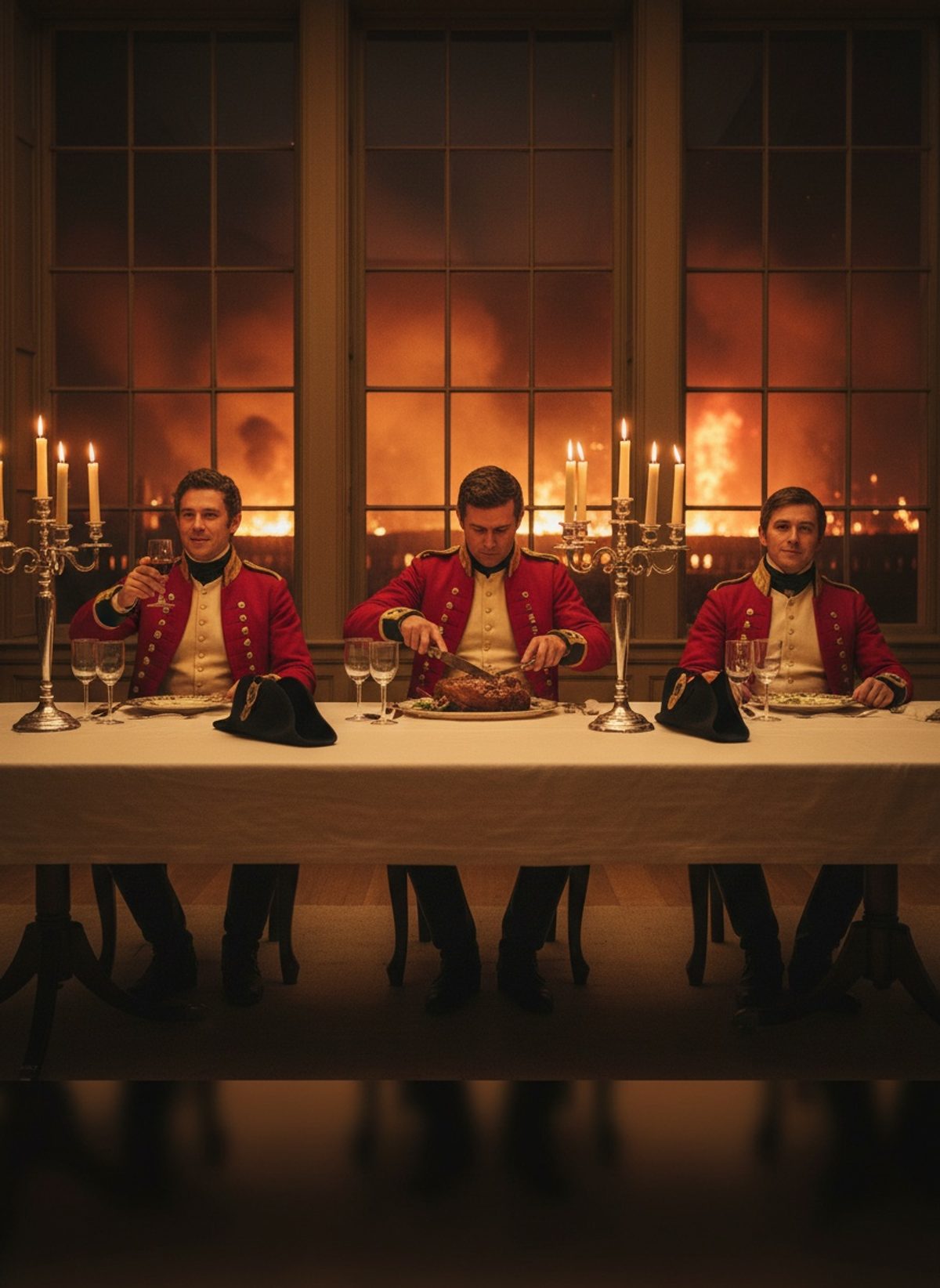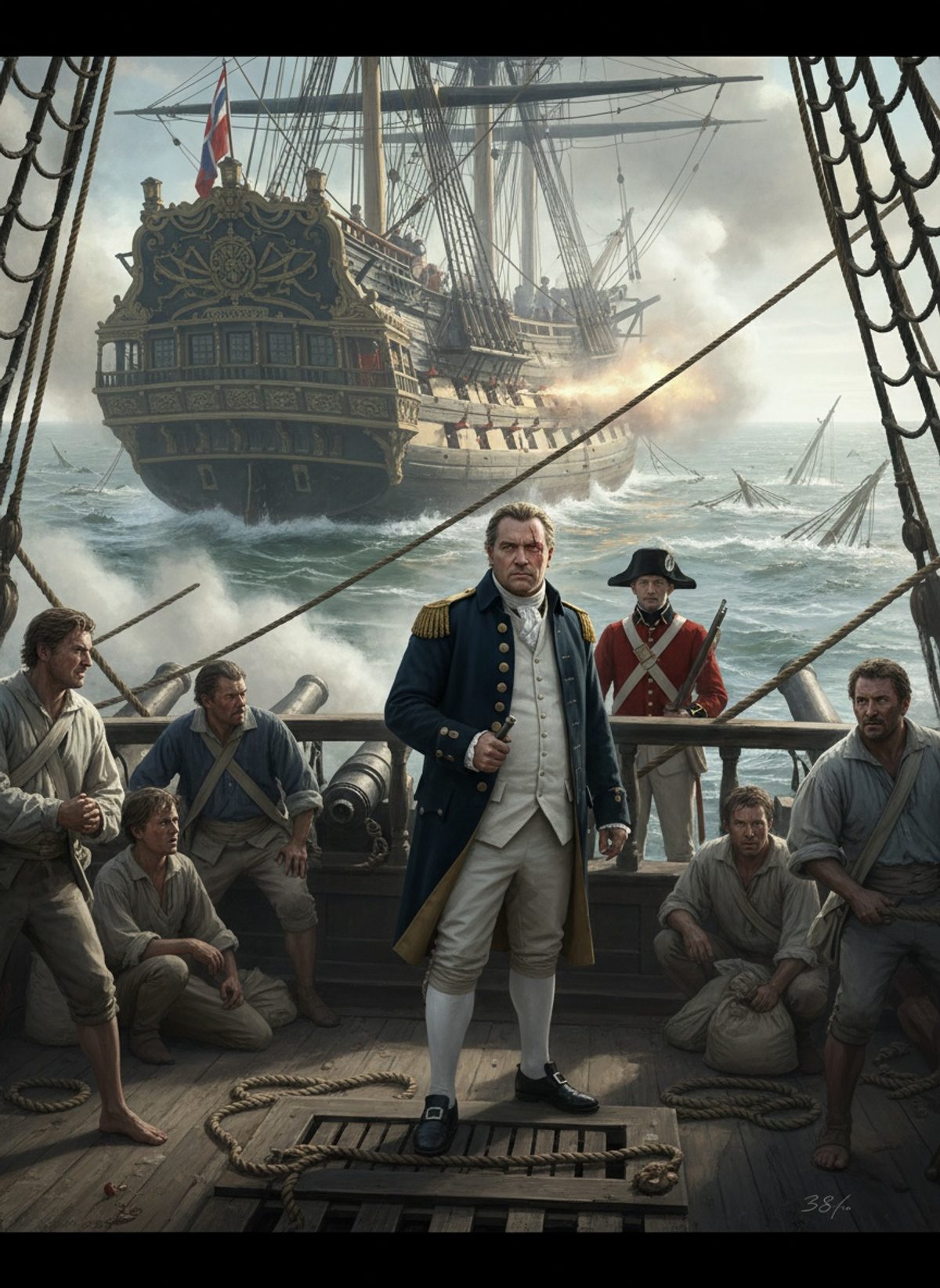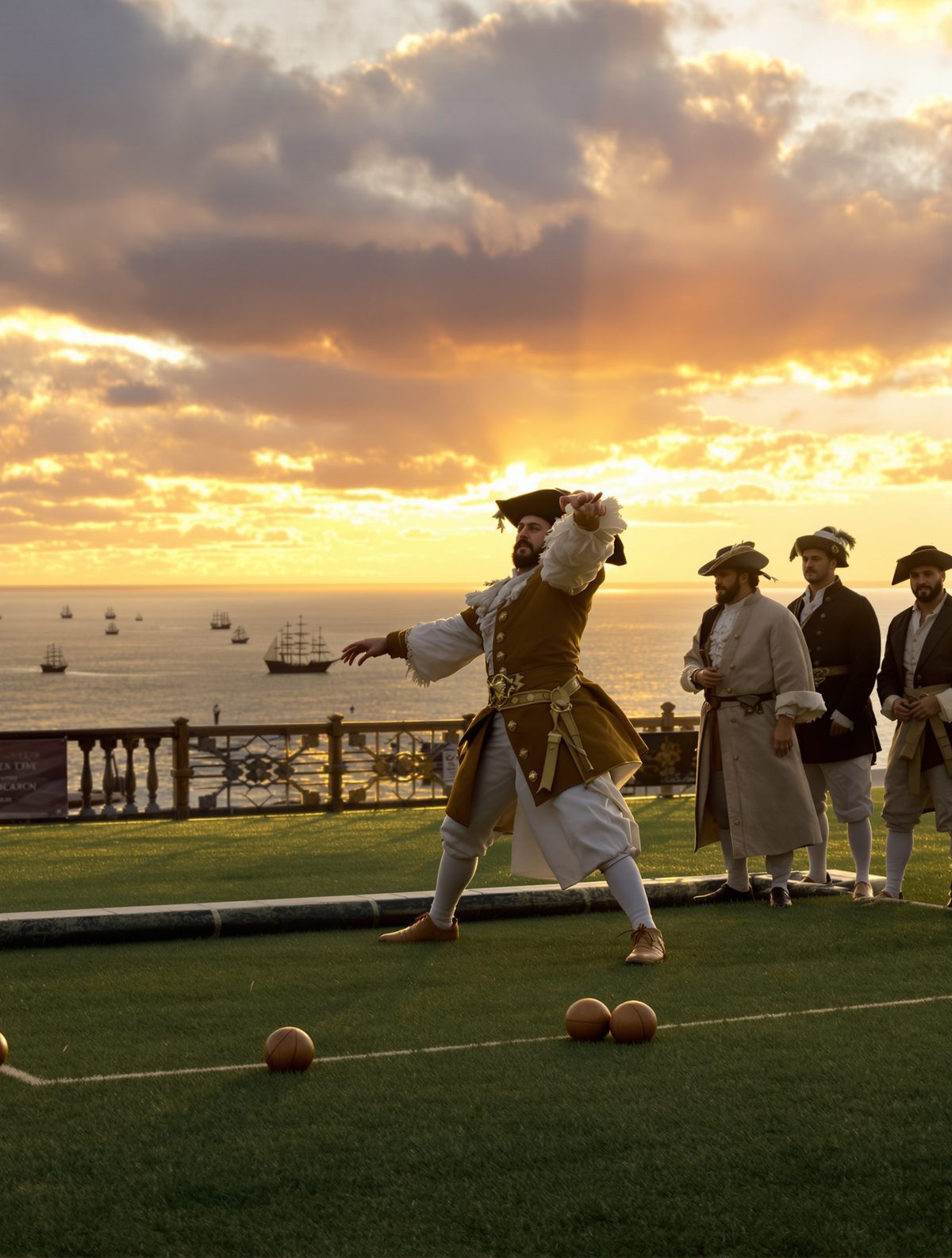
Picture this: the most powerful naval force the world has ever seen is bearing down on England's coast, its 130 ships bristling with cannons and carrying 30,000 men bent on conquest. Lookouts are screaming warnings across Plymouth harbour. Church bells clang frantically in the distance. And what is England's most famous sea captain doing in this moment of mortal peril? He's bent over a wooden ball on a grassy clifftop, carefully calculating his next shot in a game of bowls.
The date was July 19th, 1588, and Francis Drake was about to utter words that would echo through history—not because they were particularly wise or inspiring, but because they were so utterly, impossibly English in their stubborn refusal to be hurried by something as trivial as a foreign invasion.
The Calm Before the Storm
Plymouth Hoe in the summer of 1588 was England's window onto the world—and that world was about to come crashing through it. The elevated plateau overlooking Plymouth Sound had become an informal headquarters for Elizabeth I's naval commanders, who had been expecting the Spanish assault for months. What they hadn't expected was for it to arrive on such a perfect afternoon for outdoor games.
Drake wasn't alone on the Hoe that day. With him were some of the finest naval minds in England: Lord Admiral Charles Howard, Sir John Hawkins, and Sir Martin Frobisher. These weren't men taking a casual break—they were seasoned warriors who had spent weeks preparing for this moment, provisioning ships, drilling crews, and studying intelligence reports about Philip II's "Enterprise of England."
Read next: The Day a British Captain Stood Between Slaves and the Sea
The game they were playing wasn't some leisurely pastime. Bowls in the 16th century was serious business, a sport that required precision, strategy, and nerves of steel—qualities that happened to be rather useful when commanding warships. The wooden bowls, called "woods," were weighted on one side, causing them to curve as they rolled toward their target. Success demanded the ability to read conditions, anticipate movement, and maintain composure under pressure.
Then Captain Thomas Fleming came thundering up from the harbour, having just returned from a scouting mission in his pinnace, the Golden Hind (not to be confused with Drake's famous flagship of the same name). Fleming had spotted the impossible: a forest of sails stretching across the horizon from Eddystone to the Lizard. The Spanish Armada—all 130 ships of it—was finally here.
The Most English Response in History
What happened next has been debated by historians for centuries, but the essence of the story remains consistent across multiple contemporary accounts. As Fleming breathlessly delivered his earth-shattering news, Drake looked up from his bowl, processed the information that would determine the fate of Protestant England, and then calmly announced: "We have time enough to finish the game and beat the Spaniards after."
The exact wording varies depending on which chronicler you believe—some versions have him saying there was "plenty of time to win this game and thrash the Spaniards too"—but the sentiment is clear. Drake wasn't going anywhere until he'd completed his shot.
Was this bravado? Strategic thinking? Or simply the bloody-minded stubbornness of a Devon sea captain who refused to be told what to do by anyone, including King Philip II of Spain? The answer is probably all three.
Drake's response reveals something profound about the psychology of leadership under extreme pressure. While others might have panicked or rushed into hasty action, he understood that appearing calm in a crisis was half the battle. His men needed to see their commander unruffled, confident that victory was so certain he had time for leisure activities.
The Science of Not Panicking
But Drake's famous nonchalance wasn't just theatre—it was tactically sound. The Spanish fleet had been spotted at around 3 PM, and the tide wouldn't turn until nearly 10 PM. Even if the English had rushed to their ships immediately, they would have been trapped in Plymouth harbour, sitting ducks for Spanish cannons. Drake knew his seamanship: there was literally nothing they could do until the tide turned and the wind shifted.
The Armada itself was proceeding with stately majesty rather than urgency. The Spanish formation stretched seven miles across, moving in a defensive crescent that prioritized protection over speed. Their commander, the Duke of Medina Sidonia, had strict orders not to engage Plymouth directly but to continue up the Channel toward his rendezvous with invasion barges in the Netherlands.
This gave Drake and his colleagues precious hours—time enough to finish their game, enjoy a proper meal, and make final preparations without the chaos that would have accompanied a mad scramble to the ships. Sometimes the best action is deliberate inaction, and Drake possessed the rare wisdom to recognize such moments.
Contemporary accounts suggest the game lasted another hour, with Drake maintaining his composure throughout despite the growing forest of Spanish sails visible from the Hoe. When he finally rolled his last bowl, he had won both the match and something far more valuable: the complete confidence of his men.
From Bowls to Broadsides
As darkness fell and the tide finally turned, Drake's casual afternoon transformed into one of history's most crucial military operations. The English fleet—55 ships strong and augmented by armed merchantmen and volunteer vessels—slipped out of Plymouth Sound under cover of night. By dawn on July 20th, they had achieved what Spanish intelligence had deemed impossible: they had "won the weather gauge," positioning themselves upwind of the enemy formation.
The advantages of this position cannot be overstated. In the age of sail, controlling the wind meant controlling the battle. Ships could only fire effectively while sailing in the same direction as their target, and being upwind allowed the English to choose when and how to engage. Drake's afternoon of bowls had helped secure the tactical advantage that would define the entire campaign.
What followed was eight days of running battles up the English Channel—a revolutionary form of naval warfare that Drake and his colleagues had been perfecting for decades. Instead of the traditional approach of closing to board enemy ships, the English stayed at long range, using their superior gunnery and maneuverability to savage the Spanish formation without risking decisive engagement.
Drake himself commanded the Revenge, a 500-ton galleon armed with 46 guns. Throughout the campaign, he demonstrated the same calculated audacity he had shown on Plymouth Hoe, taking enormous risks that somehow always seemed to pay off. During the night action off Portland Bill, he extinguished his stern lantern and vanished into the darkness, reappearing at dawn in perfect position to rake the Spanish rear guard.
The Legend Lives On
The bowls story has taken on mythic proportions over the centuries, embroidered by Victorian historians who saw in Drake's gesture the perfect embodiment of English phlegm under pressure. Some modern scholars question whether the incident happened exactly as described, pointing out that the earliest detailed account appears in a 1736 history written nearly 150 years after the event.
But the story's persistence suggests it captures something true about both Drake and his era. This was, after all, the man who had circumnavigated the globe, burned Spanish ships in their own harbours, and accumulated enough treasure to make him one of England's wealthiest men. If anyone had the confidence to finish a game of bowls while the Spanish Empire sailed toward his doorstep, it was Francis Drake.
Moreover, the incident reflects the broader English approach to the Armada crisis. While Philip II had spent years planning his "Enterprise" with religious fervor and imperial ambition, the English response was characteristically pragmatic and understated. They prepared thoroughly, fought brilliantly, and celebrated modestly—just another day's work defending the realm.
The Enduring Power of Keeping Calm
In our age of instant communication and perpetual crisis, Drake's bowls game offers a masterclass in the power of strategic patience. His refusal to be hurried by circumstances beyond his immediate control allowed him to make better decisions and project confidence when his followers needed it most.
The Spanish Armada represented an existential threat to Elizabethan England—invasion, conquest, and the restoration of Catholic rule. Yet Drake's response reminds us that even in our darkest hours, panic is rarely productive. Sometimes the most radical act is to remain calm, finish what you've started, and face the storm on your own terms.
Four centuries later, as we navigate our own choppy waters, perhaps we could all learn something from that summer afternoon on Plymouth Hoe. The next time crisis comes sailing over your horizon, remember Francis Drake: take a deep breath, finish your game, and then show the world what you're really made of.