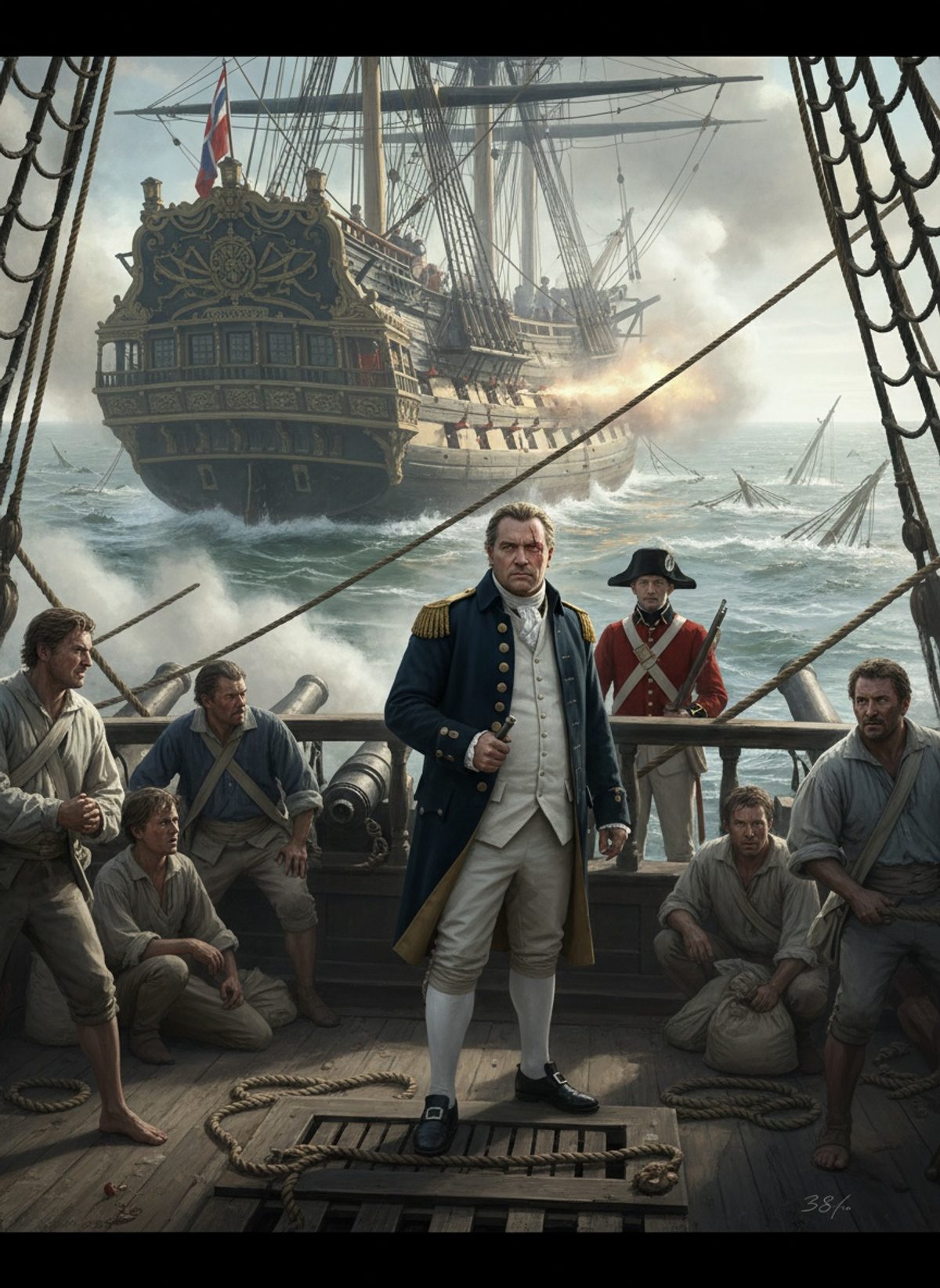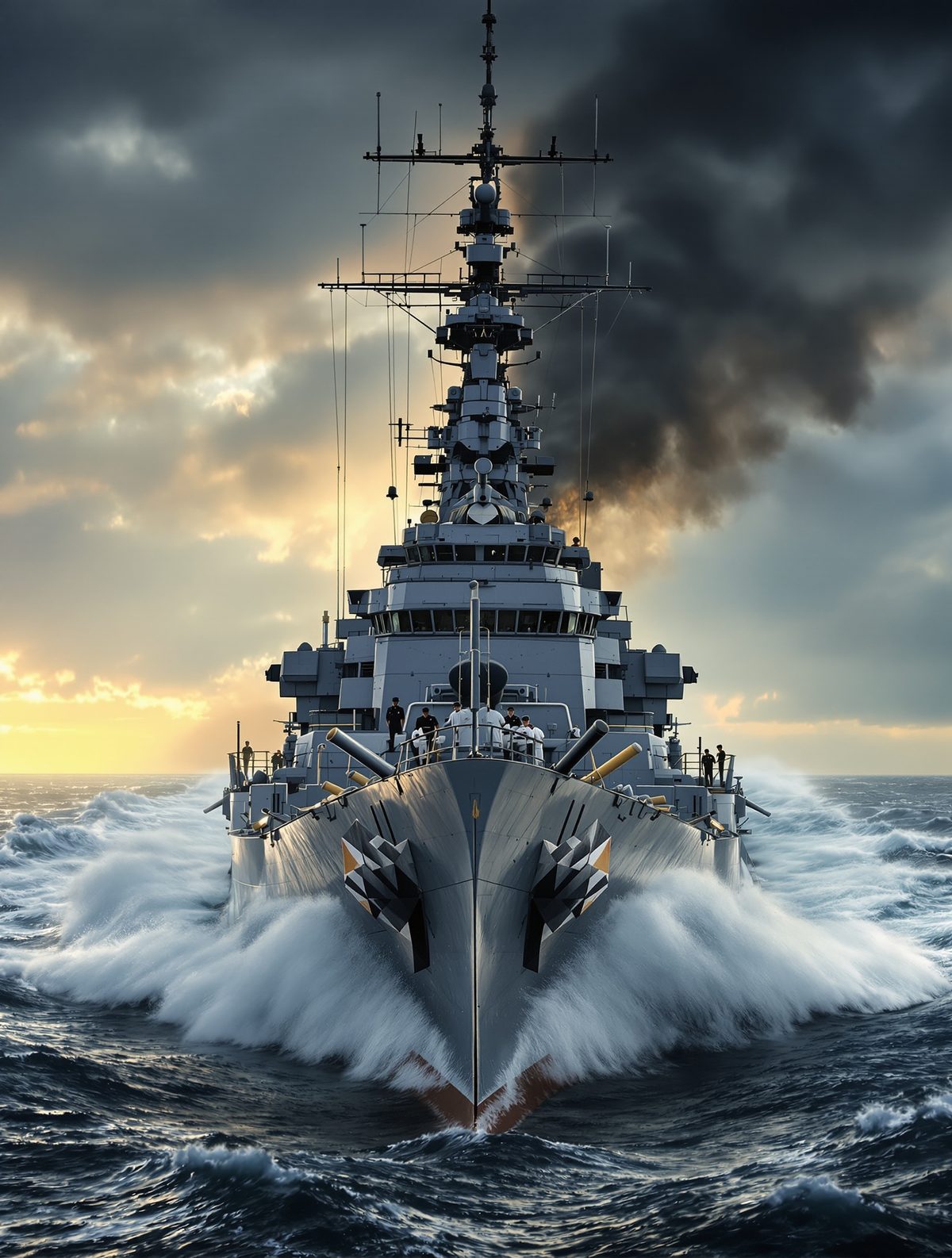
The destroyer was dying. Through the bitter North Sea squall on the morning of 8 April 1940, HMS Glowworm listed heavily to port, her superstructure ablaze, her guns silenced. The massive German cruiser Admiral Hipper loomed through the spray like a steel mountain, her 8-inch guns having already torn the British ship apart piece by piece. Any sensible commander would have ordered abandon ship. Lieutenant Commander Gerard Roope had a different idea entirely.
"Full ahead both!" he shouted over the chaos. "Steer for the cruiser!"
What happened in the next few minutes would become one of the most audacious acts of naval warfare in history—a David and Goliath moment that saved an entire British fleet and changed the course of the Norwegian campaign. Yet for decades, the full story remained buried in classified files, the legend left largely untold.
The Phantom in the Storm
The morning had begun routinely enough. HMS Glowworm, a G-class destroyer displacing just 1,345 tons, was racing through heavy seas to rejoin the battlecruiser HMS Renown and her escorts. The ship had broken off the previous evening to search for a sailor swept overboard—Able Seaman Evan Jones, who had been rescued after two hours in the icy water. Now, in deteriorating weather conditions, Glowworm found herself alone in waters that were becoming increasingly dangerous.
Read next: The Day a British Captain Stood Between Slaves and the Sea
At 0800 hours, lookouts spotted two shapes emerging from a snow squall. The German destroyers Bernd von Arnim and Hans Lüdemann had found them first. Lieutenant Commander Roope, a 35-year-old career naval officer from Southsea, didn't hesitate. Despite being outnumbered, Glowworm immediately engaged, her 4.7-inch guns barking across the grey waters.
What Roope couldn't know was that he had stumbled into the path of Operation Weserübung—Germany's massive invasion of Norway. The destroyers were screening a much larger force, and within minutes, the hunter would become the hunted in the most dramatic fashion imaginable.
David Meets Goliath
Through the storm emerged a sight that would have chilled any destroyer captain to the bone. Admiral Hipper, all 14,000 tons of her, materialized from the snow like a floating fortress. The German heavy cruiser was nearly ten times Glowworm's displacement, armed with eight 8-inch guns that could punch through the destroyer's thin plating like paper. Her captain, Helmuth Heye, must have expected a swift surrender.
Instead, Gerard Roope did something that defied all naval logic. He turned toward the cruiser and opened fire.
The engagement was hopelessly one-sided. Glowworm's shells, when they hit, barely scratched Hipper's heavy armor. The cruiser's response was devastating. Her third salvo straddled the destroyer, sending up towering columns of water. The fourth found its mark, smashing into Glowworm's bridge and forward gun turret.
But Roope had already achieved something crucial. His radio operator had managed to transmit a contact report before the wireless room was destroyed: "One cruiser, bearing 240 degrees, five miles." Those eight words would alert the British Admiralty to the presence of German heavy units in Norwegian waters—intelligence that would prove invaluable in the coming battle for Narvik.
The Captain's Impossible Choice
As Hipper's guns systematically destroyed his ship, Roope faced the impossible mathematics of naval warfare. His vessel was finished—fires raged throughout her superstructure, half his crew were casualties, and his remaining guns couldn't penetrate the enemy's armor. The German cruiser, meanwhile, was virtually undamaged and could finish Glowworm at leisure.
Most commanders would have struck their colors. The rules of war would have protected his surviving crew, and no court martial would have convicted him for surrendering a destroyer to a heavy cruiser. But Roope had spotted something that changed his calculus entirely.
Through the smoke and spray, he could see Hipper's starboard side—and a section where her armor belt was thinner, where the cruiser's great size might become a vulnerability rather than an advantage. If he could get close enough...
The order that followed would become the stuff of naval legend: "All ahead full. We're going to ram her."
Thunder in the Northern Seas
What happened next unfolded with terrifying speed. Glowworm, her engines screaming at maximum revolutions, leaped forward through the heavy seas like a wounded animal making its final charge. Captain Heye, watching from Hipper's bridge, realized the destroyer's intention with growing alarm. The cruiser's main guns couldn't depress low enough to hit the rapidly approaching target, and her secondary armament was struggling to track the small, fast-moving ship.
At 0930 hours, HMS Glowworm struck Admiral Hipper just aft of her starboard anchor. The impact was cataclysmic. The destroyer's bow crumpled like an accordion, but her momentum drove her hull along the cruiser's side, tearing a 130-foot gash in Hipper's armor and ripping away 40 feet of her armored belt. The collision also destroyed the cruiser's starboard torpedo tubes and damaged her aircraft hangar.
But the physics of the collision were unforgiving. Glowworm rebounded from the impact, her hull fatally damaged, her engine rooms flooding. As she began her final plunge into the icy North Sea, Lieutenant Commander Roope made one last radio transmission: "Am ramming enemy cruiser."
Honor Among Enemies
What followed was one of the war's most remarkable displays of naval chivalry. Despite his ship's damage, Captain Heye immediately ordered Hipper to rescue Glowworm's survivors from the freezing water. German sailors threw ropes and life preservers to British seamen who had been trying to kill them minutes before.
Thirty-eight men from Glowworm's crew of 149 were pulled from the sea. Lieutenant Commander Gerard Roope was not among them. Witnesses saw him in the water, helping wounded sailors reach the rescue ropes, but he was never seen again. Some accounts suggest he drowned after ensuring his men were safe; others that he was too badly injured to save himself.
In an extraordinary gesture, Captain Heye later wrote to the British Admiralty through the International Red Cross, specifically recommending Roope for the Victoria Cross. His testimony proved crucial when the award was made posthumously in 1945—the only Victoria Cross of World War II granted partly on the recommendation of an enemy officer.
The Battle That Changed Everything
Glowworm's sacrifice rippled far beyond that grey morning in the North Sea. The damage from her ramming attack forced Admiral Hipper to reduce speed and seek urgent repairs, disrupting German timetables for the invasion of Norway. More importantly, Roope's contact report had alerted the Royal Navy to the presence of German heavy units, intelligence that would prove crucial in the subsequent battles of Narvik.
But perhaps the most profound impact was on naval thinking itself. Glowworm's ramming attack demonstrated that even in an age of long-range gunnery, close-quarters combat could still decide naval battles. The action influenced destroyer tactics for the remainder of the war, with ramming being seriously considered as a last-resort weapon against superior forces.
Today, as we face new forms of asymmetric warfare, Gerard Roope's final charge offers a timeless lesson about the power of individual courage to change the course of history. In those final moments off the Norwegian coast, a single destroyer captain's refusal to accept the inevitable helped save a fleet, disrupt an invasion, and prove that in warfare, as in life, the greatest victories sometimes come from those who refuse to surrender when all logic suggests they should.