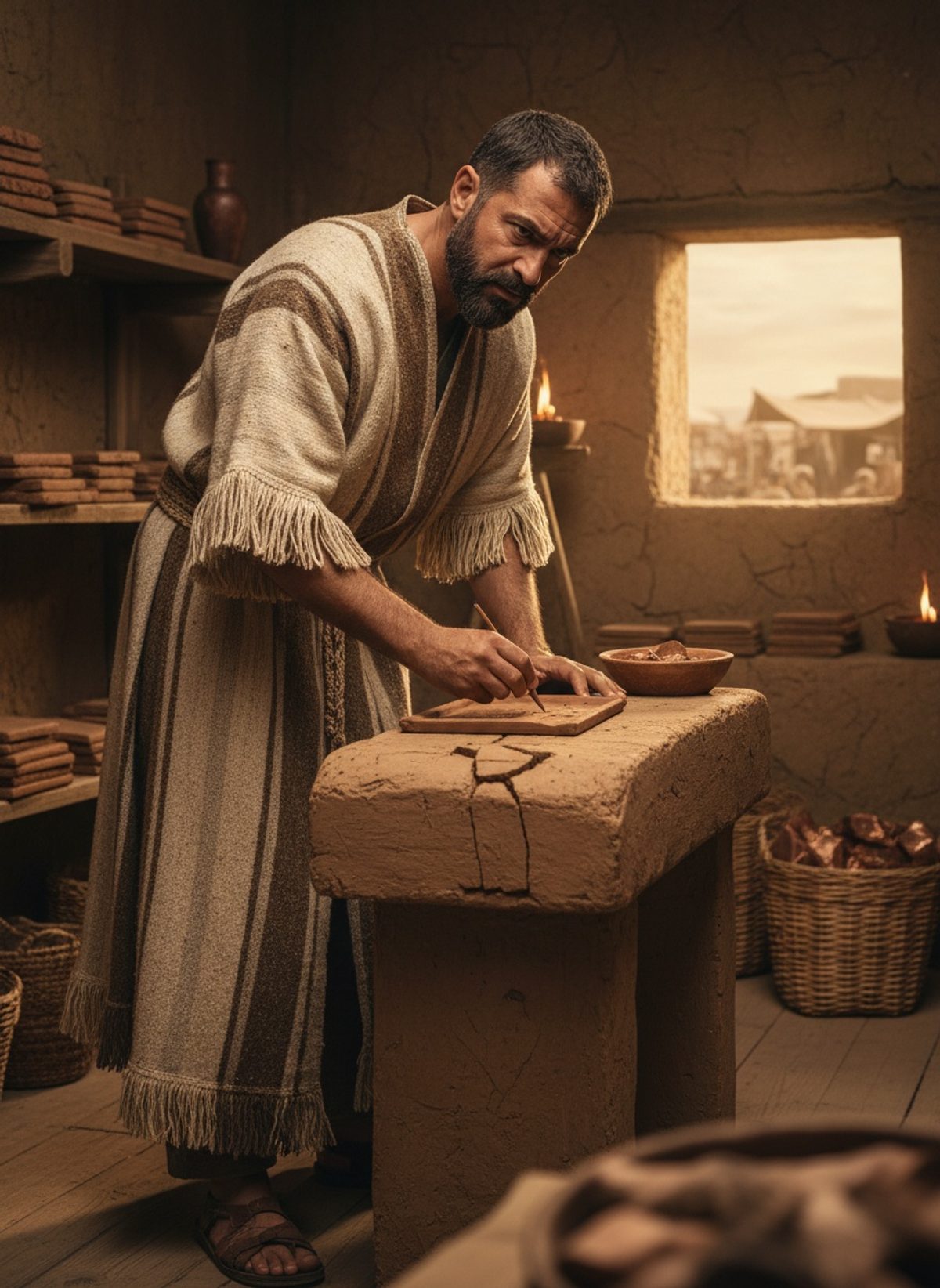
The Judean desert in summertime can seem eternal. The sun bakes the barren landscape, casting shadows that dance along the rock-strewn ground. It is a setting of stark contrast, where the azure sky meets the scorched earth in a horizon that bends with ancient secrets. As the winds sweep through the caves near the Dead Sea, picking up whispers from millennia past, a story unfolds that has baffled historians and treasure hunters alike for nearly two thousand years.
The Enigma of the Copper Scroll
In 1952, hidden amidst the dusty remnants of time in a cave at Qumran, fragments of a scroll were discovered that unveiled a shadowy moment in history. Unlike the papyrus and leather scrolls that lay nearby, this one was uniquely made of copper. Upon its unrolling, the scroll did not reveal sacred texts or historical records familiar to the region. Instead, it presented a precise inventory that spoke of treasures beyond imagination. Each line of this ancient ledger detailed the locations of caches filled with gold and silver, a wealth so staggering it invited disbelief.
Yet the Copper Scroll was anything but an ordinary treasure map. Its text, engraved rather than inked, recounted locations with a matter-of-factness that suggested true intent. Who would go to such lengths to preserve not just their treasure but a record of its whereabouts? The mystery deepened, for despite its promises of sparkling riches, not a single one of the 64 sites cataloged has been definitively identified or excavated successfully.
Jerusalem in Turmoil
The Copper Scroll dates back to around 70 CE, a cataclysmic period for Jerusalem. The city was in the throes of destruction, consumed by Roman flames during the First Jewish–Roman War. This was a time of chaos and desperation, where political instability amidst the Second Temple Period forced dilemmas of preservation and survival upon its inhabitants. It is easy to envisage an elite group, possibly priests from the Temple, faced with the daunting task of safeguarding their wealth—perhaps the very funds meant for the Temple itself.
Read next: The Chest Was Sealed for Centuries. No One Knew Who Left It.
This notion befits a storied Jerusalem gripped by the siege and eventual sack by Roman forces under Titus. With the sacred lost and the city's population decimated, the people who buried these treasures foresaw not just the obliteration of a city, but of their very cultural and spiritual world. Yet, no historical document of this time offers a direct reference or explanation regarding the Copper Scroll’s contents or its purpose.
The Search for Hidden Wealth
Despite its enigmatic origins, the allure of the Copper Scroll lies not only in the vast riches it describes, but in the meticulous specificity of its accounts. Each entry details a location with descriptions such as "in the gutter in the bottom of the 'water tank,'" cloaking its treasure in plausible yet evasive simplicity. Yet, while the directions seem straightforward, the landscape and topography have shifted over the centuries, requiring imaginative leaps and archeological insight.
Treasure hunters and archeologists alike have tried to match the Copper Scroll with physical sites, embarking on quests that blend history with adventure. These expeditions often end with more questions than answers, as centuries of change have altered the landscape beyond mere recognition. Among these failed attempts lies an extraordinary truth—the Copper Scroll may well be the only Biblical-era artifact providing such specific detail regarding the dispersal of treasure, yet it tantalizes without yielding its secrets.
Modern Implications and Theories
Numerous theories have emerged to explain the Copper Scroll’s conception and relevance. Some scholars suggest that the treasures listed were never real, mere illusions meant to distract or delay Roman forces, while others consider it a genuine account akin to other cryptic maps like the map of the treasures of Oak Island. The possibility that these sites were plundered long before modern seekers disrupted ancient soil lingers in the academic dialogue.
Others weave elaborate connections between the scroll and the enigmatic Essenes, the Jewish sect living in isolation near the Dead Sea, known for their ascetic lifestyle and apocalyptic prophecies. This link stirs the imagination, suggesting that the Copper Scroll represents a cache of communal wealth awaiting a return long prophesied and expected in some messianic future. Amidst this fertile ground for conjecture, however, the Copper Scroll steadfastly refuses to yield definitive proof of its origins or intentions.
Why the Mystery Endures
In the realms of history, the Copper Scroll occupies a unique position, straddling the line between myth and reality. Its very existence defies expectations and challenges assumptions about ancient peoples’ relationship with their wealth and their foresight amidst turmoil. Yet, beyond the promise of grandeur, the Copper Scroll serves as a resonant reminder of humanity’s enduring quest to connect with its past, to find meaning and certainty in the relics of history.
With each unavailing dig and scholarly hypothesis, the Copper Scroll's mystery deepens, offering not just a challenge to adventurers and historians but also an invitation to ponder the nature of legacy and preservation. It asks us to consider what we hold dear and how we choose to save it for the future amidst the shadow of impermanence. In this way, the story of the Copper Scroll endures, not just as a testament to hidden treasure but as a reflection of the human spirit's relentless search for understanding.