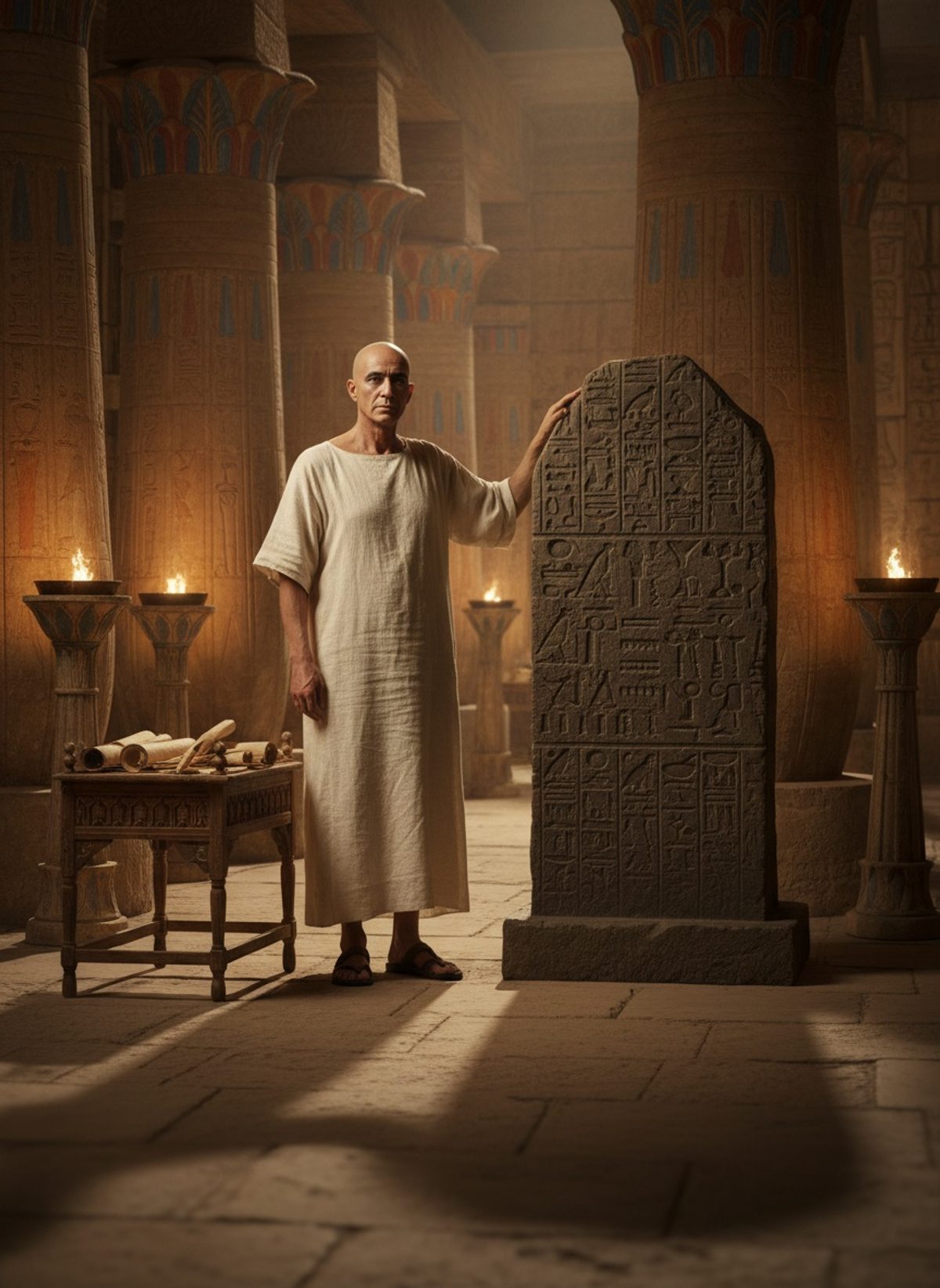
1330 BCE. A shroud of silence enveloped the Valley of the Kings, a sacred landscape bathed in the golden light of a dying sun, where shadows danced across the entrance to a yet unopened tomb.
The Hidden Narrative in Stone
Nestled into the rugged hills on the west bank of the Nile, the Valley of the Kings is a breathtaking testimony to the grandeur and enigma of Ancient Egypt. It holds the secrets of the New Kingdom’s mightiest pharaohs, those figures who once commanded respect across lands far and wide. Yet, among these celebrated figures lies a lesser-known mystery carved into time—the tale of a tomb undisturbed by looters, but bearing the silhouette of historical intrigue.
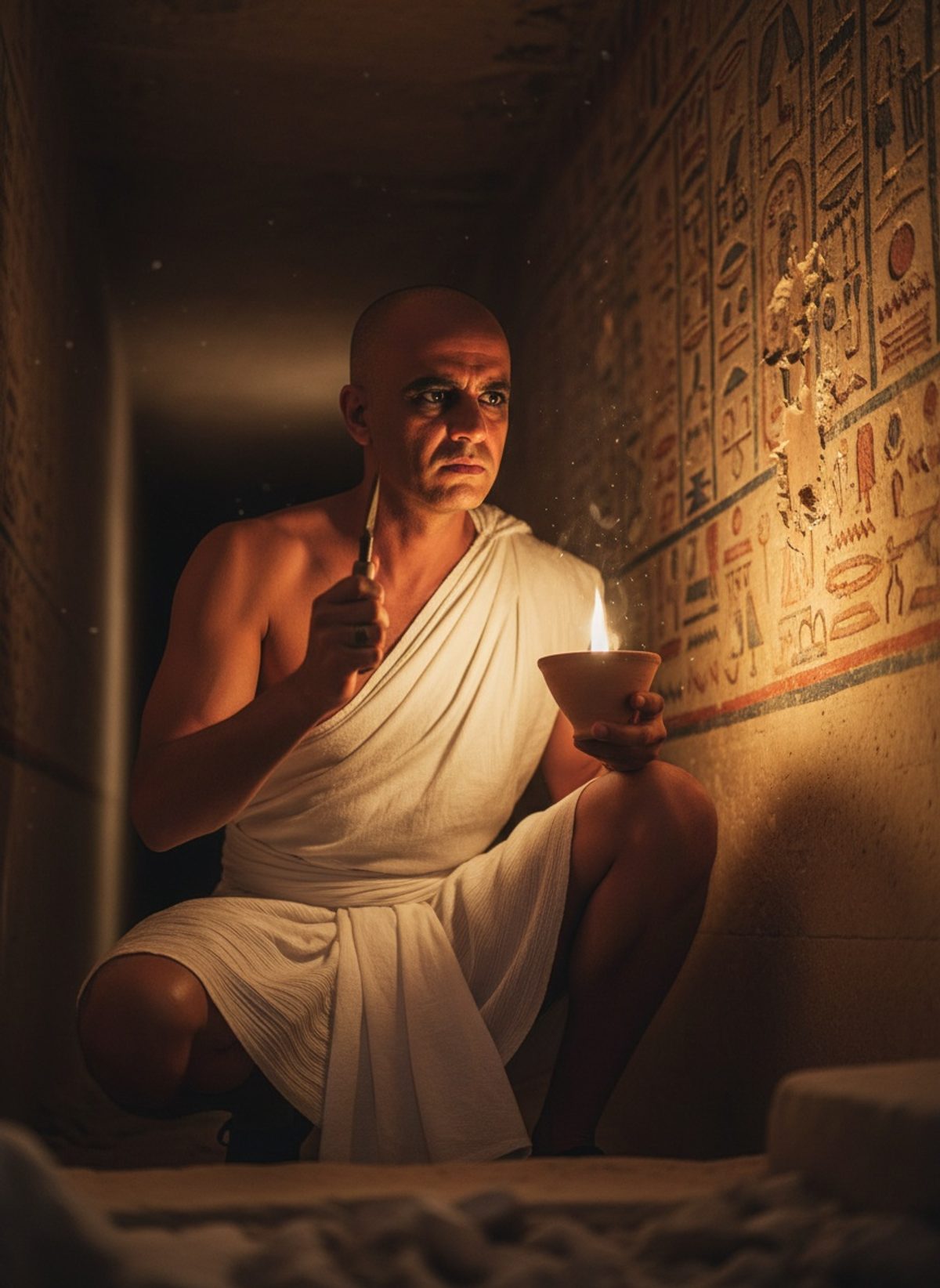
When archaeologists uncovered this tomb, pristine and untampered, they expected to find the trappings befitting Egyptian royalty. Indeed, the treasures within spoke of a king's journey into the afterlife, a passage marked by wealth and care. However, what lay at the heart of this tomb was not the opulence, but the tale told by a tampered cartouche.
A name, scratched and re-etched, whispered of desires to erase and rewrite history. Who was the pharaoh they sought to bury not just in death, but in memory?
Read next: The Jar Was Sealed. The Message Was 2,000 Years Old.
Pharaohs and Their Vanishing Acts
In the epochs of New Kingdom Egypt, pharaohs wielded not only political and religious power but controlled their legacy through the elaborate monuments that bore their name. Yet, history is rife with tales of their images and histories being marred by successors with an axe to grind—or, as in this case, a chisel.
The act of erasing a name from a cartouche, known as *damnatio memoriae*, was a political maneuver, a very physical obliteration of identity. This practice was reserved for those who had fallen from grace or who posed a threat, even in death. To strike a name was to condemn them to an eternal oblivion, to deny them the afterlife they had painstakingly prepared for.
Intriguingly, however, the nameless pharaoh in question had all but slipped the fate of obscurity. Minuscule remnants of the original inscription, barely visible upon close examination, survived the purge. An archaeologist’s keen eye discerned these remnants, setting in motion a quest to unveil the lost name that echoes faintly through the annals of history.
The Forensic Dance of Discovery
The mystery of this misplaced identity did not rest easily in the hands of those who uncovered it. Employing a blend of traditional archaeology and modern technology, scholars embarked on a journey to restore the wiped identity. They used digital imaging, advanced scanners, and infrared technology to reveal what the human eye could not.
This delicate forensic work brought forth the shadows of hieroglyphs hidden beneath the visible ones, the artistry of the original name slightly curved but discernible. Like whispers resurrected from time’s shadow, they pointed towards a pharaoh whose story defied annihilation.
These whispered symbols, though not able to provide a full picture, were a piece of a grander puzzle of which tantalizing fragments survive in other records and relics unknowingly scattered across dusty museum basements and archives.
A Mysterious Ceaseless Struggle
This intricate tale is not isolated in the chronicles of Ancient Egypt. Throughout the ages, new magistrates of power often sought to overwrite the past, the debris of ambition littering their wake. The story thus becomes more than just a case of mistaken identity; it is a window into the relentless spirit of human ambition and the impermanence of records.
The unknown identity buried and almost lost to time reminds us that history is far from complete. Every act of erasure is its own story, every shadow a thread of a larger narrative. With each discovery, we gain a foothold, a brief respite from oblivion’s pull—a secondary immortality of sorts gained through the hearts and minds that continue to seek truth.
Why the Vanished Pharoah Matters
The attempt to obliterate a name from history was not solely an act of ancient spite; it was a reflection of the relentless pursuit of power, a poignant reminder that history is often carved by the victors. Yet, those chiselled names still speak to us across millennia, resonating in the halls of conscious thought, their stories insisting on survival no matter how obscure.
The mystery of the misnamed tomb teaches us the imperfections in our narrative building, urging societies to value investigative integrity in the stories we preserve and the diverse protagonists we celebrate. In the absence of a complete picture, we are compelled to confront the reasons why a name needed erasing and what it tells us about power. Despite the silent stones and unanswered questions, the unknown Egyptian pharaoh persists, whispering to us from beyond the silence, a reminder of resilience against the sands of time.