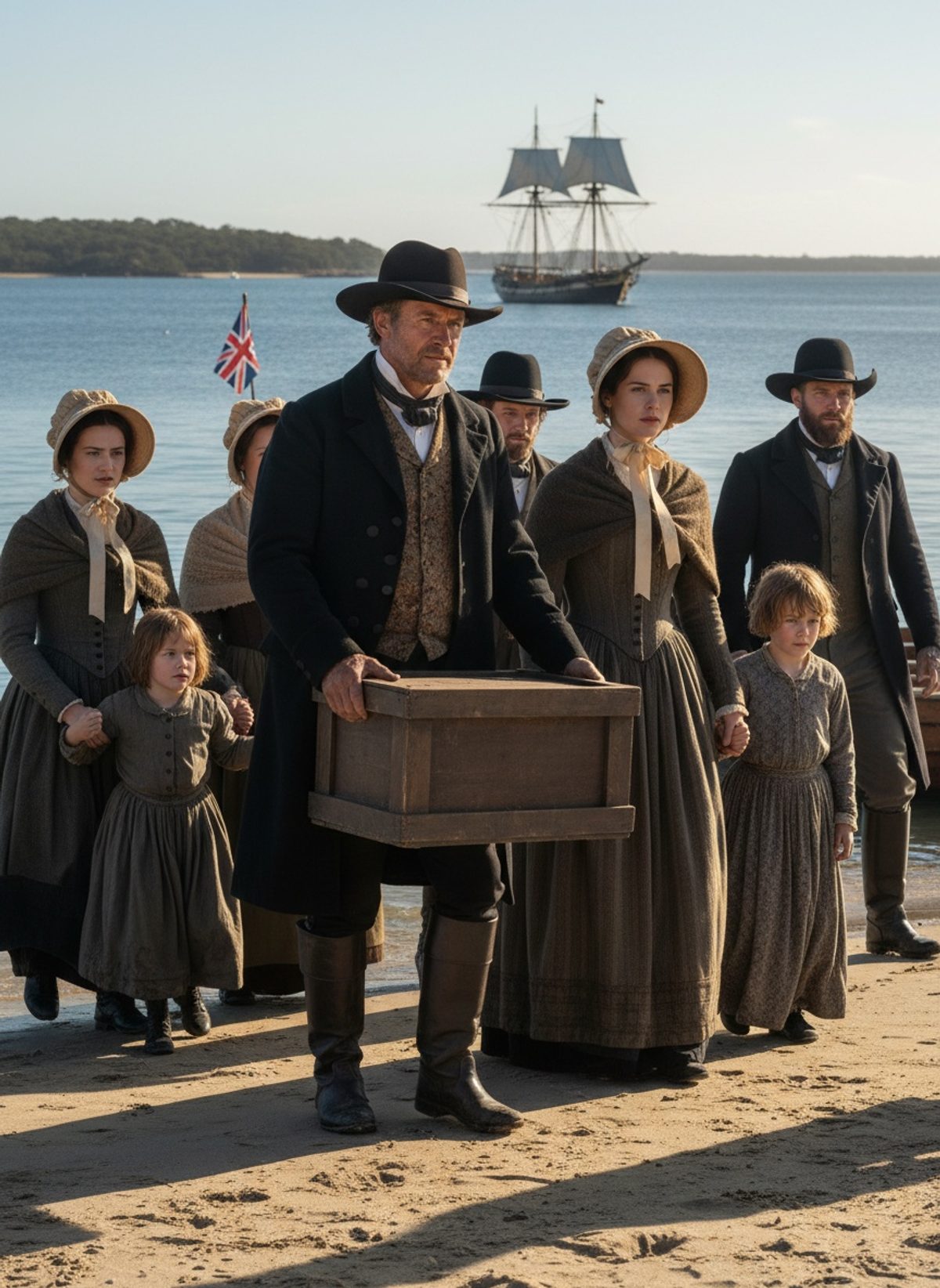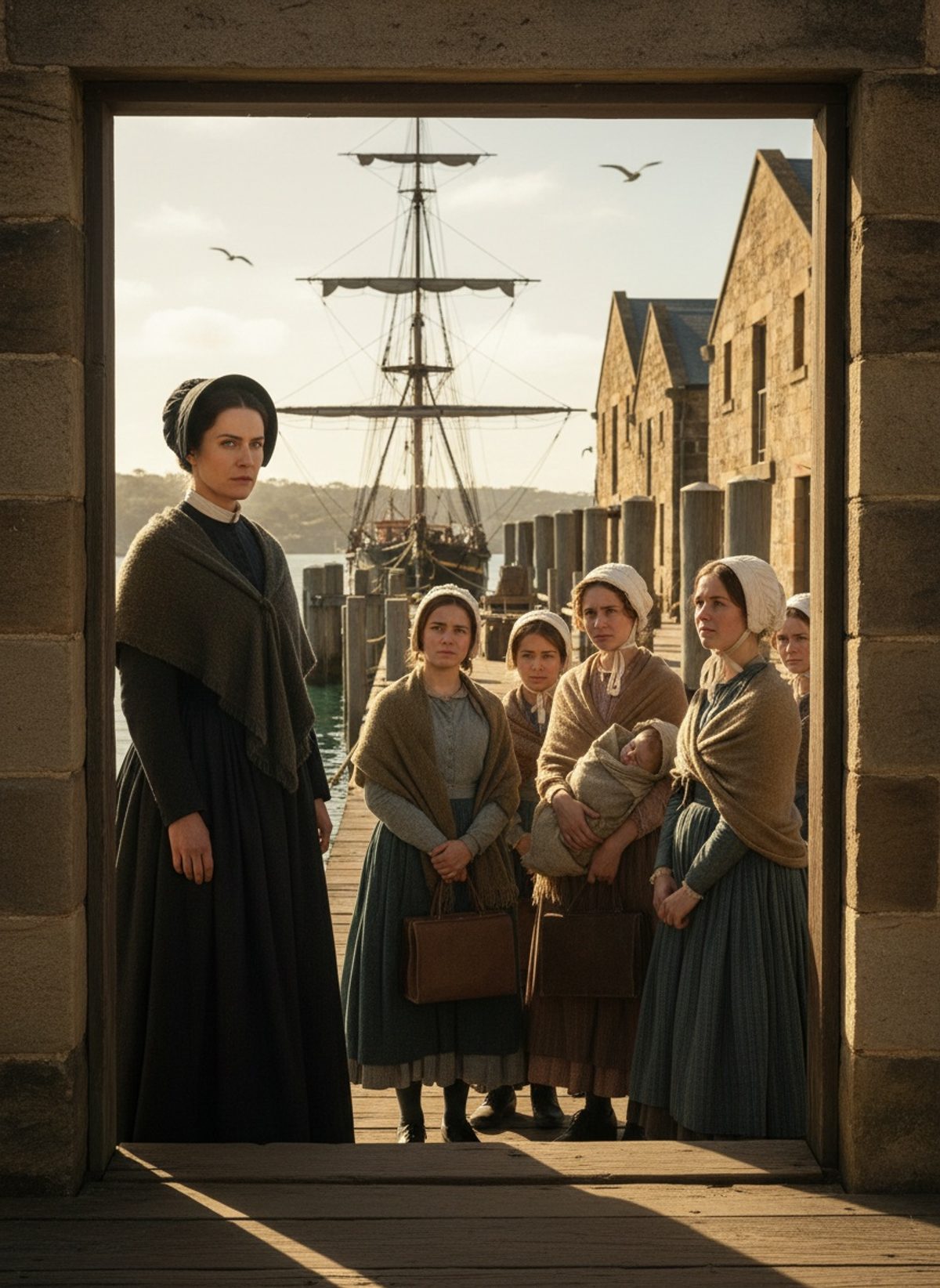
The air was thick with anticipation and the briny chill of the sea as Caroline Chisholm stood on the bustling docks of Sydney Cove. Each creak of a gangplank announced a new arrival, young women making their uncertain way onto foreign soil. Overwhelmed and unsteady, they took hesitant steps into a land that promised a fresh start but offered little more than the vague outlines of opportunity. Caroline, with her piercing gaze and steadfast demeanor, was their first sight of hope in this vast and indifferent colony. Armed with nothing but resolve, she pushed through the throng, reaching toward hands that trembled with uncertainty, offering guidance and the steady promise of shelter.
Opening Doors Where None Existed
The colony of New South Wales, in the year 1841, was a place of raw potential and harsh realities. With the promise of new beginnings came planeloads and shiploads of settlers, individuals drawn by the promise of fertile land and brighter prospects. Yet, for many young women, the journey was but the beginning of a stark battle against the elements of poverty and social vulnerability. Caroline Chisholm watched, day after day, as ships ferried hopefuls to the colony’s gates — young women without kin, without coin, without certainty of their next meal or bed.
Caroline’s heart was fierce, her mind a ledger of unrelenting purpose. With each arrival, she logged names, stories, and circumstances, compiling not just a list of need, but a manifesto of urgent action. The dockside was a paradox, bustling with the energy of new arrivals but for these women, alone felt oppressively idle. Caroline decided to transform this space into a threshold of salvation. She opened a modest room nearby, a sanctuary from Sydney’s rougher edges, offering the simplest yet profound gift of welcome: a safe bed and a warm meal.
This room, humble in its trappings, became a beacon in the burgeoning settlement. It was a place of transformation where stories traded desolation for the possibility of a start anew. Caroline was tenacious in seeking work for these women, liaising with settlers desperate for service hands and households in need of maids or companions. Each placement was not just a job; it created a lifeline, a thread woven into the fabric of the colony’s burgeoning society. She saw the potential for vulnerability to be converted into strength, knowing each woman she guided was a building block for a more nurturing future in the antipodes.
Read next: When Edward Wakefield's Dream Colony Rose From the Sea, 1840
Beyond Bread and Butter
Caroline’s mission went beyond offering immediate relief or temporary shelter. She envisioned a systematic solution, carving a path of stability and dignity. Her approach was unorthodox yet simple: find employment to tether these young women to the colony’s promise. In a time when society’s expectations confined women to the periphery, she saw them not as burdens but as assets. Caroline tapped into the rudimentary networks that linked settlers with the resources they needed — labor, service, companionship — crafting a model of integration that was as much about survival as it was about creating community.
The magic often occurred over a shared meal, in the comforting hearth of her missions. Here, women found not just sustenance for their bodies but nourishment for their spirits. Caroline offered something more durable than a single hot meal — a resolve that these women would own, in time, the ground they walked on. Her efforts were not without resistance. There were gatekeepers aplenty who balked at her defiance of social norms; yet, driven by an unyielding belief in the capacity for change, Caroline negotiated each barrier with grace and steely resolve.
While others saw helpless, destitute figures, she saw hands eager to work, minds ready to learn, and souls brimming with untapped potential. Her work highlighted a stark truth too often neglected in the records of empire: the essential contributions women made to the establishment and progression of new societies. Caroline’s inscriptions in the ledgers were more than names, they were testaments to resilience and her acumen in social engineering — crafting bonds of reciprocity and solidity in Australia’s embryonic years.
The Ripple of Audacity and Empathy
Caroline Chisholm’s work was not about rendering charity, nor did it rely on the optics of philanthropy for superficial praise. She instigated a grassroots revolution, subverting the norm where lifeboats for vulnerable women were scarce and sporadic. With each woman she helped, she inspired others to follow in her footsteps, increasing momentum toward a more equitable colony. As populations grew and urban nightmares loomed larger, her work underscored community welfare and humane concern as vital to sustainable colonization.
The echoes of her efforts resonated far beyond the docks and dusty streets of 1841 Sydney. She saw her work as threads in a far greater tapestry — a society that honored its vulnerable with opportunity and embraced its vagrants as integral to the collective progress. Her belief that every woman on those lists could one day lead others fueled her relentless pursuit amid the chaos and uncertainty that defined immigrant life in the colony.
What Caroline Chisholm achieved in those early days would simmer beneath the surface for decades to come. Her conviction, compassion, and courage offered not only a roadmap for others but spotlighted an often-neglected narrative. In the contours of history, where stories of conquest and empire-building take precedence, she remains a beacon whose light reaches into the present day, reminding us of the power of one person’s vision to turn despair into a shared journey toward hope and opportunity.