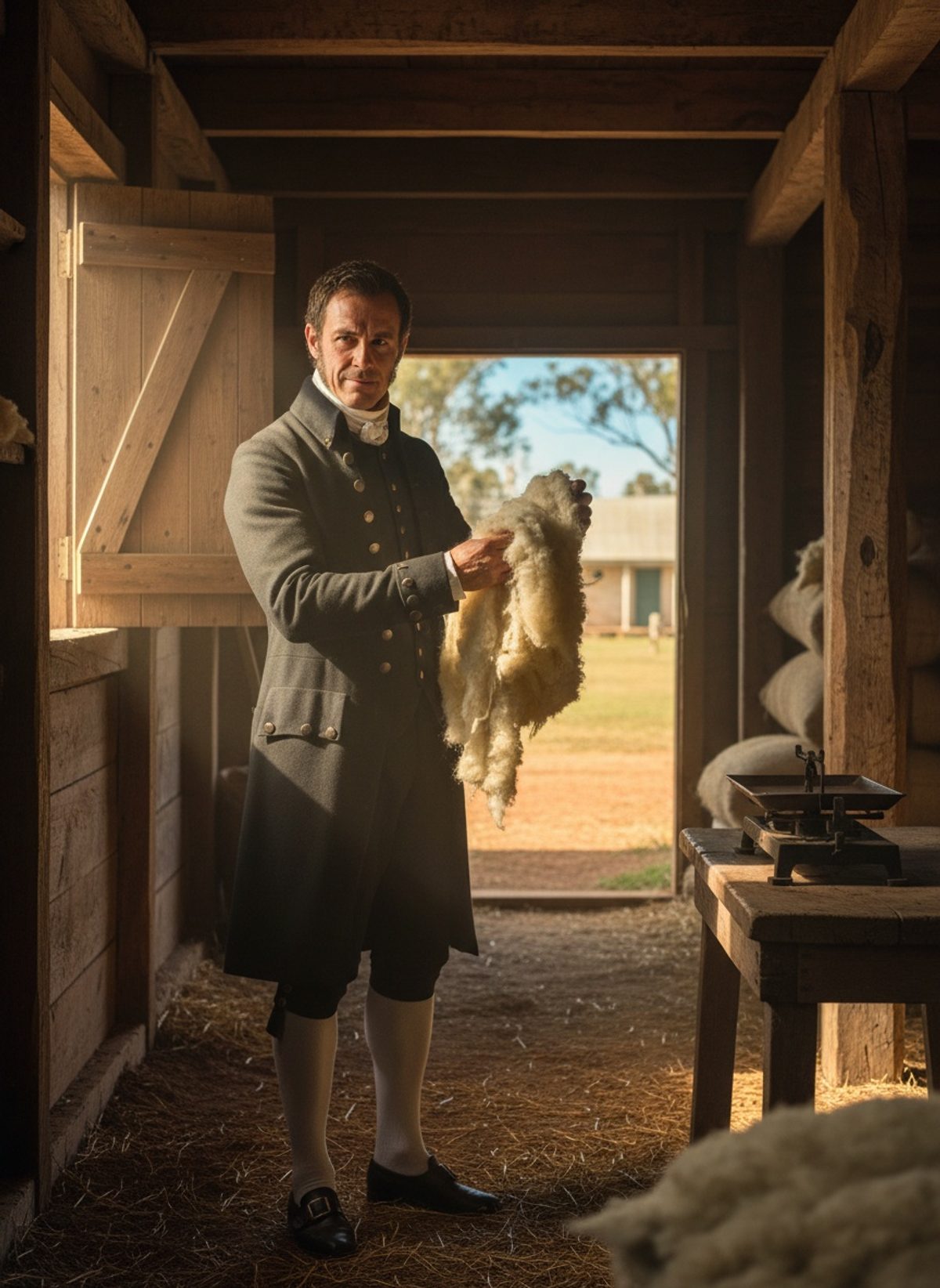
The deep, earthy scent of lanolin wafted through the air as John Macarthur gently laid down the fleece, his calloused hands lingering over its fine fibres. He was standing in the dim light of a Sydney wool store in 1807, and the wool he held was unlike any seen before in this fledgling colony.
The merinos had thrived under the brutal Australian sun, a triumph he had both anticipated and desperately needed. The feel of the fleece—soft, yielding yet resilient—between his fingers confirmed it: Australia had the potential to weave the threads of an empire. This was the moment that could transform a land of convicts into a nation of enterprise.
The Disgraced Officer's Gambit
John Macarthur was no stranger to adversity. As a Scottish-born soldier, his brashness and ambition had been both his bane and his boon. Court-martialled and exiled to the distant penal colony of New South Wales for insubordination, he seemed destined for obscurity. Yet, rather than accept defeat, Macarthur seized his banishment as an opportunity. If he could not rise through the military ranks, he would forge his path elsewhere.
In exile, Macarthur turned to agriculture, eyeing the colony's vast expanse with singular vision. To him, Australia's wild heart offered untapped potential, a blank canvas where he could sketch his ambition's contours.
Read next: When Caroline Chisholm Fed the Hungry at Morpeth, 1843
Between tussles with governors and squabbles with rivals, he dreamed of wool, the stalwart staple of the British economy. His mind, a chaotic whirlwind of calculations and aspirations, saw sheep with fleeces that could withstand not only the harsh conditions but also the critical eye of the British textile industry.
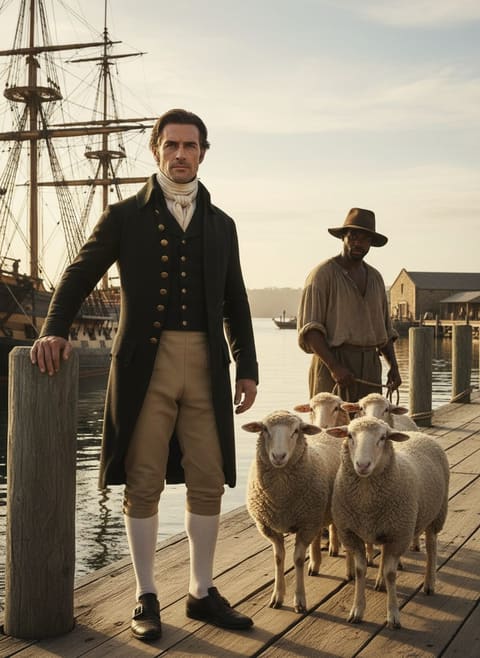
Determined, Macarthur embarked on a journey to England, seeking a dialogue with the Board of Trade, with nothing but his audacious belief and persuasive tongue. He wrought a miracle of diplomacy there, securing a cargo of Spanish merinos, prized for their unrivalled wool. These sheep held the key to transforming the penal colony's reputation, and he brought them back to Australia's shores, hoping to weave both a fortune and a legacy.
A Continent's Transformation
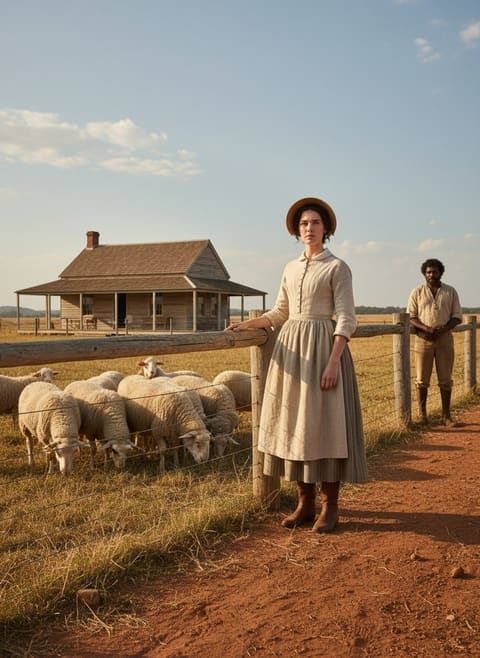
Upon return, Macarthur's foresight began to unfold. The merinos, delicate creatures accustomed to Spain's temperate climes, faced a harsh initiation under the Australian sky. But survive they did. It was a testament to both the sheep's resilience and the land's untapped promise. As the woollen fibres thickened, so too did the prospects of the colony.
Behind these pastoral scenes lay a burgeoning revolution. Word of the colony's new commodity travelled, carried on rumour and report, igniting interest thousands of miles away in England. Macarthur's wool was not just wool; it was a symbol of possibility. His determination to infuse the Australian land with European ambitions started a textile revolution, positioning the colony as a critical player in global trade.
The ripple effects were manifold. Allowing Australia to specialize drew skilled immigrants craving opportunity and wealth. The colony's economy expanded beyond its prison walls, flourishing into a competitive hub emblematic of Britain's wider imperial aspirations. The wool clip, resting innocuously in his hands that day, signified a transition from coerced labour to a future guided by vision and audacity.
Read next: When John Macarthur's Daughter Planted a Garden at Parramatta
The Legacy of Merino Vision
John Macarthur's aspirations did more than enrich his coffers; they etched new contours onto Australia's identity. His merinos set the stage for a pastoral boom that would anchor the country’s economy for centuries. The fibres of those first fleeces stretched across the globe, intertwining the nascent nation's fate with distant empires.
Australia's leap from penal colony to economic powerhouse was not merely a tale of successful agriculture. It was a story about the power of vision to transform punitive measures into opportunities for grandeur. Macarthur’s efforts charted a future where adversity was merely the landscape to be traversed and reimagined.
In the decades following, Australia’s sheep numbers grew into the millions, and wool became the backbone of a robust export economy, irrevocably changing its footprint on the world stage. The fleece that trembled gently in Macarthur's hands back in 1807 was more than just wool; it was the fabric of dreams, wrapping around the land’s potential, like a hidden promise now unfurling.
Ultimately, John Macarthur's story transcends colonial ambition. It reflects the indomitable human spirit that can turn punishment into progress and dreams into reality. In discovering that wool could be spun from utter exile into wealth and prestige, Macarthur wove not just the fibres of textile but the very fibre of a young nation’s future.