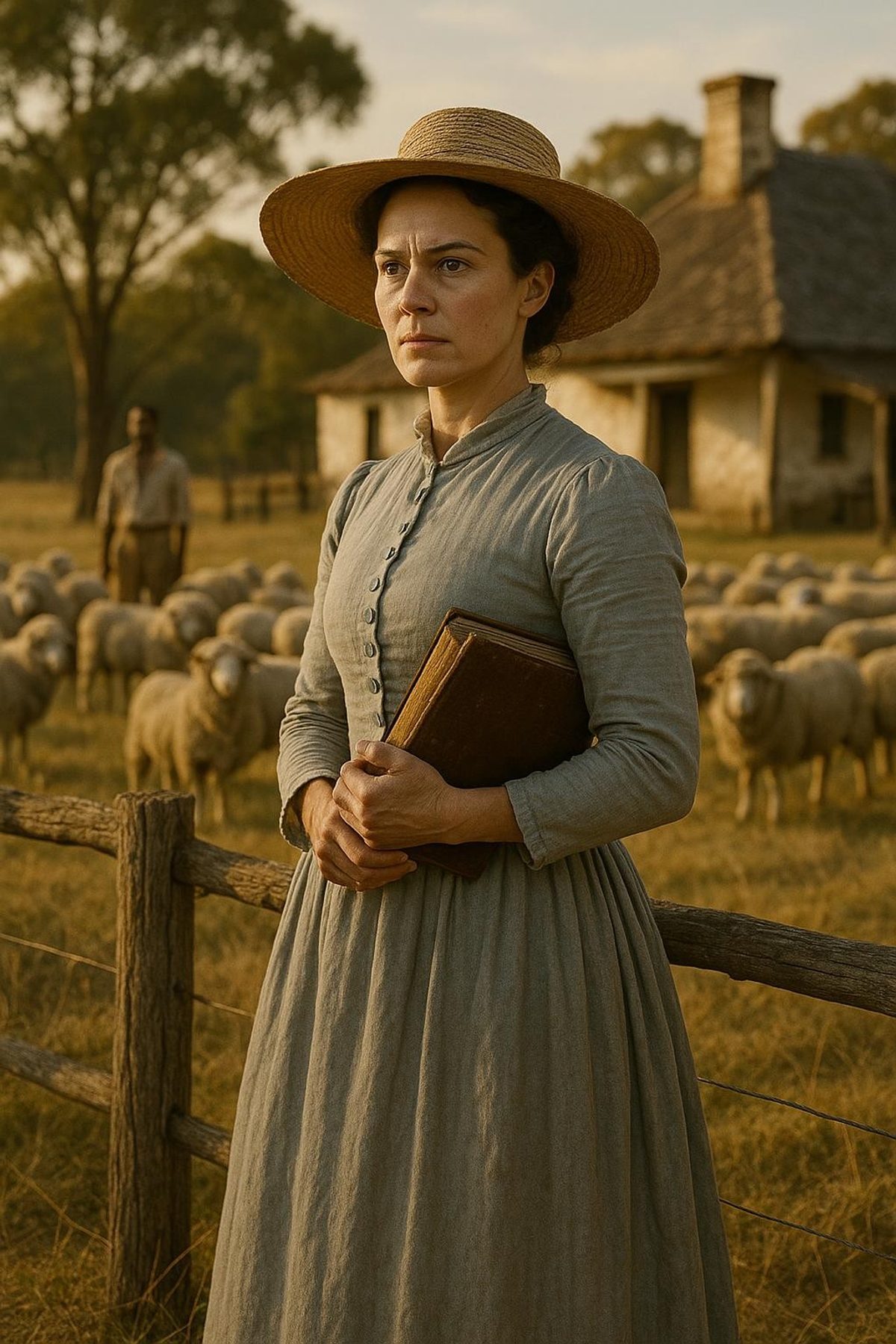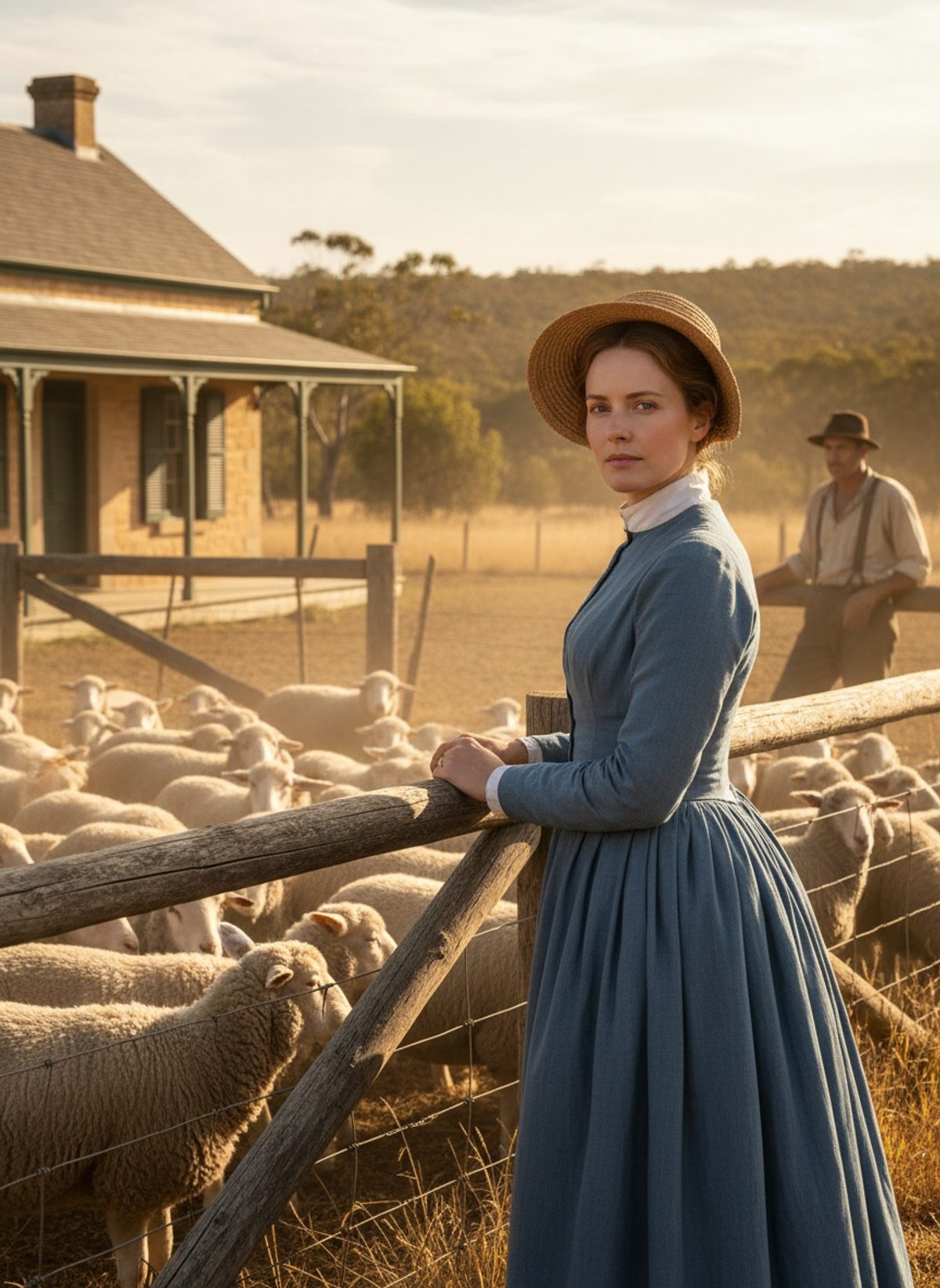
October 1804. The ship that bore John Macarthur away sailed beyond the horizon, reflecting the sun's wavering light. Gone in chains to England, Macarthur left a daunting void in the rugged expanse of New South Wales. Yet, in this nascent colony clinging to the edge of an untamed continent, his absence carved out a space for an unlikely heroine.
Elizabeth Macarthur — no longer a shadow to a mercurial husband, but a woman on her own in a land that demanded every ounce of strength and resilience. With six children as her constant companions and a small contingent of convict workers for assistance, Elizabeth stared down the challenges of running their sprawling property. Among her charges was a fledgling flock of merino sheep, their superior wool largely dismissed by fellow settlers as little more than an idle dream of her husband. But Elizabeth held a vision that peered beyond the horizon just as the ship had, refusing to let the flock or her family’s fortunes falter.
The Unyielding Nature of the Frontier
The early 19th century in New South Wales was harsh and unforgiving. This newly established colony was more penal outpost than paradise, with settlers battling the punishing sun by day and icy chills by night. The land — vast and unwieldy — tested the limits of human endurance, often returning just as little as it was given. Here, on the precipice of civilization and wildness, the Macarthur farm struggled to carve out its existence. The task fell to Elizabeth not only to maintain but to cultivate ambition from the soil.
Left to steer the ship alone, Elizabeth took to the helm with an acumen that astonished those few who bothered to notice — those who did were often the same dismissive settlers who looked on merino sheep as little more than fanciful distractions. The flock, a precarious investment of time and effort, required more than rudimentary care. These sheep bore the future in each fleece, and Elizabeth understood the necessity of nurturing that promise with an unwavering eye on the outcome.
Read next: When John Macarthur's Son Planted the First Vineyard, 1827
Her days began before dawn, the calls of her children mingling with the bleats of the flock and the whispers of the dawn wind through the gum trees. Her mornings were spent coordinating the shearing efforts, ensuring the wool clip was carefully prepared and sent on fateful journeys to market. She was not merely multitasking; instead, Elizabeth was laying the very foundations of the wool industry that would chart New South Wales’ course for the decades to come.
Weaving the Fabric of a New Economy
Despite the challenge, Elizabeth showcased a remarkable ability to keep meticulous records of each clip, managing the finances with a precision that might have been the envy of London’s counting houses. Her ability to sell the wool at a favorable price was nothing short of remarkable. It was these financial dealings that began to shift perceptions, transforming idle gossip into grudging respect.
Yet, beyond the arithmetic of shillings and pence, Elizabeth harnessed her resourcefulness in more subtle maneuvers. She championed the cause of merino wool with a conviction born of necessity and a penchant for seeing opportunity where others saw barren wilderness. Slowly but surely, her diligent efforts bore fruit as the colony started to recognize not only the wool's quality but its economic potential.
Each shearing season, Elizabeth ensured the wool was harvested with an eye for quality — fibers of a softness and durability that began to draw interest back across the seas. She collaborated with traders, peddlers, and anyone who would listen to her tale of wool’s promise. Transactions that floated across the Indian Ocean carried more than material goods; they were beacons of potential prosperity. Her resolve was formidable and unshakeable, even when faced with swindling buyers or the perils of transport by sea.
Through correspondence, she advocated for the establishment of better breeding practices, ensuring the merino sheep maintained and even improved their reputation. Elizabeth's letters and deals ensured that this emerging industry stood on the shoulders of giants clad in merino coats.
True Grit on a Distant Shore
Elizabeth's journey was not one of grandiose gestures or dramatic confrontations, but rather of stoic perseverance and unyielding resolve. The real work was often unseen, carried out in solitude where recognition was sparse, and acknowledgment even sparser. Yet her efforts spoke through the prosperity that slowly began to trickle to the colony.
In the years that passed, as Elizabeth managed the farm, the merino wool industry began to flourish — a burgeoning thread weaving its way into the tapestry of Australia's economic landscape. Her contributions were not merely transitional; they were transformative. It was through her diligent stewardship that the colony could muster the strength to stand tall on the international stage, trading in a commodity respected and revered the world over.
Over the nearly eight years of John Macarthur’s absence, Elizabeth did not simply maintain a farm; she galvanized the ambitions of a colony. Her steadfast spirit and innovative outlook ensured that what many saw as a folly became a cornerstone of wealth. The legacy she left was not only in the fleeces shipped afar but in the very hopes and dreams spun from them — an industrious future for New South Wales emerging from the skeins of her quiet determination.
Today, the sheep that traverse the verdant pastures of Australia owe much to the quiet, relentless courage of a woman left behind in a new world. Elizabeth Macarthur’s story resonates through time, a testament to unheralded strength echoing across the ages — reminding us that the annals of history are often built not by the rotund voices of those who leave, but by the steady hands of those who remain.