Amidst the cold swells of the North Sea in 1916, the Battle of Jutland unfolded under a sky as gray as slate. The air was thick with the acrid scent of gunpowder and the deep, thunderous roars of naval artillery echoed across the water. Waves lashed against steel hulls, while the horizon flickered with the brief, cruel light of exploding shells. In the midst of this maritime chaos stood HMS Chester, its decks a tapestry of heroism and tragedy. It was here, at one gun position, that a remarkable story of courage quietly etched itself into history. An unnamed boy, just sixteen years old, lay dying amidst the wreckage — but he did not flinch. This is where Jack Cornwell's brief yet astonishing tale unfolded, one that war scribes later called an act of gallantry beyond the annals of textbooks.
HMS Chester was steaming through the North Sea, part of a formidable armada. The sea whispered secrets older than empires, conversing only with those who dared to venture into its depths. That day, as hostile forces collided in what would become World War I’s largest naval battle, the ship found itself caught in the crosshairs. Among the thunder of naval guns and the relentless barrage of German shells, there was also a terrifying silence — a silence which, paradoxically, marked the spaces in time during which fate held its breath. For young Jack Cornwell, every second was eternal, each moment a note in a requiem written in steel and smoke.
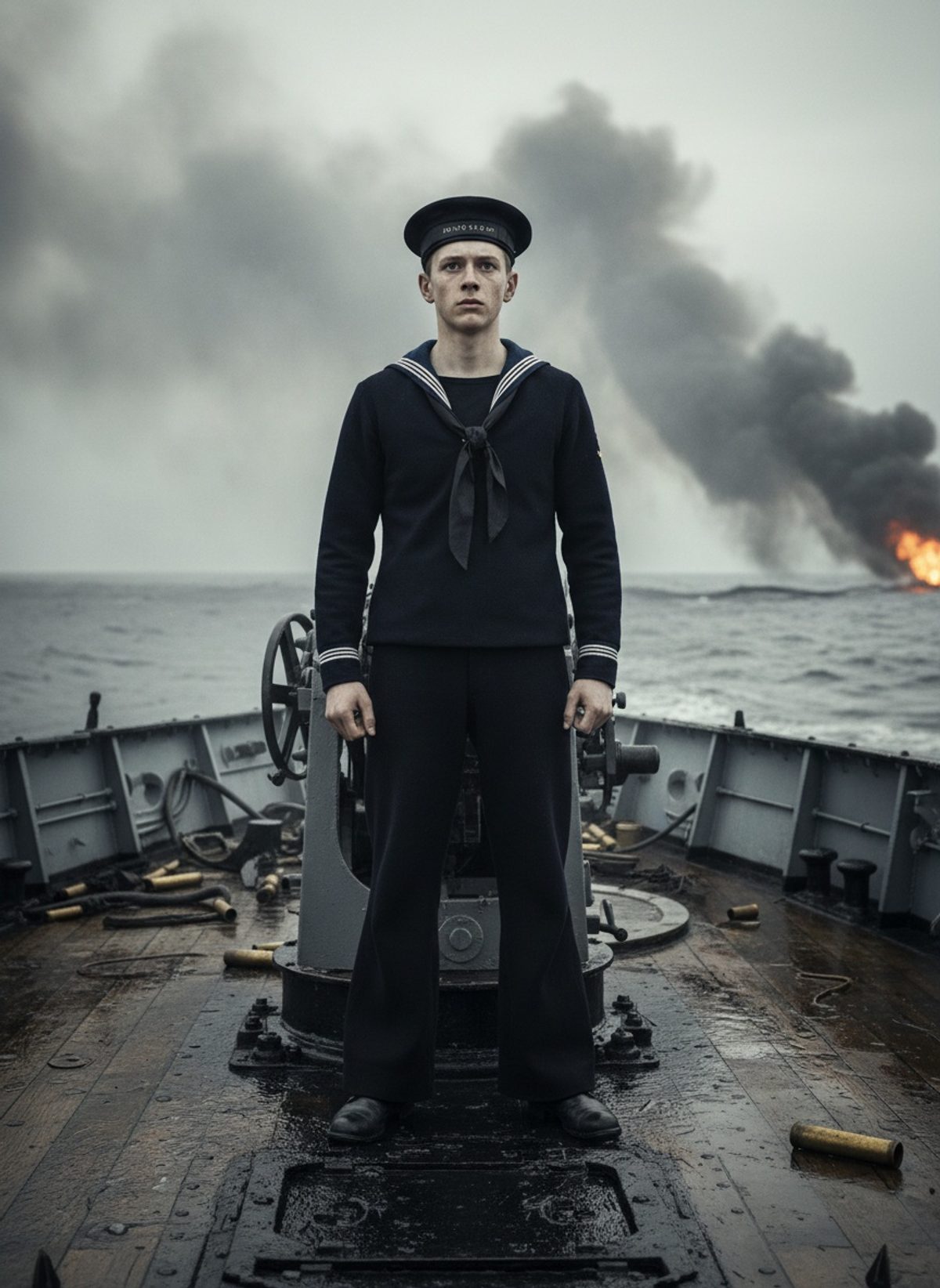
As the battle raged around them, with chaos splintering into moments of pure decision, Jack was situated at his post on the forward gun. The air rang with the cacophony of battle, the recoil of the ship’s guns adding a visceral thud to the sounds of death that fell like a grim hail. His training had barely concluded; Jack, the youngest member on the ship, was a mere Boy First Class. Yet, in the fiery crucible of combat, what mattered was not rank or age, but fortitude. The gun crew tasked to Jack’s position paid the ultimate price when the Chester came under concentrated fire during the engagement. The onslaught was merciless, and death lingered in the air like a specter, a grimiding observer of war's savage tally. Within minutes, the crew around Jack lay motionless, overcome by the brutal reality of naval warfare.
Amidst this setting of loss and despair, something extraordinary occurred. Jack, mortally wounded and in a situation few could fathom let alone bear, made a choice. Whether it was borne of discipline, courage, or a convergence of both, he remained at his station. Despite the chaos swallowing the world around him, Jack stayed standing with his hands firmly gripping the sighting tools. It was a tableau both heart-wrenching and inspiring, a picture of resolve painted in stark monochrome against a backdrop of dreadful conflagation. His training, his duty to the ship and his shipmates, embodied in his steadfastness amid the firestorm.
That isolated act, witnessed by none, spoke volumes of the indomitable spirit that defined countless individuals during times of armed conflict. When the dizzying dance of destruction ceased, and the beleaguered Chester limped away from the jaws of annihilation, Jack was discovered. It was a sight beyond tragic heroism, invoking a surge of emotions in those who came upon him. His efforts, his sacrifice, were seared into the consciousness of the surviving members of the Chester’s crew, many of whom lived because of the stalwart spirit of a boy who refused to run.
Jack Cornwell never lived to see peace's return or to hear the echoes of battles fought recede into history. His injuries, though unseen in the clamor of the fight, proved mortal. Three days later, he succumbed, leaving behind an ageless legacy written not in stone or paper, but in the hearts of those who comprehended his valor. The Admiralty, upon learning of his tenacity, heralded him as an exemplar of bravery, awarding him posthumously the Victoria Cross — the highest military decoration for valor "in the face of the enemy" to members of the British and Commonwealth forces.
Some narratives are woven not with words but with actions — Jack's decision to stand fast became a beacon, illuminating the indomitable human spirit. His story, transcending the immediate horror of battle, beckons introspection on values such as duty, sacrifice, and honor. Jack Cornwell’s brief stand at his gun, entwined into the larger tapestry of Jutland, windy with the whistles of history, remains a poignant tale echoing through time. While textbooks may omit his name or reduce it to a mere footnote, the story of Jack Cornwell reminds us that amidst the vast, uncaring sweep of history, the deeds of individuals can emerge, uncompromising, from the shadows—defining humanity in its darkest moments.