She was just one woman among hundreds trapped inside the British Residency in Lucknow. But Violet Cowper would soon stand in a way that even the most battle-hardened soldiers would find hard to forget.
The summer of 1857 bore a relentless sun over India, casting long shadows and hotter tempers across a land already simmering with discontent. The flames of revolt, now known as the Indian Mutiny, had spread rapidly after a spark ignited by a mix of cultural disdain and military restlessness. In the heart of this chaos, Lucknow's Residency became more than just a strategic holdout; it was a beacon of hope and defiance. Within its battered walls, a British garrison of around 600 soldiers, accompanied by a hodgepodge of civilians, clung fiercely to life as they faced an overwhelming besieging force of 8,000 rebels. Among the ranks of those trapped were ordinary people facing extraordinary circumstances, their courage exemplary in ways that would echo far beyond their 87-day ordeal.
In the midst of the siege, Violet Cowper emerged not from within the ranks of soldiers but from among the civilians. Her name might not have rung with the same resonance as the commanders or the renowned defenders whose tales were etched in reports and letters back to England. Despite this, Violet carved her place in history through sheer will and compassion. On the sweltering sands of the Ganges plains and surrounded by the din of cannon fire, her bravery manifested in ways that transcended standard narratives of heroism. She stood firm, like the monsoon rains yet to arrive, indicating hope amidst despair.
The walls of the Residency groaned under constant bombardment, the nights pierced by the whine of musket balls and the shriek of incoming shells. Anxiety pulsed through the corridors, creeping into the hearts of soldiers and civilians alike. Each day without help was a day deeper into the pit of uncertainty—and desperation. Amidst the chaos, Violet found purpose beyond mere survival. Women in the Residency had roles to play—nurturing, comforting, and healing. But when the final assault threatened the very sinew of their fragile sanctuary, these tasks took on unparalleled urgency.
Read next: When Walter Cowan Boarded an Enemy Destroyer at 68
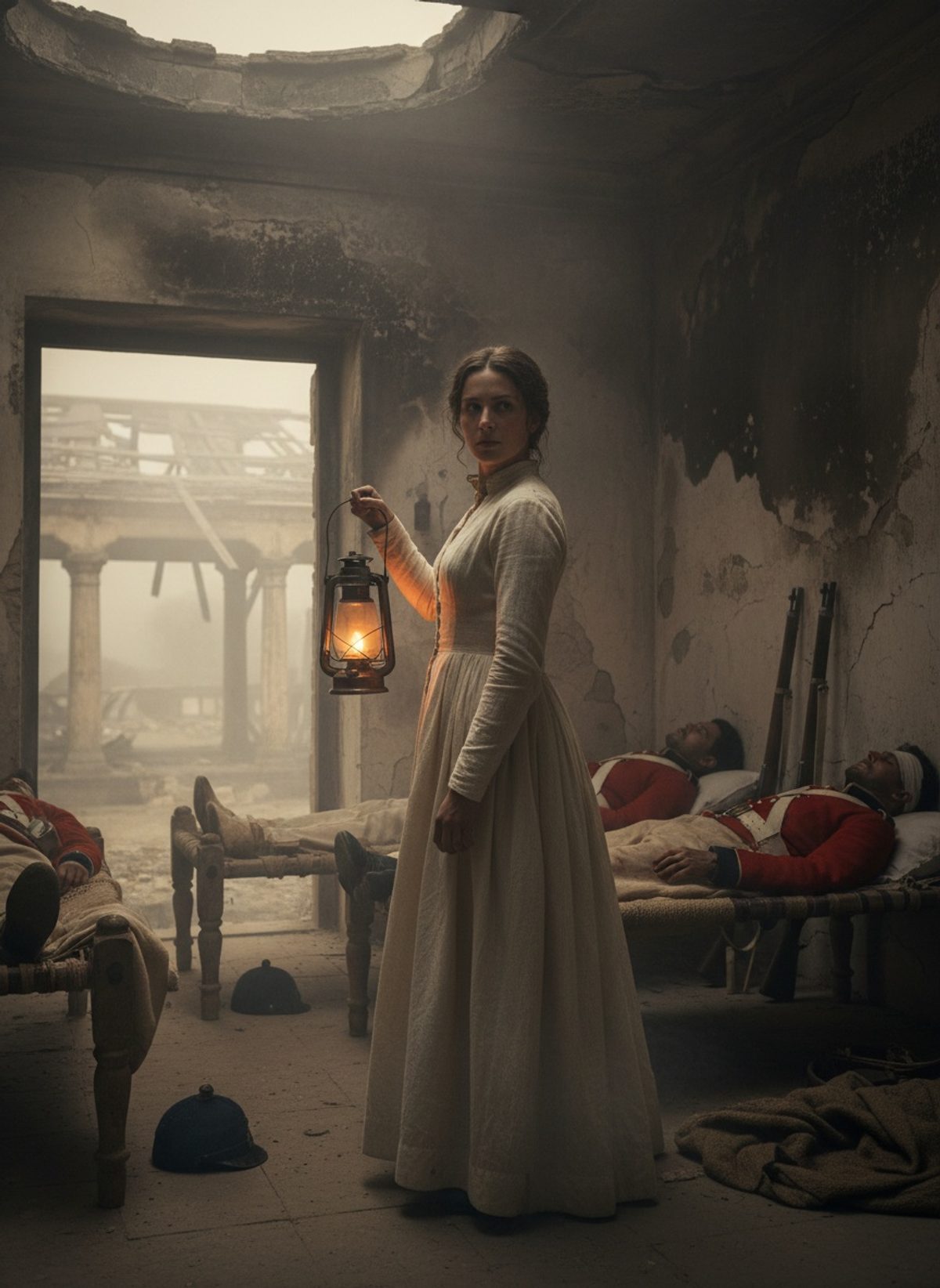
On that fateful day, Violet stood resolute, a bastion in the main doorway of the makeshift hospital. The air was thick with the acrid stench of gunpowder, the cries of the wounded, and the impatient murmurs of the advancing enemy. There, among the moaning and the wounded who lay lined against the walls, chaos unleashed its full fury. Yet, Violet was unyielding, moving not an inch from where she stood, as if determined to soak up all the despair and replace it with her own stubborn resolve.
Several defenders urged her to flee, to find safety within the labyrinth of stone passageways where some semblance of security might still exist. But Violet refused. Her eyes, filled with a profound empathy, scanned the room of the injured—the soldiers too weak to hold a rifle, a boy clutching a handkerchief where his arm used to be, a mother shielding her child. To abandon them was unthinkable. In that instant, Violet’s quiet resolve captured something far greater than herself. It was an act that reverberated through the surviving accounts and whispers of those days, a manifestation of unwavering devotion that resonated deeply amidst the shards of a beleaguered community.
The siege ended as such ordeals often do, with a fierce crescendo of violence and a bittersweet relief of incoming reinforcements. But the mythology of Lucknow’s stand had already begun to crystallize around moments like Violet’s. Her decision to hold her ground illuminated the powerlessness and power of humanity in battle, casting in sharp relief the duality of human nature and the shadows of imperial ambition. The Residency, battered but unconquered, stood testament not just to strategic prowess or military might but to the quiet strength found in those who refused to lay down under the most daunting odds.
In the shifting sands of colonial history, Violet Cowper’s story reminds us of the unsung and the overlooked—those who with their understated valor serve as anchors to our most tumultuous moments. Lucknow represents a confluence of cultures, a collision of ideologies thrust together in violent struggle, only to reveal moments of shared humanity within the dust of oppression and insurgency. Violet’s steadfastness at the doorway reflects a universal metaphor—a passage between duty and despair, choice and necessity. As history continues its inexorable march, we pause to consider those left behind in its textbooks, guarding little more than the truths we often choose to forget.