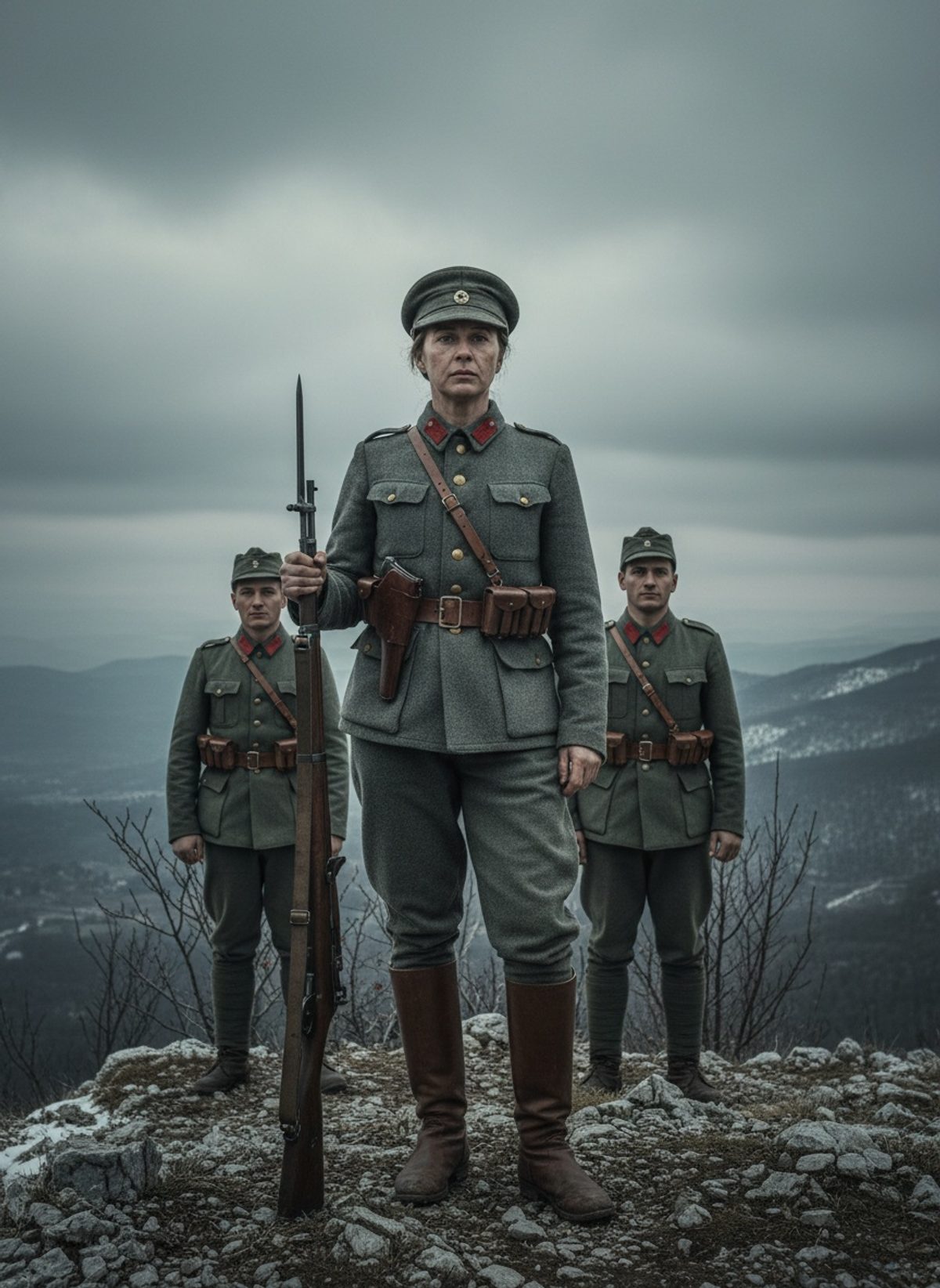
The crisp autumn air cut through the Balkan mountains as a brisk wind whispered through the barren trees. Snowflakes danced under a slate-gray sky, signaling the impending chill of winter. It was here, amidst the rugged terrain and the relentless cold, that a figure in a Serbian uniform emerged—Flora Sandes, clutching her rifle, prepared to lead yet another charge into the heart of battle. For the soldiers alongside her, she was not merely an ally; she embodied resilience and defiance. As the occasional far-off rumble of artillery echoed through the valley, Sandes' hardened gaze steadied, not wavering for a moment. In a war dominated by men, Flora Sandes proved that courage knows no gender.
From Suffolk to the Frontlines
In 1914, the clash of distant cannons signalled the beginning of the Great War—a conflict that would embroil nations far and wide in its devastating grasp. Among those caught up in the early wave of patriotism and duty was Flora Sandes, a woman whose tenacity and sense of adventure were no minor traits. Born in Suffolk, England, Sandes volunteered with the Red Cross, envisaging a future where she'd bandage wounds and bring comfort to the wounded. Yet, life had other plans.
What started as a journey of compassion quickly morphed into the path of a soldier. As Sandes found herself in Serbia, the call to arms resonated too ardently for her to ignore. When the opportunity arose to join the Serbian Army officially, she stepped forward, finding herself part of a force desperately fighting for its survival against overwhelming odds. Shedding the role of a nurse, Sandes embraced her new life as a soldier, her resolve hardening with every marched mile.
Forged in Battle
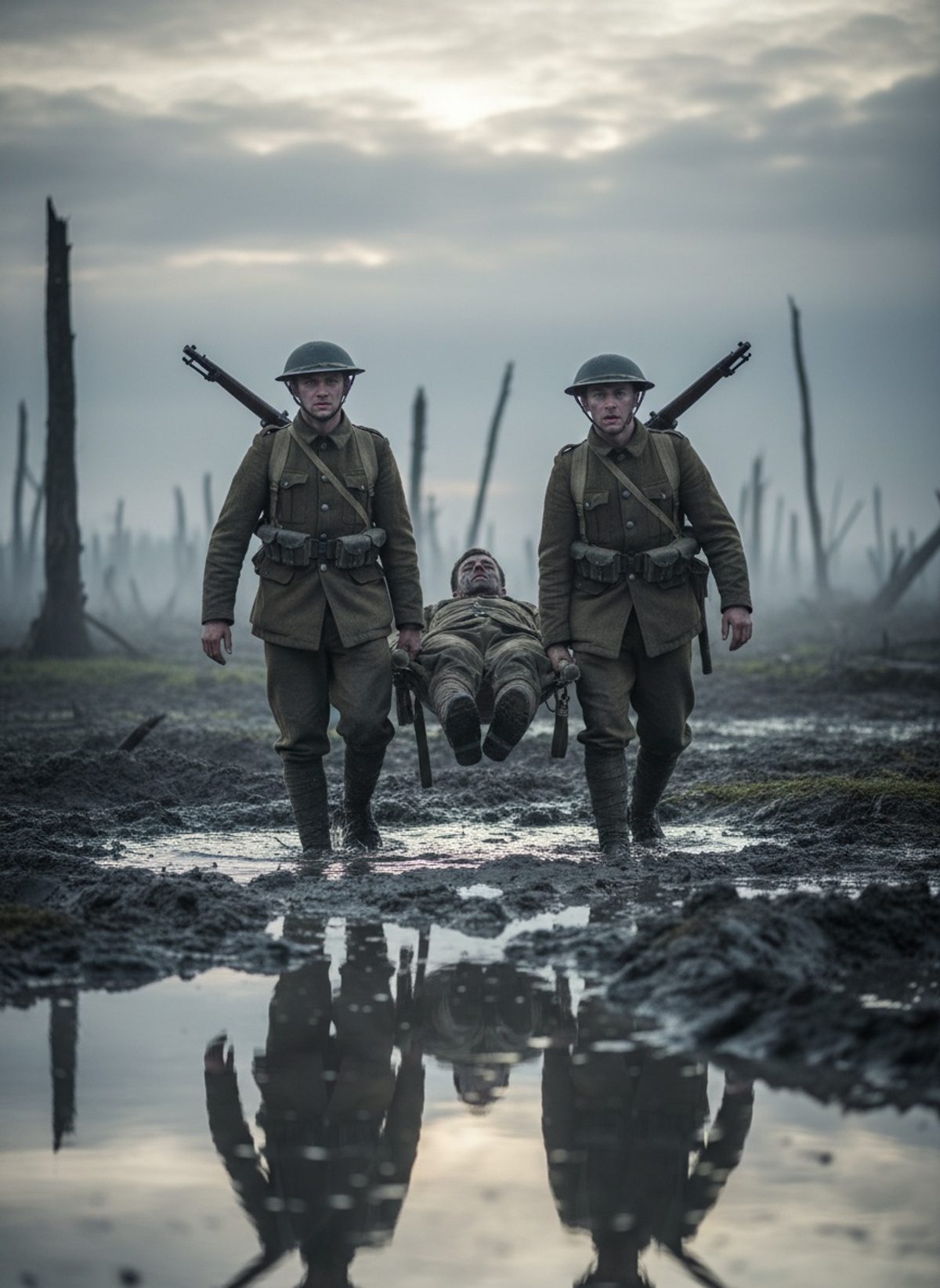
The transition from healer to warrior was neither simple nor smooth. Sandes was thrown into a world of mud, blood, and fire, where survival often hinged on the sharpness of one's instincts. But her determination was unshakeable. The trenches of Macedonia were a far cry from the English countryside, yet amidst the clamor and chaos, she adapted swiftly. Sandes demonstrated fierce prowess, learning to wield a rifle with precision and charging enemy lines with unyielding bravery, grenades in hand.
Read next: When Britain Forgot Where Its Soldiers Were, 1902
Her battlefield exploits became legendary. As a soldier, she was fearless—an outlier defying the norms of her time. Her fellow soldiers saw her not as an anomaly but as a comrade. Together, they faced the harsh elements and the brutal realities of warfare. Every strike led by Sandes was a testament to her indomitable spirit, her actions echoing loudly in an era that doubted the capabilities of women beyond the home front.
A Unique Comrade
Though she was the epitome of valor, Sandes' presence in the Serbian Army was more than just historical novelty. Her leadership earned her the official rank of a sergeant—an unprecedented position for a woman born in England, yet deeply respected in her adopted army. Here, rank was afforded not by gender but by capability and courage, by the sweat and sacrifice shared in the trenches.
Sandes' connection to her fellow soldiers transcended nationalities and gender. She was a beacon of strength, a guiding force in the heart of tumult. Her stories and laughter buoyed spirits during lulls in the fighting, forging deep bonds with her comrades-in-arms. In many ways, she was a living contradiction—both a fierce protector and a nurturing presence amid the grisliest of settings.
The Battle Continues
As the war raged on, Sandes' resolve never waned. She became a symbol not just of defiance but of the potential for transformation in times of upheaval. Every skirmish, every rallying cry, led her closer to rewriting the narrative assigned to women of her era. The war did not discriminate between its victims, and so neither did Sandes when it came to her role in it.
With the war drawing to a close, Sandes' indelible mark on history was undeniable. She emerged from the dust and debris not just a survivor but a warrior who altered perceptions merely by being who she was—a woman with a rifle, a soldier with purpose. The fabric of battlefields was irrevocably altered by her presence, etching memories of her courage into the minds of all who served alongside her.
An Enduring Legacy
Flora Sandes' journey from the comfort of English pastures to the heart of Macedonian battlefields raises questions and provokes profound reflection. In a world grappling with newly defined roles, she challenged the entrenched norms, driven by her own moral compass and unyielding spirit. Her story resonates as a powerful account of resilience, a tale of transformation amidst the chaos of war, compelling us to re-evaluate preconceptions and appreciate the unquantifiable strength found in those who defy expectations.
Sandes’ life serves as a powerful reminder that history is often shaped by those on its margins, individuals who dare to step beyond convention and stand firm in their convictions. Her story remains not just a footnote in the chronicles of World War I but a beacon for those who follow, inspiring generations to question limitations and forge their own destinies against the tide of antiquated beliefs. In the shadow of the Balkan mountains, amid whispers of the past, Sandes' legacy endures—an untold legend turned timeless truth.