He was not a dashing hero of fiction nor a figure from the Arabian Nights. He was a British officer, an explorer, and at the age of thirty-two, Richard Burton did what other European men only dared to whisper about—he entered Mecca in 1853 and lived to tell the tale.
The Victorian era was a time of empire, exploration, and perhaps more than a little intrigue. At its heart was a fascination with the mysterious, the exotic, and the unknown. Nowhere was this more evident than in the long-held ambition of certain European explorers to step foot in Mecca, Islam's holiest city, forbidden to non-Muslims. To breach its sanctity was to risk death, a deterrent that had effectively kept out successive generations of inquiring foreign minds. Yet Richard Burton, known later not only as an intrepid explorer but also a master linguist, decided to challenge fate and walk the pilgrim’s path to the sacred Kaaba.
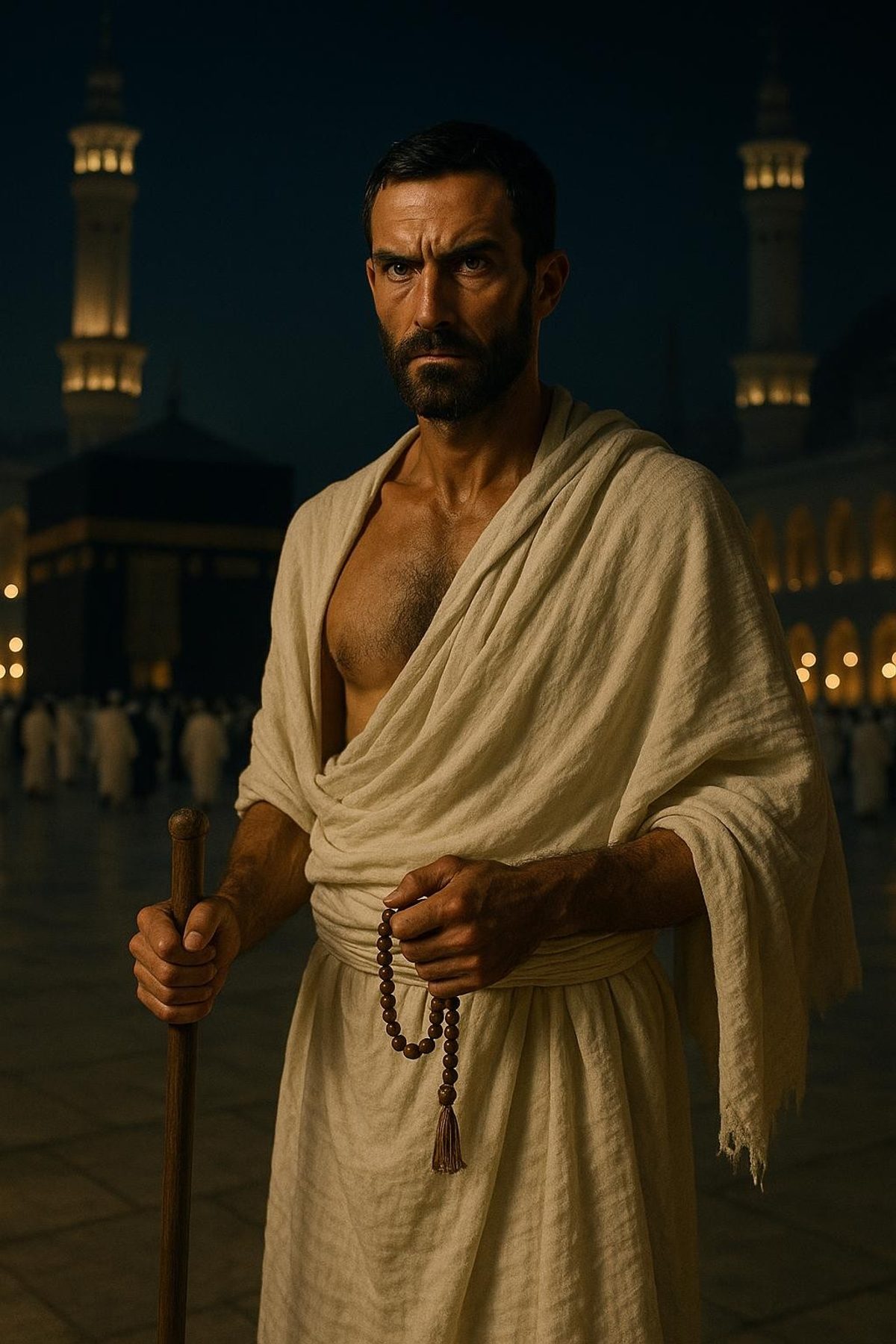
Burton's mission began in the dusty chaos and vibrancy of Cairo, where he immersed himself in the character of an Afghan pilgrim under the name Mirza Abdullah. He donned a heavy beard, wrapped himself in the austere, hooded chador, and took meticulous care to perfect every detail of his disguise. Burton's linguistic mastery was key—he did not just speak Arabic; he lived it, infused it into his existence until it was as natural as the air he breathed. He had already studied Arabic in detail, alongside Persian and various Indian dialects, a testament to his insatiable curiosity and unrelenting dedication.
Under the blazing Egyptian sun, Burton encountered the first real test of his disguise. Gathered alongside genuine pilgrims on the Haj route, every interaction was a potential test of his authenticity. Concealed in plain sight, he took mental notes while never faltering in his persona, aware that any suspicion towards his artifice would spell disaster. Yet Burton's ability to observe and absorb his surroundings during these perilous moments constituted one of his greatest strengths. His memory became a living journal, storing observations in the quiet places of his mind until they could be recorded confidentially during the stillness of night.
Read next: When Stamford Raffles Walked Into a Dying City, 1819
As he journeyed through the arid vastness, the landscape slowly transformed into one of the most revered spiritual journeys. Approaching Mecca, it was not just the geographical distance but the incredible gulf of understanding between East and West that he crossed. Finally, on a momentous day in September 1853, Burton looked upon the revered Kaaba. The sanctity and solemnity of the scene before him were almost mystic, draped in the history and the spirituality of countless pilgrims who had preceded him. He reached out and touched the Black Stone, completing a symbolic convergence of worlds.
Throughout his time within the city, Burton's steely nerves and unfaltering commitment to his guise were tested. His uncanny ability to blend into his environment went beyond mere mimicry. He lived as a pilgrim, meticulously yet daringly gathering intelligence on the cities of Mecca and Medina, their rituals, and their culture. These experiences laid the foundation for his extraordinary work, "A Personal Narrative of a Pilgrimage to Al-Madinah & Meccah," published years later to enrapture and captivate Victorian readers with the promise of a world entirely different from their own.
The significance of Burton's sojourn went beyond the mere bravado of his daring act. The detail and accuracy of his account challenged Western preconceptions of the Islamic world, igniting both fascination and a new wave of appreciation for its complexities. The publication of his work offered insights into Islamic rituals and traditions, creating an unprecedented bridge between disparate cultures. Yet, the journey also mirrored Burton's lifelong quest for knowledge and understanding in a world that, at that time, thrived on partial truths and legends.
It is a testament to the powerful curiosity and resourcefulness of Richard Burton that his extraordinary venture remains not merely an anecdote of audacity but an emblem of the transformative power of exploration. He defied the limiting expectations placed upon him, illuminating paths unknown and fostering dialogues that might have otherwise remained silent. Burton's journey into Mecca transcended the act of physical exploration; it was, at its core, an exploration of human potential and the universal quest for understanding.