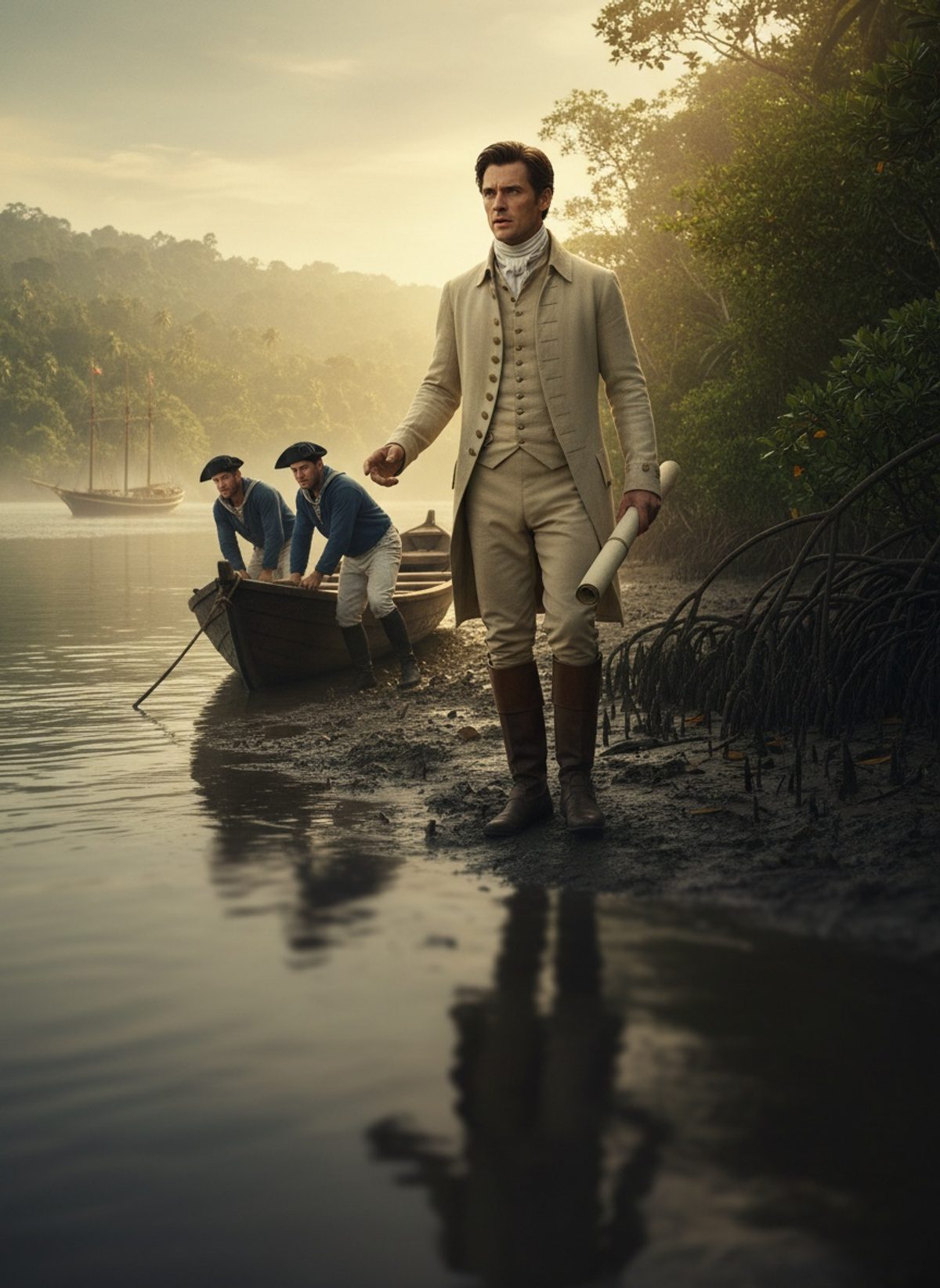
January 29, 1819. A relentless drizzle clung to the air, dampening both spirit and soil.
The Unexpected Arrival
The boat cut through the waters, almost ghost-like in its approach, giving no hint of the dramatic changes it heralded. At the prow stood Stamford Raffles, a junior official of the East India Company, determined to transform this swampy wilderness into a hub of trade and culture. Born in 1781 aboard a ship bound for the West Indies, Raffles was no stranger to the influence of the sea. By the time he set foot on the malarial island at the southern tip of the Malay Peninsula, he carried with him a vision—a future that few could yet imagine.
Singapore, as it was known only to the most intrepid traders and adventurers, lay shrouded in obscurity. Once a vibrant part of the Srivijaya empire centuries prior, by the time Raffles arrived, it was little more than a fishing village, its glory faded and its strategic significance overlooked. And yet, as Raffles stepped ashore that gray January morning, he saw beyond the lilies and lagoons. The island may have been unassuming to the untrained eye, but Raffles discerned its potential as a vital fulcrum, a meeting point on the global maps of commerce.
With a few deft negotiations, a treaty was signed on February 6, 1819, with the local chieftain, Sultan Hussein Shah, and his regent, Temenggong Abdul Rahman. The agreement was simple yet profound: the British would have the rights to establish a trading post on the island, providing protection and revenue in return. It was a bold stroke at a time when the Dutch East Indies Company maintained a stronghold throughout the region. Reckless and audacious in equal measure, Raffles’ gamble would soon prove to be an undying stroke of foresight.
Read next: When George Taubman Goldie Outbid France for the Niger, 1884
The Seeds of Transformation
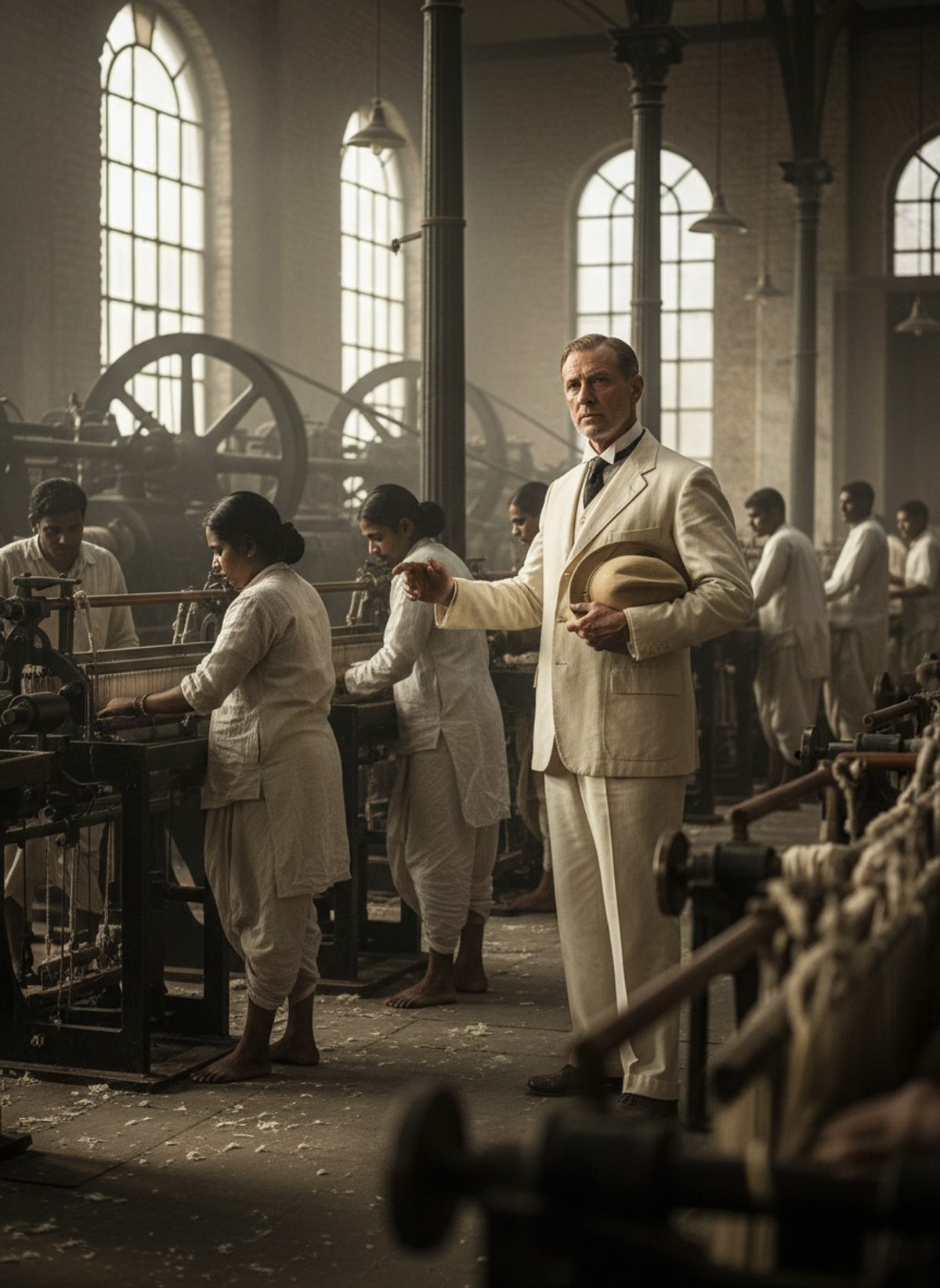
It was not merely commerce that concerned Raffles. His vision extended far beyond ledger books and cargo manifests. He believed that Singapore could become a melting pot of cultures, a thriving cosmopolis where the East met the West harmoniously. He laid out plans for free trade, establishing Singapore as a free port, eliminating the stifling monopolies that choked innovation and exchange elsewhere.
The response to his open-armed approach was immediate. Traders from China, India, Arabia, and even Europe flocked to the new settlement. Within the first three years, the port saw exponential growth, with trading ships swarming its bustling docks. The numbers told a story of their own: over 400 ships and $22 million worth of trade in those early years. For a settlement that hardly existed a blink ago, these figures were no less than extraordinary.
Raffles, however, was not just a man of business. He insisted on social reforms, placing education and justice at the heart of his burgeoning metropolis. He initiated the building of schools, emphasized the importance of knowledge, and worked tirelessly to lay down a system of laws that would ensure fairness and equity for all residents. Through tireless documentation and well-reasoned arguments, Raffles meticulously pushed back against the adversities that threatened his ideal. His commitment to the egalitarian realm he imagined only deepened as opposition from rival powers increased.
Raffles' fervor for botany also influenced his beloved island. Attempting to replicate the success of the British colonies in India, he explored plantations and horticulture that could utilize Singapore's rich tropical climate. His contributions in this sphere were renowned, and his name became synonymous with scientific inquiry in the natural world, a juxtaposition of the practical and the ephemeral.
The Making of a Metropolis
By the mid-1820s, the changes wrought upon Singapore were undeniable. Raffles had risked not only professional but personal stakes to see his plan bear fruit. Yet, it came with a price. Disagreements with his contemporaries, disputes over governance, and the omnipresent threat of the Dutch reared their heads with increasing regularity. Nevertheless, in describing the island, Raffles remained undeterred: "The child of my own genius," he proudly claimed.
Though Raffles left Singapore in 1824, the foundations he laid endured through tumult and trend. Building after building, civil work after civil work, took root and flourished on the principles he espoused. Whether it was the vast multitudes of goods tracked across oceans or the rich cultural drawings seen in its people, Singapore had metamorphosed into a testament to ambition.
The legacy Raffles charted in an age where imperial ambitions often masked exploitation was atypical. His endeavor was not solely about what could be taken, but about establishing a project of endurance. Today, Singapore stands as one of the most significant trading hubs globally, an enduring testament that nods quietly to its unassuming beginnings.
When reflecting on those pivotal early decisions made amid the backdrop of colonial expansion, the greatest lesson lies not in the empires that came and went, but in the vision of individuals who saw what others overlooked. To what degree was Raffles’ success a question of fortune as opposed to foresight? That conundrum remains, but regardless, when Stamford Raffles walked into that fever-choked swamp in 1819, he closed the door on somnolence, awakening a realm that now holds key strings in the interconnected world we inhabit today.