He did not carry a weapon or wear a uniform. Yet, without him, the British Empire's military machine could never present its fearsome veneer of discipline and precision. The quiet labor of the dhobi wallah, armed with little more than soap and stones, was pivotal to the British regiments stationed throughout India.
In the bustling expanse of 1885 Meerut Cantonment, the dhobi wallahs started their day well before dawn, shrouded by the soft, dim glow of the remaining night stars. Their presence was as predictable as the bugle call, a silent nod to a rhythm older than the empire itself. While the soldiers polished their boots and brass buttons, it was the dhobi wallah who ensured the marred marks of yesterday's toil disappeared from their uniforms. Every regiment relied on these unsung washermen to transform a pile of sweat-laden clothes into crisply starched and spotless garments—a transformation critical to the highly visual performance of military might.
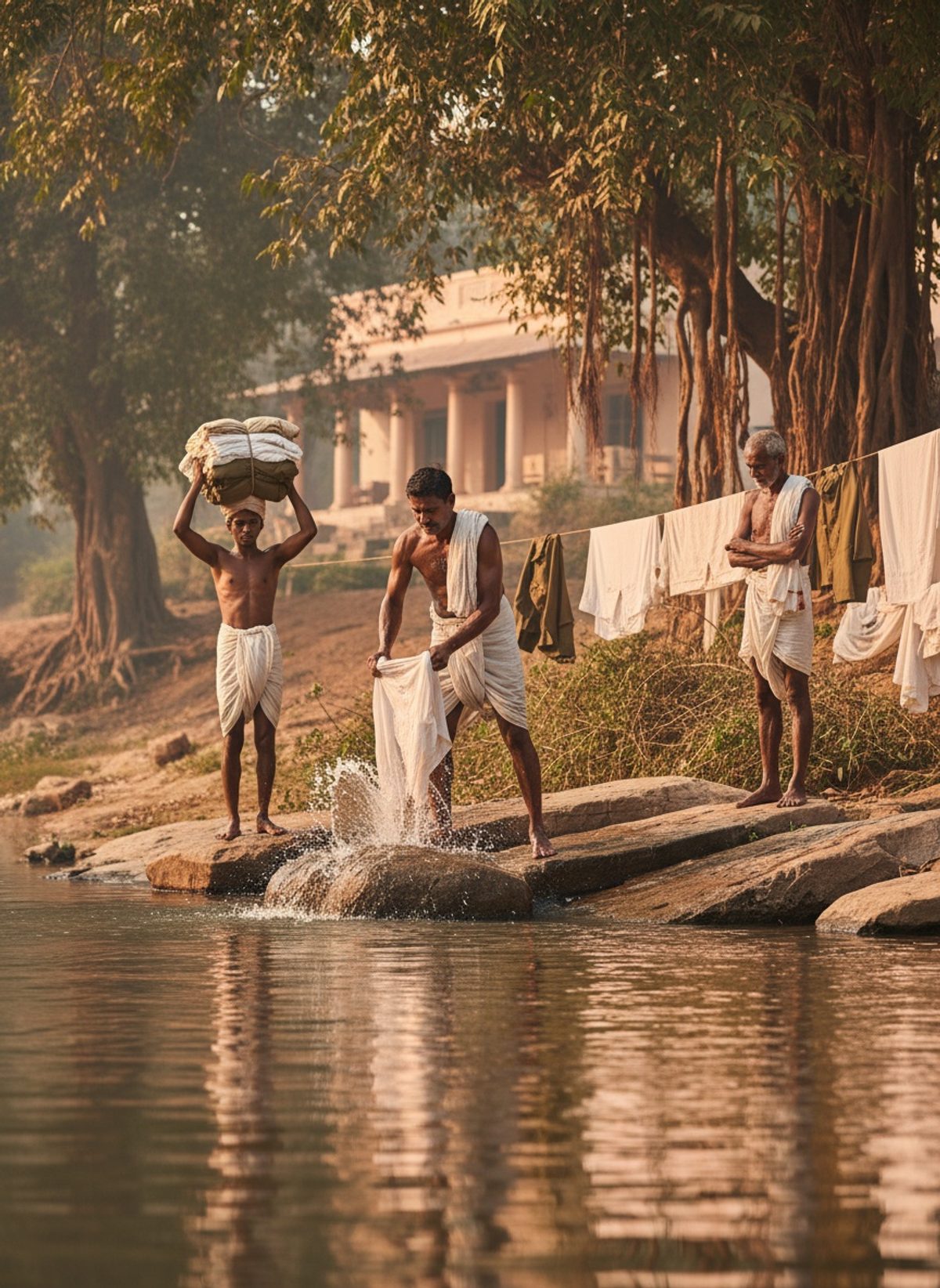
The process was laborious and intricate. With expert hands, the dhobi wallah would bundle the garments and expertly separate them. Armed with natural dyes and enduring techniques passed down through generations, he would set to work at the banks of rivers or local water bodies. Using flat stones as his workbench, he rhythmically beat the shirts and trousers against the rocks, a soothing, repetitive sound that added a unique tenor to the early morning air.
Water, soap, and human strength played their part, but the dhobi wallah’s true skill lay in knowing how to handle the myriad fabrics and dyes used in British uniforms. Each garment demanded individual attention, varying soap mixtures, or different strokes based on its fabric type and the stains it bore. The final reveal was nothing short of a ceremony—a fresh start for each garment, neatly folded and delivered, ready by the time the soldiers lined up for the parade ground inspection.
Read next: When the Army's Own Doctor Declared War on Its Vices, 1897
What could not be found in the pages of official military rosters was the level of trust that existed between the regiments and their dhobi wallahs. Invisible yet indispensable, these men were gatekeepers of their own kind of battlefield—the one between respectability and disarray. The impeccable uniforms polished with the dhobi wallah's diligence were just as vital as the rifled helmets that shimmered under India's relentless sun. Hierarchies and respect in the ranks rested, somewhat surprisingly, on the crisp creases of a starched shirt.
It is easy to wonder what would happen if their quiet service had been absent. The dusty terrains of Victorian India would indeed be accentuated by chaos. The stir caused by torn and rumpled uniforms would ripple through the ranks, diluting the psychological could have further reaching impacts upon the morale, both visible and formidable.
But their role transcended the aesthetics of military uniformity. The dhobi wallahs embodied an exchange of culture and pragmatism during the high noon of the British Raj. It is intriguing to consider that through the simple act of performing their daily tasks, they subtly influenced the patterns of British life in India, introducing elements of local practice that might otherwise remain unseen.
The dhobi wallahs, without invitation to ceremonial dinners or acknowledgment in dispatches, carved a place for themselves within the larger canvas of empire not by demanding it but through sheer diligence. However, for all their service, theirs was a position of precarious dependence. In many instances, they operated under a semi-feudal system, inheriting their roles and responsibilities through family lines. And yet, each one commanded a mastery over his task that belied the invisibility of his role.
When one reflects on the great tapestry of the British Empire in India, it is tempting to focus solely on the gilded centers of power, the victors and their champions. But in the shadow of each exalted figure were the dhobi wallahs, laboring tirelessly at the rivers’ edge, their sleeves rolled inside out against the current of daily adversity. Their story, available in scattered whispers, was about the indispensable nature of what could be perceived as mundane—a reminder that even the most powerful armies cannot march without those who ensure their dignity's upkeep.
In their humble way, the dhobi wallahs remind us of a timeless truth: that behind the formidable facade of any empire lay the patience and persistence of everyday life. Every crisply folded shirt is a testament to unseen efforts and unsung contributions. It is the collective strength of these overlooked hands that ultimately paints the true story of empires past, echoing softly across time as a subtle merging of cultural establishments and historical necessities. How different might have been the tale of British India had these humble washers of clothes not shouldered their indispensable burden?