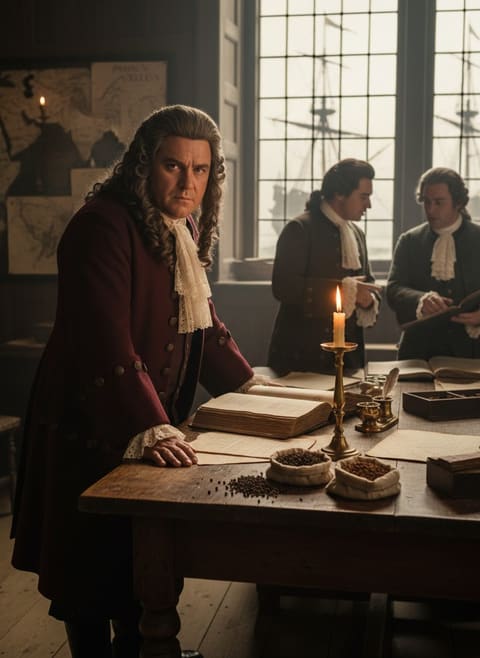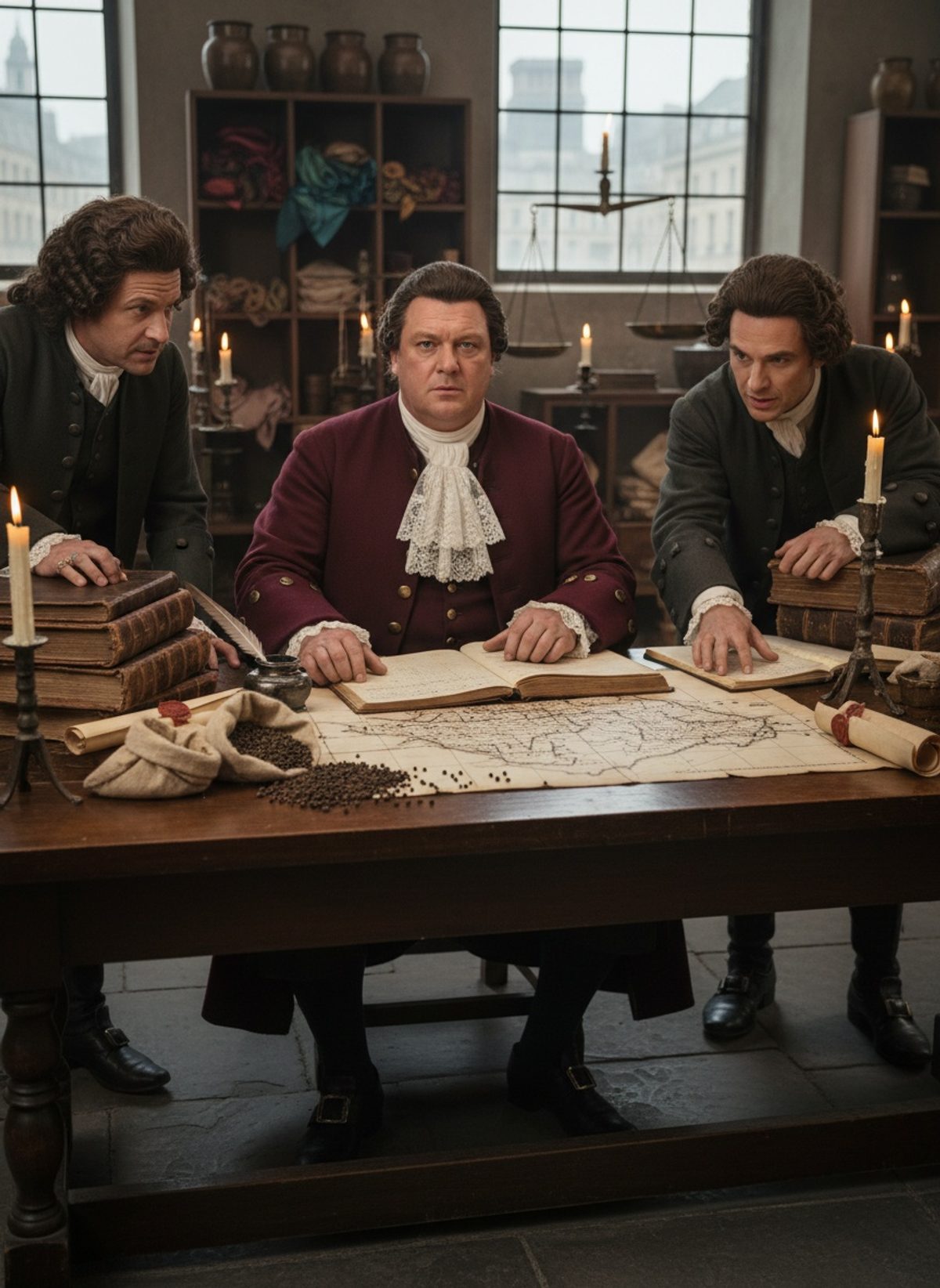
The streets of London in 1672 buzzed with the vibrant energy of progress. The early morning air was tinged with the musty fragrance of the nearby Thames, as wagons trundled over cobblestones, and merchants, cloaked against the persistent drizzle, jostled through the labyrinthine alleys of the city. Yet, amid the bustle, an unseen drama unfolded that held the fate of an empire in its grasp. Behind closed doors, surrounded by polished wood and flickering lamplight, a single man contemplated a map, its routes charting the riches of the East. Josiah Child, with his relentless ambition and calculated vision, was poised to redefine the trade that sustained nations.
The Merchant's Gambit
At the heart of this tale lay the East India Company, a symbol of England’s maritime ambitions, and a beacon of commerce that held sway over the spice routes of the world. By 1672, the company's power was unmistakable, but its destiny was about to be irrevocably altered. Josiah Child, an astute and opportunistic merchant whose foresight defied the conservative traditions of his peers, had his sights set on controlling not just the ships or the cargoes, but the very pulse of trade itself.
Child's rise to power was a masterpiece of strategic cunning. In a world where royal charters dictated the fortunes of men, Child understood that influence was forged not at the point of a sword, but through the language of commerce. Purchasing a formidable share of the Company’s stock, he systematically built a network of influence, navigating the intricacies of boardroom politics and alliances with the tenacity of a seasoned diplomat.
His most audacious move came when he orchestrated a revision of the East India Company's charter. The changes were subtle yet profound, allowing him to wield unprecedented power over the company’s operations. With this new dominion, Child could manipulate the very prices of essential commodities like pepper, spices, and silk. It was a coup executed not on battlefields, but in the hushed confines of accounting ledgers and shareholder meetings. The spice routes, once the arena of explorers and sailors, were now his domain.
Read next: When Josiah Wedgwood Undersold Every China Merchant in Europe
Reckoning with Riches
London, under Child’s influence, found itself at the epicenter of a new world order. The docks became stages for commerce that dazzled the public imagination; exotic goods arrived in a cascade of colors and scents, altering English lifestyles and diets forever. Pepper was no longer merely a seasoning; it became a symbol of affluence, as fine as the silks that slipped through the hands of London’s elite.
Yet, with great wealth came inevitable tensions. English society was a tapestry of guilds and mercantile traditions, many of which bristled under the weight of Child's unilateral control. Whispers of discontent spread through the taverns and coffeehouses where merchants gathered, their camaraderie tainted by unease at a market bent to the will of one man.
Child's innovations were not confined to the cupidity of commerce. His land reforms in Bedfordshire, where he owned vast estates, mirrored his commercial philosophy—efficiency and profit over tradition. In his vision, the world was a ledger, with human endeavors measured in terms of yield and return. While resented by some, many admired his acumen as evidence of England’s cultural acumen and economic prowess. Under his aegis, the East India Company became not only a purveyor of goods but a hallmark of English supremacy on the global stage.
Read next: When Josiah Harlan Bluffed a Kingdom in Britain's Shadow, 1838
The Price of Ambition
Despite indelible opposition and whispered threats, Josiah Child carved out a legacy that continues to echo through history. The ripples of his actions reached far into the future, presaging the complexities of globalization and corporate influence in society. His tenure marked not just an economic transformation, but an ideological one, where the accumulation of capital began to eclipse traditional measures of power.
But power, much like the spice he so loved to trade, was a double-edged sword. The same ambition that brought Child wealth and admiration also sowed seeds of jealousy and rivalry. Competitors and compatriots alike watched carefully, keen to exploit any weakness in his meticulously crafted empire. Nonetheless, for a time, Child stood unchallenged, a titan of trade who saw the world in lines and ledgers, redefining the concept of what it meant to wield influence.
The story of Josiah Child is not merely a saga of wealth and power but a cautionary tale, echoing the timeless struggle between innovation and ethics, ambition and restraint. It is a legend that reminds us that while the spice routes may have been auctioned off, the true cost of such ambition was reflected in more than just pounds sterling. In this light, Child’s tale becomes emblematic of the intersection between commerce and the human condition—testament to how, in rewriting the rules, one man reshaped the world.