June 1381. The morning sun cast long shadows across Smithfield, illuminating the throng of faces etched with anticipation and defiance.
The Blacksmith's Son
As the flickers of dawn stained the horizon on that fateful day, a figure emerged from the crowd — Wat Tyler, the blacksmith's son turned fearless leader, positioned himself at the heart of an electrifying moment. He was not merely a man, but the voice of countless others, those who had been wronged, dismissed, and overlooked. Drawn by his courage and vision, tens of thousands of peasants stood with him, their hearts beating in unison for change in 14th century England. This moment had been building, simmering beneath the surface of oppressive class structures and crippling taxes.
The origins of this rebellion lay years earlier, amidst the murmurings of discontent spurred by unfair taxes, particularly the notorious Poll Tax imposed on everyone regardless of wealth. The rural poor, until now largely passive, found their champion in Tyler. His charisma and resolve provided a rallying point for the oppressed. The journey to London was not a mere physical trek, but a pilgrimage aiming to dismantle centuries of unjust hierarchy. Fire and fury marked their path as manor houses were set ablaze, and the wealth of the elite was seized not for greed, but for justice.
In a world where a commoner's voice was but a whisper, this was a cacophony resounding through the heart of England, a clamor for change echoing into the very throne room of King Richard II. Among the steel-tipped pikes and the fluttering banners of rebellion, Tyler stood at the vanguard, the embodiment of peasant’s hope, as they awaited what could either be negotiation or a bloody confrontation.
Read next: When Bhagat Singh Walked to the Gallows Singing, 1931
The Meeting
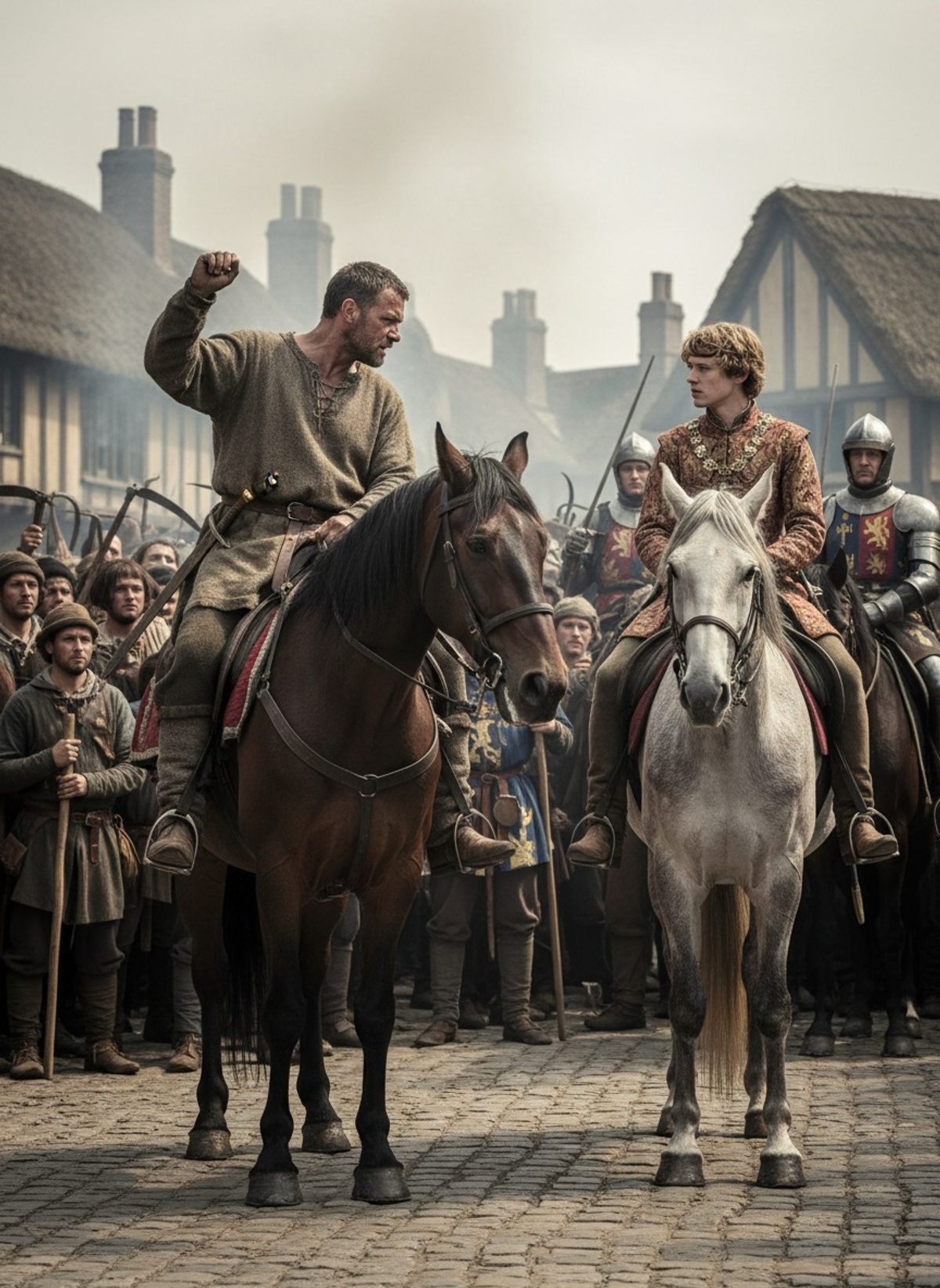
As Tyler approached young King Richard II, the contrast was stark and symbolic — the king, a boy of fourteen, with the weight of the crown heavy on his head, facing an audacious blacksmith who commanded the loyalties of sixty thousand men. The two met at Smithfield, a place known more for the clamor of livestock than for kings and rebels, yet now it was a stage upon which the future of England teetered.
Tyler spoke with the force of a man who knew his time was fleeting but that his voice could echo through eternity. His demands were direct, searing through the morning's haze with clarity: an end to serfdom, the right to free trade, and the abolition of the oppressive taxes that had driven the masses to this brink. He stood not only for himself but for the countless farmers, weavers, and blacksmiths who remained unseen yet undeterred beneath the gaze of the crown.
The tension was tangible, a living thing weaving through the crowd of onlookers and actors in this unfolding drama. Then, in a moment charged with betrayal and sudden violence, a lord’s sword found its mark, striking Tyler down before the assembled multitude. The instinct of chaos twitched at the edges of the gathering, a collective gasp reverberating like a cracking whip through the air. For a heartbeat, it seemed the fragile promise of negotiation might descend into the maelstrom of violence once more.
Yet, in the wake of this treacherous act, the boy king did the unexpected. Alone, Richard rode forward into the tempest of emotion, a singular figure against an ocean of unrest. It was a calculated gamble, a boy forced by circumstance into premature kingship, now facing the maelstruous specter of revolution.
The Final Stand
Amidst this unexpected lull, the king addressed the leaderless throng. "You shall have no captain but me," Richard declared, in what was both a declaration of authority and an unanticipated gesture of reconciliation. His voice, carrying both the authority of kingship and the vulnerability of adolescence, sought to bridge the chasm left by Tyler’s fall. With these words, King Richard II turned once more to a kingdom divided by class and cloaked in discontent.
The crowd, left in shock by Tyler's demise, heard these words diffusing the rage almost miraculously. King's promises now hung like a delicate thread of hope during a time when promises were often as insubstantial as the breath used to utter them. They agreed to disperse, trusting perhaps reluctantly, that compensation would follow this historic meeting.
The rebellion's immediate flames were extinguished, yet the embers were never fully quenched. Fall of Tyler stirred a collective consciousness that would smolder through the centuries, a testament to the undeniable power harbored within the oppressed. The Peasants' Revolt, though brutally quashed, rippled through English society, forcing the elite to sit up and listen where they might have otherwise dismissed the cries of their subjects. This was not merely the end of a rebellion, but the inception of a dialogue that, albeit slow to evolve, began reshaping the narrative of power and governance.
In the annals of England's story, the confrontation at Smithfield stands out, not least for the extraordinary courage of a blacksmith's son. His ideals persisted beyond the confines of that blood-stained square, whispering promises of a future where equality was not an audacious demand but a fundamental right. Wat Tyler may have fallen that June day, but he stood eternal in the fight for a fairer society. The echoes of his defiance continue to weft the fabric of public consciousness, urging us to remember that even the smallest voices can roar, when unified by purpose and justice.