He was twenty-three years old. Bhagat Singh was known not as a reckless bomb-thrower but as a scholar of revolutionary writings. In those last years of British rule in India, Singh emerged not from the lineages of royalty or wealth but from the heart of the Punjab region, where stories of resistance simmered beneath the loom of colonial authority. Despite his young age, Singh's name became synonymous with defiance against British colonialism, an emblem of youthful audacity that electrified a subcontinent yearning for independence.
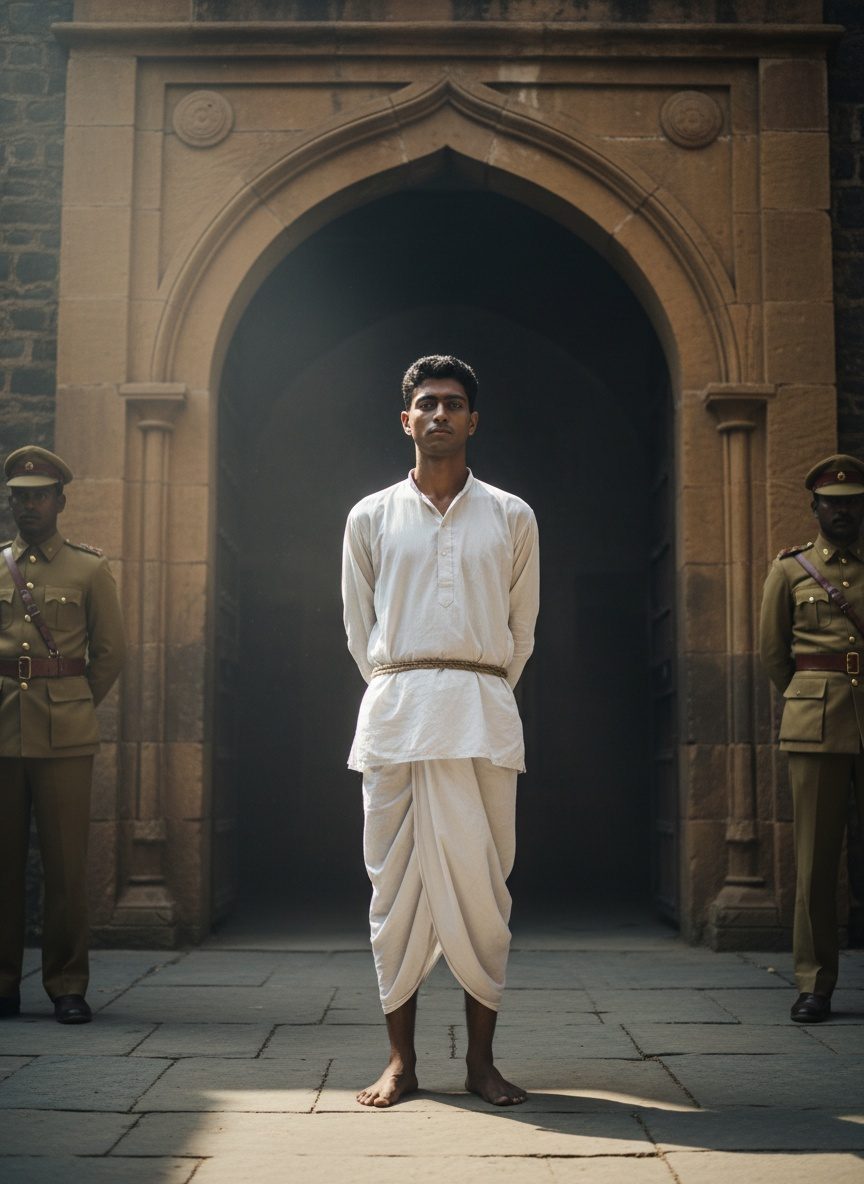
By the time he walked to the gallows on March 23, 1931, Bhagat Singh had become a legend. His decision to go to his execution without a blindfold was emblematic of his clear-eyed commitment to his cause. As he approached his death, he was not silent. He walked bravely, humming a song of revolution, a final act of defiance against his oppressors. This was not an action of despair but an audacious statement: his spirit, his convictions, could not be hanged.
The journey to that moment was a path of understanding and action shaped by conviction rather than rage. Bhagat Singh was influenced greatly by the political upheaval following the Jallianwala Bagh massacre of 1919, where hundreds of unarmed Indians were killed by British troops. It was a pivotal moment that sowed seeds of resentment and the desire for radical change among many Indians, particularly the youth. For Singh, this was not just an injustice but a clarion call to study the tactics of revolutionaries from around the globe. He immersed himself in the works of Marx, Lenin, and other thinkers who challenged oppressive regimes.
It was this ideological grounding that led Singh to orchestrate the bombing of the Central Legislative Assembly in Delhi in 1929. The bombs he and Batukeshwar Dutt threw were not intended to kill but to make noise — noise that would echo beyond the walls of the Assembly to gather attention and provoke debate on India's future. Following the act, instead of fleeing, Singh willingly courted arrest. This was revolutionary theatre meant to inspire and galvanize the masses, urging them to awaken from submission to resistance.
Read next: When Wat Tyler Faced the King in Smithfield, 1381
While imprisoned in Lahore, Singh and his compatriots turned their trial into a stage for their cause. For Singh, the trial was yet another battleground. He used the courtroom as his platform to spread his message, focusing on the injustice of British rule over India. His arguments were marked by cogent reasoning and an unwavering belief in the righteousness of the struggle for independence. Despite mounting pressure and opportunities to plead for clemency or stage an escape, Singh remained resolute. His unyielding spirit became a rallying cry outside the prison walls, as millions in India and beyond called for his release.
Conversations about Bhagat Singh often overlook the intellectual depth and internationalism of his outlook. He communicated in Urdu, Hindi, Gurmukhi, and English with equal eloquence and fervor, penning letters, manifestos, and passionate notes from his cell. In "Why I am an Atheist," one of his most profound essays, Singh laid bare his rejection of divine intervention, placing the fate of nations squarely on human action and reason. His writings were peppered with reflections on economic inequalities and critiques of capitalist structures, advocating for an independent India founded on principles of justice, equality, and freedom — ideals that often transcended the traditional narratives of nationalist struggle.
Read next: When Disguise Carried a Fugitive Through Empire's Heart, 1876
As the reality of his execution loomed, Singh’s demeanor remained unfaltering. Witnesses to his final moments described a man void of fear or hesitation, buoyed by the strength of his convictions. He stepped toward the gallows with the same resolve he had embraced the revolutionary path, each step a melody against colonial tyranny. That his execution was scheduled a day before approval for an appeal could be lodged speaks volumes of the threat his ideas posed to British rule. Yet, even this rushed judgment could not silence the reverberations of his sacrifice.
Bhagat Singh understood the power of martyrdom. He envisioned that his death would stoke the fires of resistance more than his living deeds might have managed. In Lahore and beyond, his hanging prompted waves of protest and strikes, expressions of a collective guilt over failing to spare him and a new vigor to continue his fight. As the executioner’s lever was pulled, it did not simply mark the end of a life but the ignition of an uprising that would sweep across a nation.
Why does Bhagat Singh's story remain pivotal to understanding India's journey to independence? It reminds us that the fight for freedom is a tapestry woven from diverse strands of ideology, persuasion, and legacy. Bhagat Singh, in those last days and moments, transcended his individuality to embody an idea — one that outlived the walls of Lahore Central Jail to inspire generations to look beyond the shackles of oppression and envision a world wrought by courage and conviction. His tale is a testament to the power of youth and intellect in shaping the destiny of nations, echoing lessons far beyond the history books, in the hearts of those who dare to dream of change. His song might have ended on the gallows, but its reverberations still challenge the forces of tyranny with the promise of freedom's enduring note.