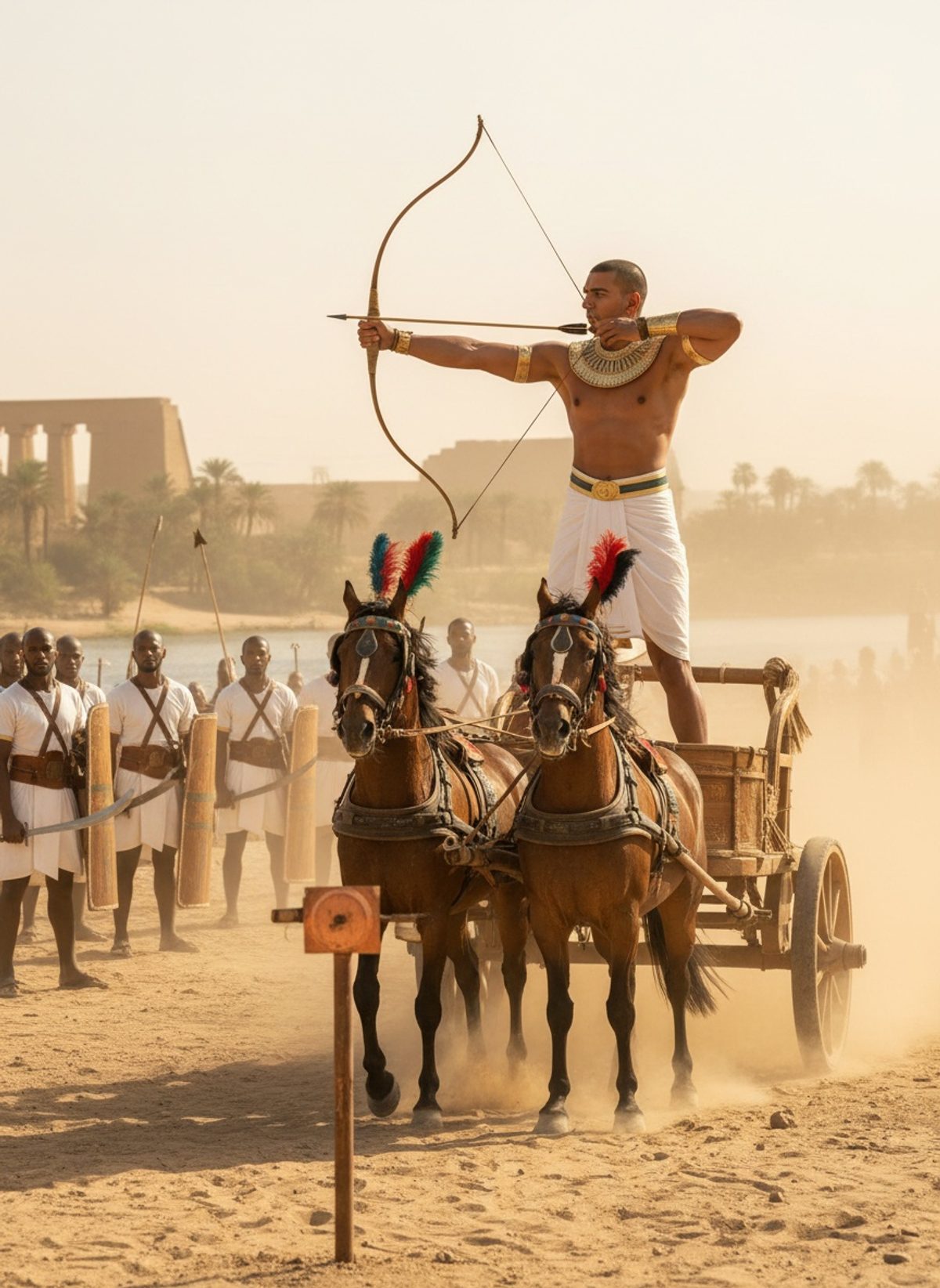
He was not born to be pharaoh. But on that decisive day, Amenhotep II drew his bow and challenged the very limits of human strength.
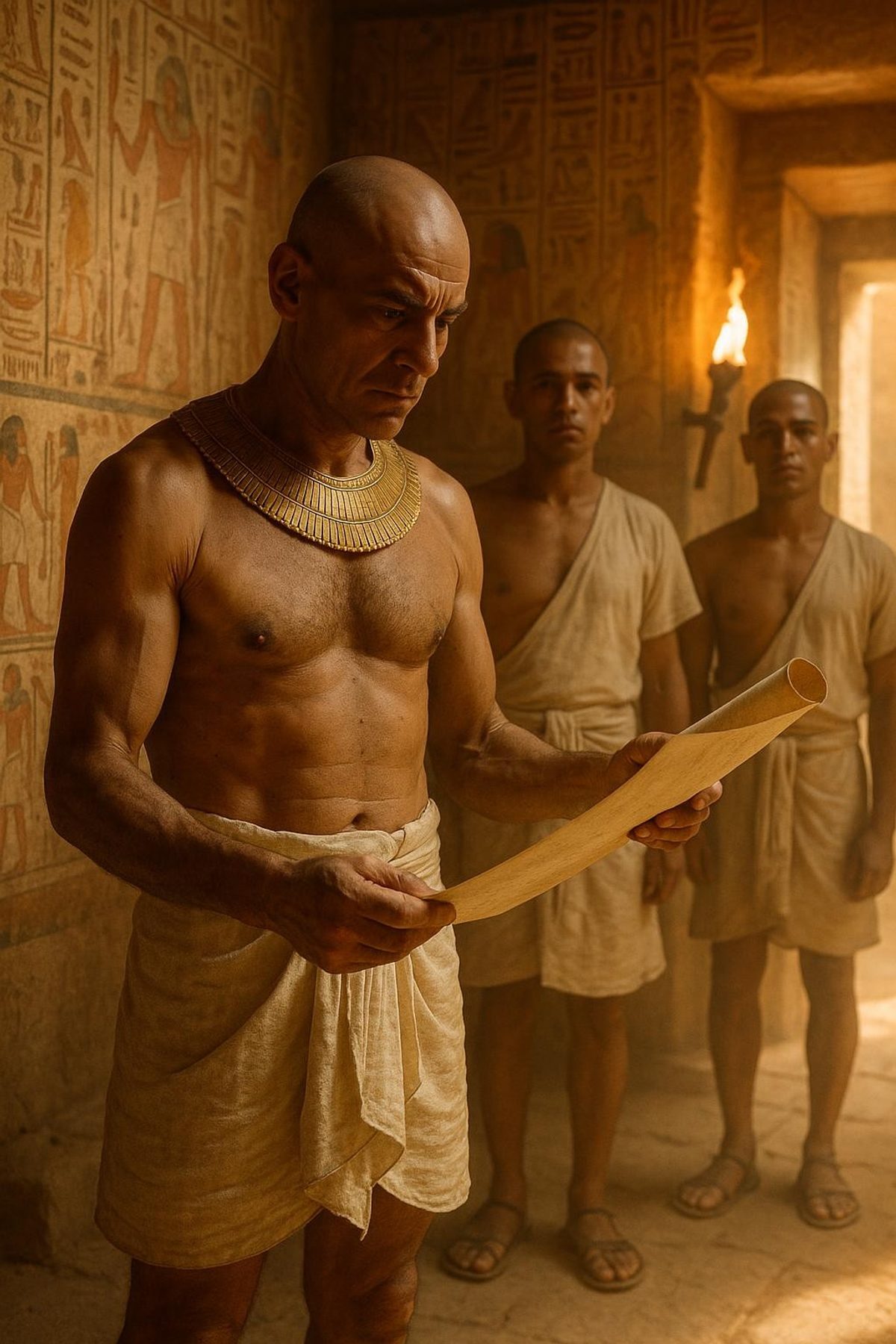
In the ancient and storied land of Egypt, greatness was measured not just by the glint of gold or the height of towering obelisks. In 1427 BC, Amenhotep II faced the weighty task of proving his mettle. He was the son of Thutmose III, one of Egypt's most formidable warrior kings, who expanded Egypt's reach to unprecedented horizons. Yet, Amenhotep’s path to the throne was not set at birth. He was the son of Thutmose's lesser wife, Merytre-Hatshepsut, and had to rise amidst the shadow of his elder brother, Amenemhat, who was the original heir. The sudden lull in Amenemhat’s mortal journey and his subsequent departure opened the gates of succession for Amenhotep, albeit with the pressure to demonstrate his right to rule.
The memphitic air around him crackled with anticipation as he stood before an audience of soldiers, nobles, and watching deities. This was no mere display of strength; it was a rite of affirmation, a proclamation of divine favor. His childhood in Memphis, away from the theological stronghold of Thebes, had already marked him as a ruler with unique perspectives and experiences, lending him skills not just in governance but athletic prowess too. Yet, no inscription of his childhood adventures could truly convey the spectacle of this moment. The bow presented to him was a behemoth, a thing of legend — a tool said to be strung by the gods themselves.
The sun's rays danced on the copper target, a daunting testament to its creator’s craftsmanship — four fingers thick, impenetrable to all but one. Strong men and accomplished archers had tried and failed to penetrate it. Yet when Amenhotep drew the bowstring and when the sinews in his arms tensed with divine potential, time stilled. His arrow not only pierced but passed clean through the copper, mocking its solidity. Silence reverberated across the sands, deep and profound, until the crowd erupted into rapturous applause. What they witnessed was not just the triumph of muscle and might but of destiny and divinity entwined.
Read next: Kha Sealed the Jar. Three Thousand Years Later, It Opened.
This spectacle resonated with tales of his past deeds, narratives that seemed to blend the absurd with reality. He was a prince known for his competitive spirit and extraordinary feats. Inscribed tales suggested he could out-row two hundred esteemed naval men, casting him as a Hercules among mortals. While some modern scholars cast doubt on the accuracy of such claims, the crafted image of Amenhotep as a supreme athlete and warrior captured the imaginations of those who chronicled his reign. The stories of his youth transitioned seamlessly into the narrative of his kingship — a ruler whose body was carved and honed for battle but, interestingly, whose reign would become known not for warfare, but negotiation and consolidation.
Assuming power at the tender age of eighteen, Amenhotep II found himself amidst a rapidly changing geopolitical landscape. His father, Thutmose III, had secured Egypt’s dominance through prolonged military campaigns, especially against the formidable Mitanni. Yet, unlike his father, Amenhotep II presided over an era that veered toward peace, particularly with Mitanni, the great adversary in the north. The cessation of their enmity under his reign marked a pivotal shift from the ceaseless expansion of empire to the enrichment of culture and stability within it.
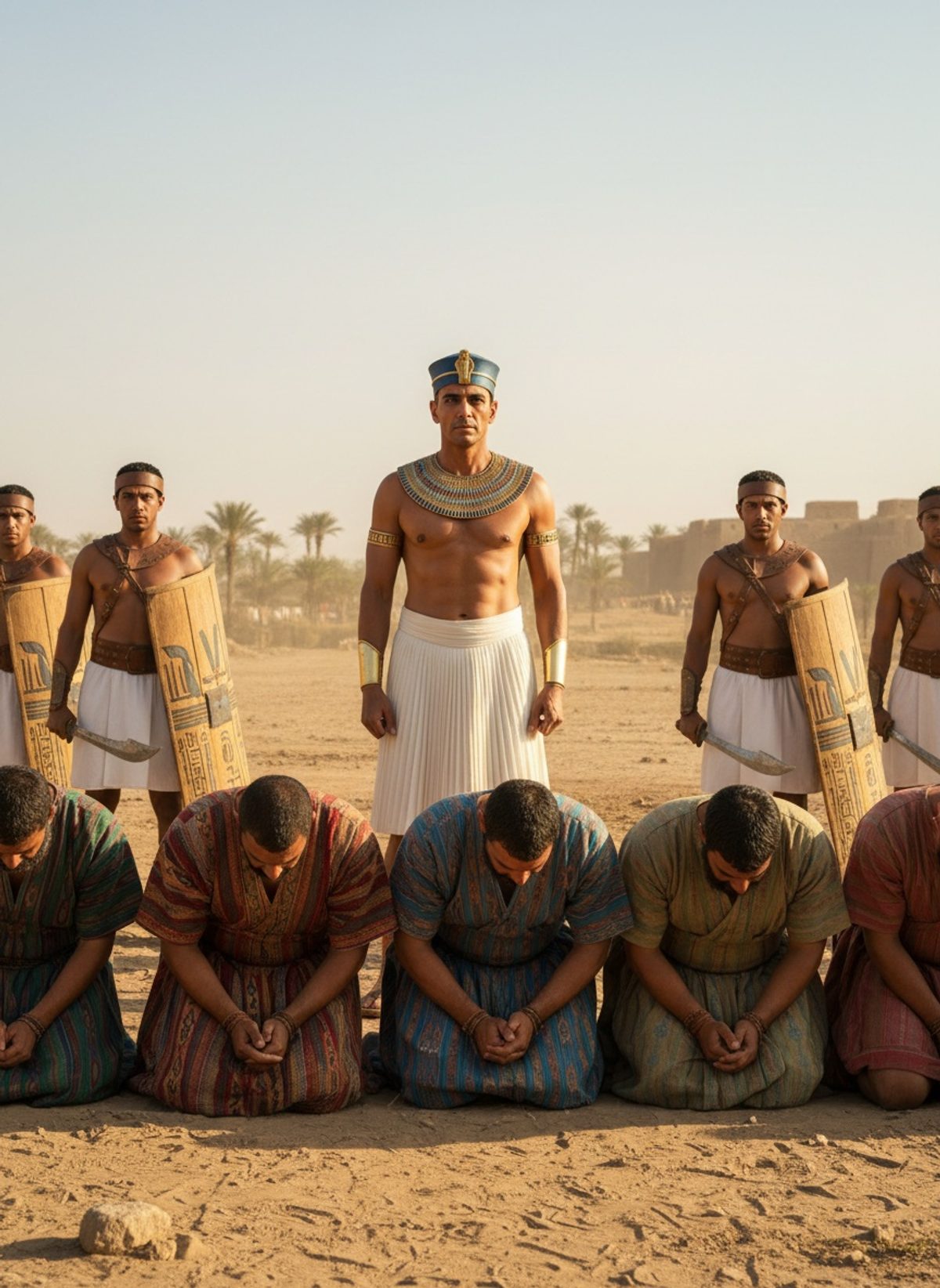
But the path to such a transition was fraught with the necessity to confirm prowess and protect the empire's borders still. Early in his reign, he undertook campaigns to Syria, demonstrating tactical might similar to his predecessor yet with a notable difference — a legacy not drenched in the continual tides of war. Here was a young pharaoh, a warrior at heart who fulfilled his duties to the battlefield, but who also had the wisdom to embrace diplomacy. His interactions gradually punctuated by treaties that fostered an era less of conquest, and more of tangible, long-lasting peace.
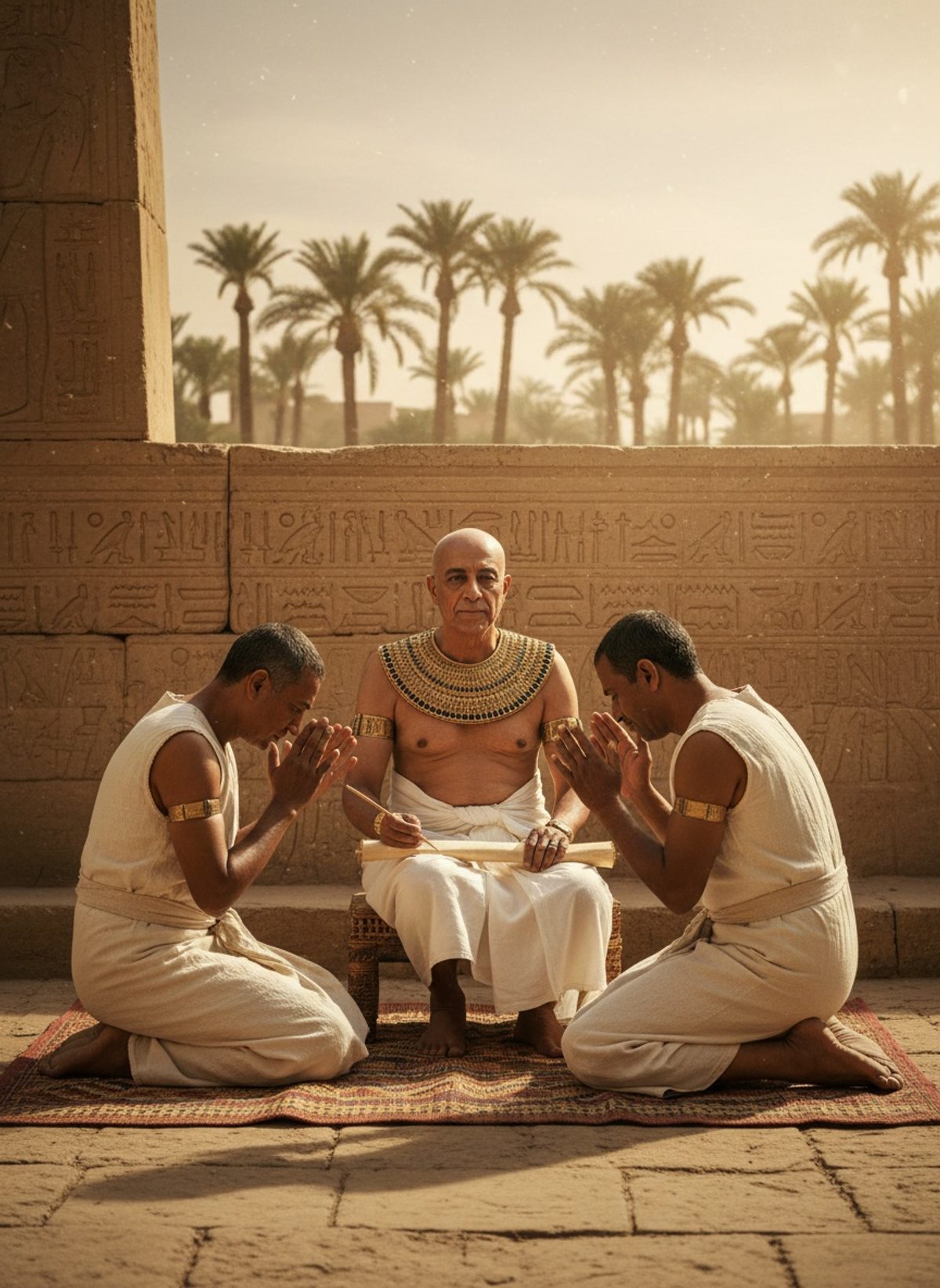
In the royal palace, Amenhotep embarked on another significant aspect of his duties — securing his dynastic lineage. He took a consort named Tiaa, of mysterious origins, concealed behind the veils draped by time. Together, they forged a lineage steeped in potential. Thirteen children, nine sons and at least one daughter, were born from this union. While not every name has survived the annals of history, the succession of Thutmose IV notably stands as a testament to Amenhotep's legacy — extending the storied reign of the Thutmosid dynasty.
Through these turns and twists, Amenhotep II navigated an era replete with challenges but blessed by opportunities. This potent mixture granted Egypt the stability it needed in a time when internal fortitude was paramount. Yet underneath the tales of conquest, governance, and lineage, it was his measured charisma and unyielding spirit that reverberated longest in the sands of time.
The bow was more than just a weapon; it was a symbol, and in piercing the impossible, Amenhotep II etched a narrative into the very bedrock of Egypt. He sculpted his destiny with as much precision as he launched that fatal arrow. In pondering this spectacle, one sees more than just the dance of sinew and strength; it's a window into how myth and reality blend to shape the tales of those who lead. It cautions us about the narratives we craft today and how legend and fact blur the line between men as mortals and men as gods.