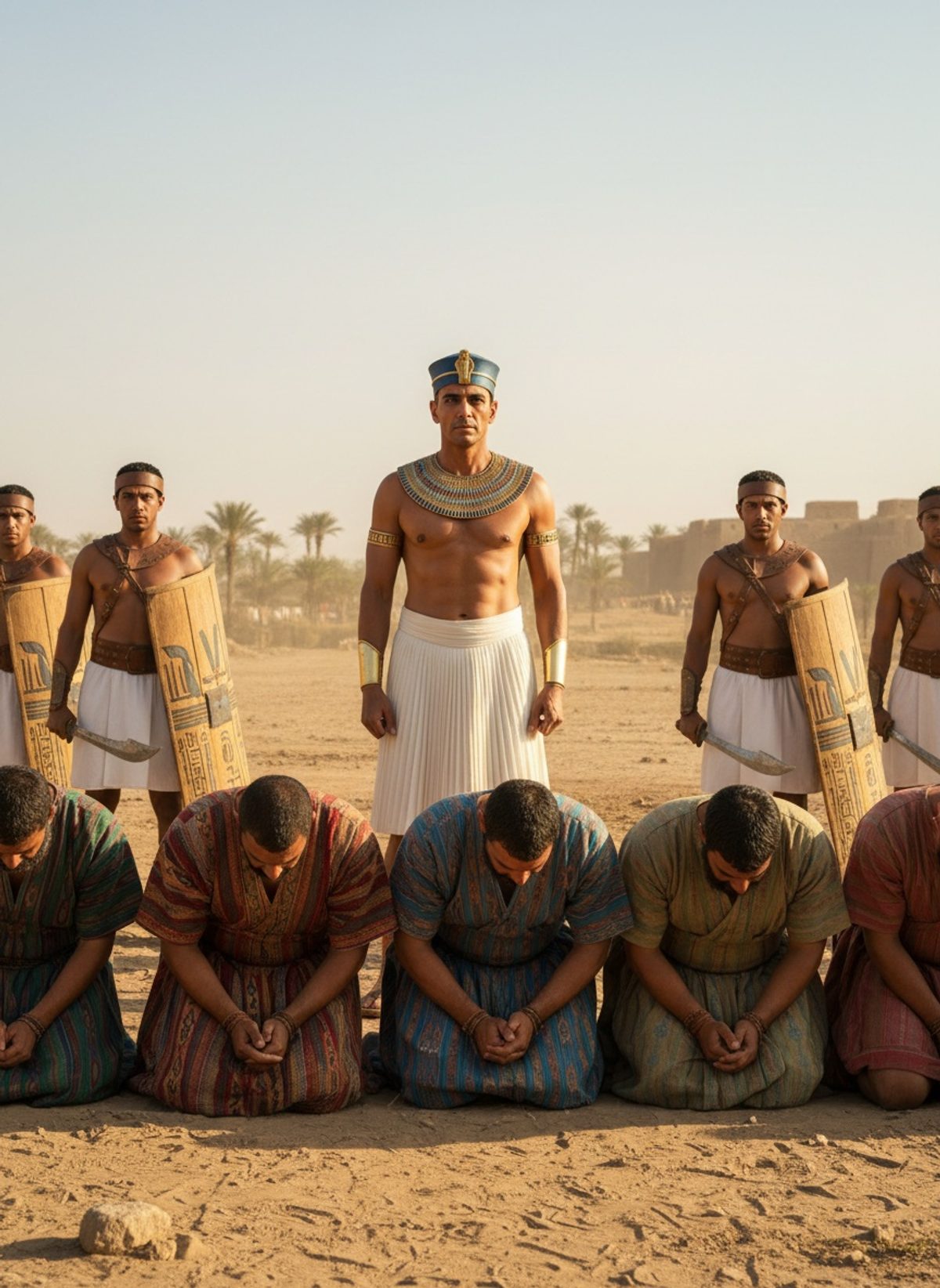
The dry earth of Megiddo was still warm under the setting sun, casting long shadows over the battlefield. The scent of trampled grass and upturned soil lingered in the air, mingling with the distant cries of wounded men and horses. It was 1457 BC, and this ancient ground had just borne witness to a confrontation that would alter the course of history. Egypt's army, led by the formidable Pharaoh Thutmose III, had claimed victory over the largest coalition ever amassed against it. The kings who had dared defy the might of Egypt now knelt in defeat, their fates hanging in the balance under the scrutinizing gaze of a pharaoh whose decision would echo through time.
The Aftermath of Victory
Under the vast skies of the Near East, the coalition's defeat at Megiddo marked a pivotal moment for the Egyptian Empire. For Thutmose III, the triumph was not an end but a beginning. As he surveyed the kneeling rulers before him, he eschewed the path of bloodshed and opted for a strategy both innovative and cunning. Rather than exacting immediate vengeance, Thutmose chose a subtler form of dominance: he sent these humbled foes back to their territories. This act of clemency, however, was no mere gesture of kindness—it was a calculated move in a larger game.
By sparing their lives, Thutmose III set a precedent that transformed his enemies into vassals, and more importantly, their offspring into political assets. The vanquished kings, bound by oath to the Egyptians, returned home, their freedom shadowed by a lingering debt to the pharaoh who had shown mercy when he might have wielded death.
The Sons of the Subjugated
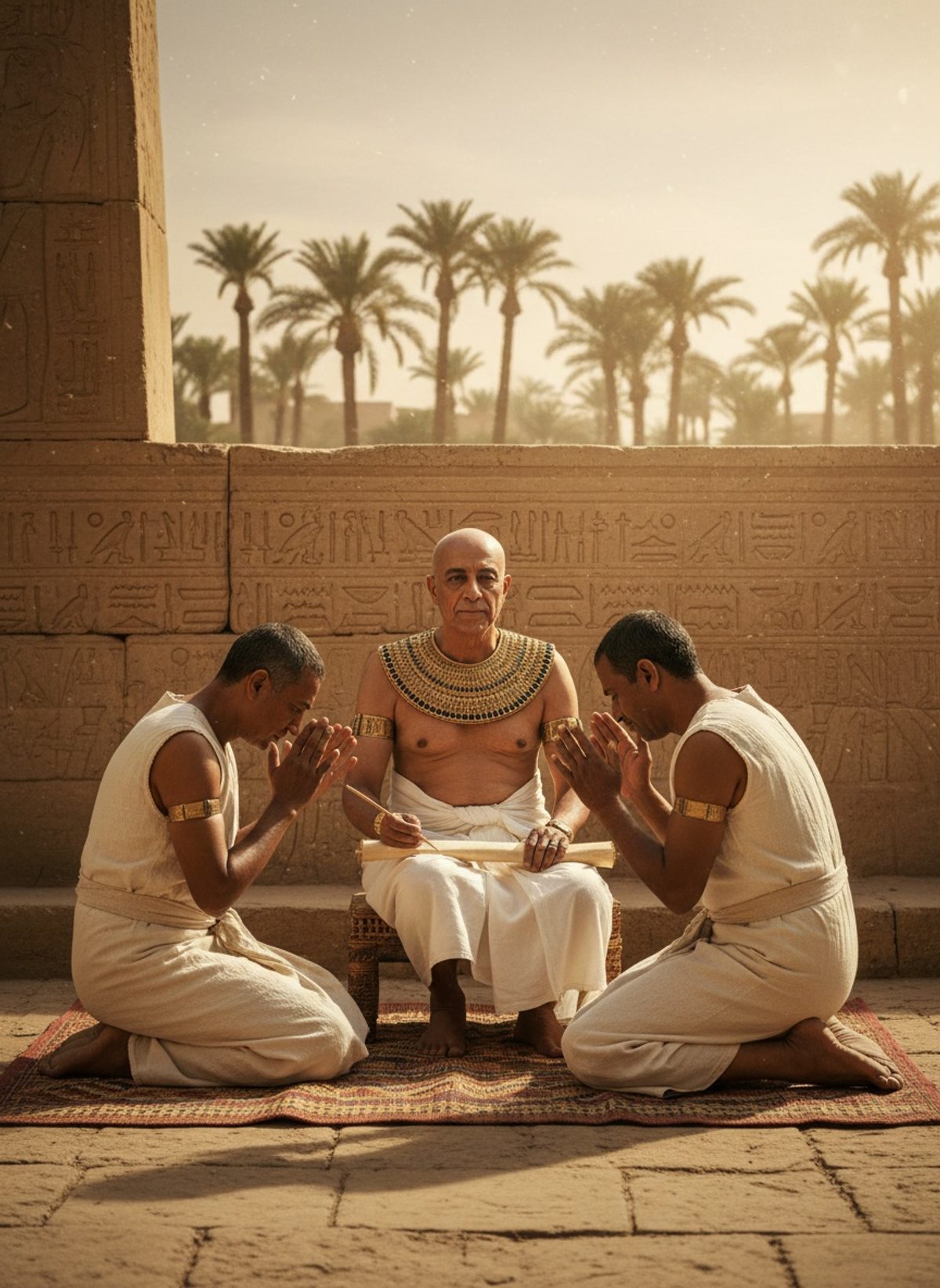
The genius of Thutmose's strategy lay in his handling of the next generation. Sons of the defeated kings were taken from their homes to reside at the Egyptian court as wards. Far from captives, they were treated as guests—educated in the ways of Egypt, groomed to think like Egyptians. They absorbed not only the language and culture of their captors but also their politics, customs, and technological prowess.
Read next: Harkhuf Came Back From Africa. The Pharaoh Wept.
This assimilation bore fruit as these youths matured into men who felt as much a part of Egypt as their own native lands. When they eventually ascended to power back home, they did so with allegiances subtly shifted. They understood Egypt, admired it, and worked within its sphere of influence to further its interests. Thus, Thutmose's tactic birthed a cadre of rulers embedded across foreign lands who operated with an Egyptian mindset, forming an invisible network of influence that fortified Egypt's standing without the loss of Egyptian lives or excessive military endeavors.
A New Kind of Empire
By converting adversaries into allies through education and cultural integration, Thutmose III forged an empire of ideas as much as lands. The territories that came under Egyptian influence experienced a sharing of knowledge and culture that, while serving Egypt's interests, also enriched the broader region. Architecture, writing, and religious practices began to echo Egyptian styles and thought. The impact of Thutmose's policies went beyond geopolitics; it instigated cultural shifts that would endure long after his reign.
Thutmose's reign saw unparalleled prosperity and stability for Egypt, as the empire thrived under the governance of these strategically placed allies who had been once enemies. Their collaboration ensured that the borders of Egypt remained secure, protected by a buffer of friendly territories between the heartland and any potential threats. This peace ushered in a golden age, characterized by monumental construction projects and artistic accomplishments that defined the New Kingdom era.
The Legacy of Thutmose's Vision
Thutmose III's decision on that fateful day at Megiddo was more than a calculated political maneuver; it was a revolutionary paradigm in empire-building. By sparing his enemies, he demonstrated a profound understanding of power dynamics and the potential of human relationships, recognizing that true control extends beyond swords and spears.
This episode, largely untold in the annals of common historical teachings, presents an intriguing perspective on the fluid nature of power in the ancient world. It reveals that sometimes an empire's greatest strength lies not in its ability to conquer, but in its capacity to assimilate and adapt. The echo of Thutmose's wisdom reverberates through history, reminding us that the foundations of lasting influence are often built on foresight, patience, and understanding rather than force alone.