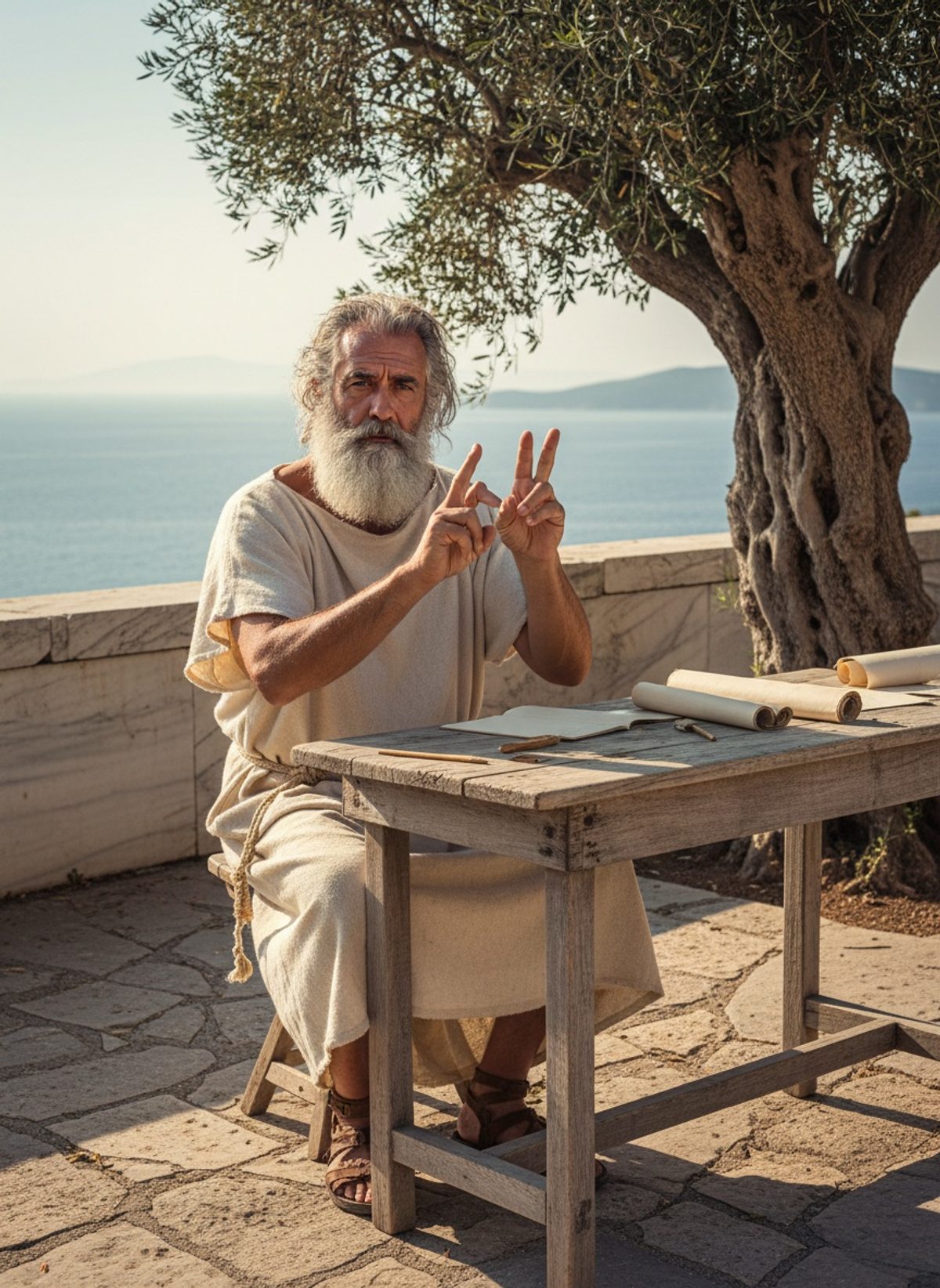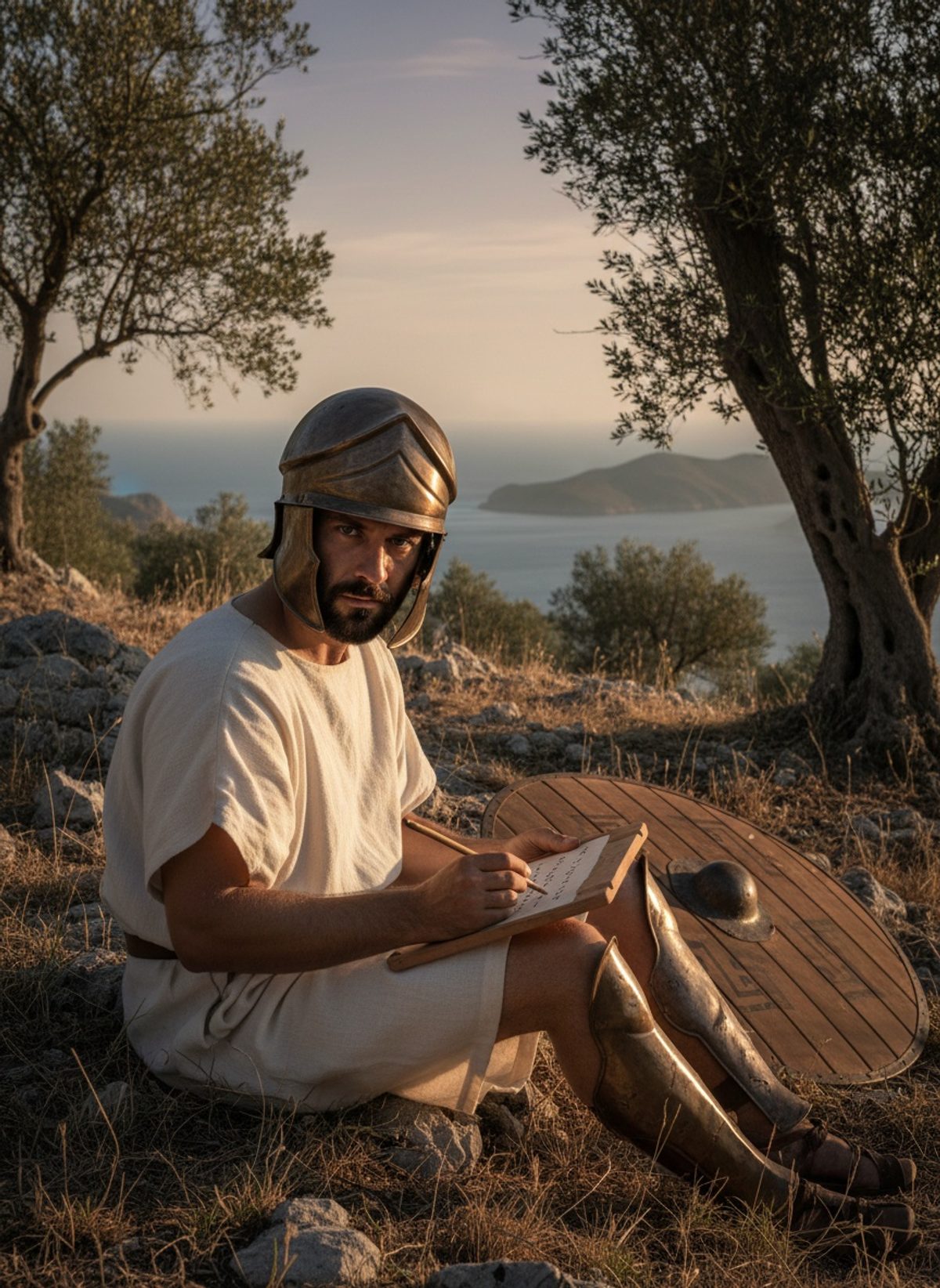
The island of Paros, bathed in the piercing light of a Mediterranean sun, is a land where the Aegean breezes carry both the scent of salt and the whispers of ancient myths. It was here, in a land steeped in warrior tradition, that a young Greek soldier faced a decision that would defy the conventions of his age. In this stark landscape of stone and sea, it was not just his life but the very notion of heroism that hung in the balance.
The Unyielding Code of the Warrior
In 7th century BCE Greece, a soldier's shield was more than a piece of bronze; it was the embodiment of his honor and duty. To fight as a hoplite meant not merely holding one's ground, but standing firm amid the phalanx—no matter the cost. Retreat was unthinkable; to drop one's shield was the ultimate disgrace, a stigma that could outlast even death.
It was against this backdrop that Archilochus of Paros stepped onto the stage of history. Emerging from a culture that lionized valor and valorized sacrifice, he made a choice that would shatter conventional mores: he let go of his shield in battle to save his own life. This, however, was not where his narrative broke ground; it was his subsequent declaration that startled the ancient world. Unlike any other soldier, Archilochus embraced what others deemed dishonor and fashionably turned it into poetic expression.
A Poet of Emotion and Introspection
A subsequent turn of events would propel his story from the fields of battle to the annals of literature, as Archilochus chose verse over silence. Described in a sacred inscription, the Muses themselves supposedly visited him as a youth, exchanging a lyre for a cow. Whether guided by divine muse or the boldness of his nature, Archilochus found expression in poetry, an art form he would revolutionize.
Read next: Enheduanna Stood Before the God. She Spoke First.
Archilochus became perhaps the earliest known Greek author to compose extensively on the theme of his personal experiences and emotions, delivering his audience a candid glimpse into his life and mind. He established himself as a master of iambic verse, turning introspection into a literary weapon sharper than any spear. His ability to encapsulate vivid imagery and raw, human sentiment invited readers into a space few dared to go.
The Poem That Defied Expectation
Archilochus's act of laying down his shield was itself a breach of social codes, but it was his choice to immortalize the event in writing that catapulted him into infamy. In the surviving fragments of his work, he penned his pragmatic view: "Some Thracian prides himself on the shield which I reluctantly left beside a bush. But I saved myself. What does it matter about that shield? To hell with it! I’ll buy another no worse." There was no room for misplaced glorification of sacrifice here—just stark pragmatism and survival.
This was a paradigm shift rarely echoed in ancient Greek literature, the kind of heretical wisdom that reverberated through the classrooms of rhetoric centuries later. Previous poets had stuck to the hero’s code: life was worth sacrificing for honor. Archilochus, though, would instead celebrate the contrarian truth of choosing life over an inanimate object, belittling rather than venerating the totem of martial fidelity.
Celebrated Controversy
Archilochus's compatriots were not the only ones rattled by his brazen verses. Over the centuries, his wit and duality blurred lines rather than rigidly enforcing them, and it earned him admirers and detractors alike. In his lifetime, much like today, genius was polarizing—and in the centuries following his death, as the shrine known as Archilocheion grew on his home island, the poet's dual legacy took root in public memory.
Inscriptions and fragmented records offer us glimpses of a man both mortal and mythical. He could evoke biting satire and genuine warmth in the same breath. Not limited to roles of a soldier or poet, Archilochus may have been participating in what Aristotle called role-play, assuming voices that were stylized yet relatable. By the era of the Roman Empire, Archilochus’s works were still a topic of conversation, an evergreen challenge to conventional Greek ideals. Revered alongside the gods, he illustrated that divinity in verse was often found in the shadows of human imperfection.
The Legacy of a Reluctant Hero
Archilochus remains a historical anomaly, much like the unexpected paths of thought that emerge in his poetry. He stands apart because he dared to redefine heroism, not in conventional terms but in the lived experience of the individual mind. His decision to forsake his shield was not just an act of cowardice or wisdom, depending on one’s view, but also a thread that unraveled the complexities of humanity within military life.
The story of Archilochus may be thousands of years old, but its resonance survives, echoing through the corridors of literary history and the human psyche. Lives matter above our weapons; stories above prescriptive norms. In every era where society grapples with the balance of personal survival and communal duty, Archilochus's tale surfaces with a challenging whisper: in the end, perhaps it is not how one stands ready to fall but rather how one lives to tell. Archilochus dared to write it down, ensuring that his choice—both gallant and rogue—remains inked into the eternal scroll of human history.