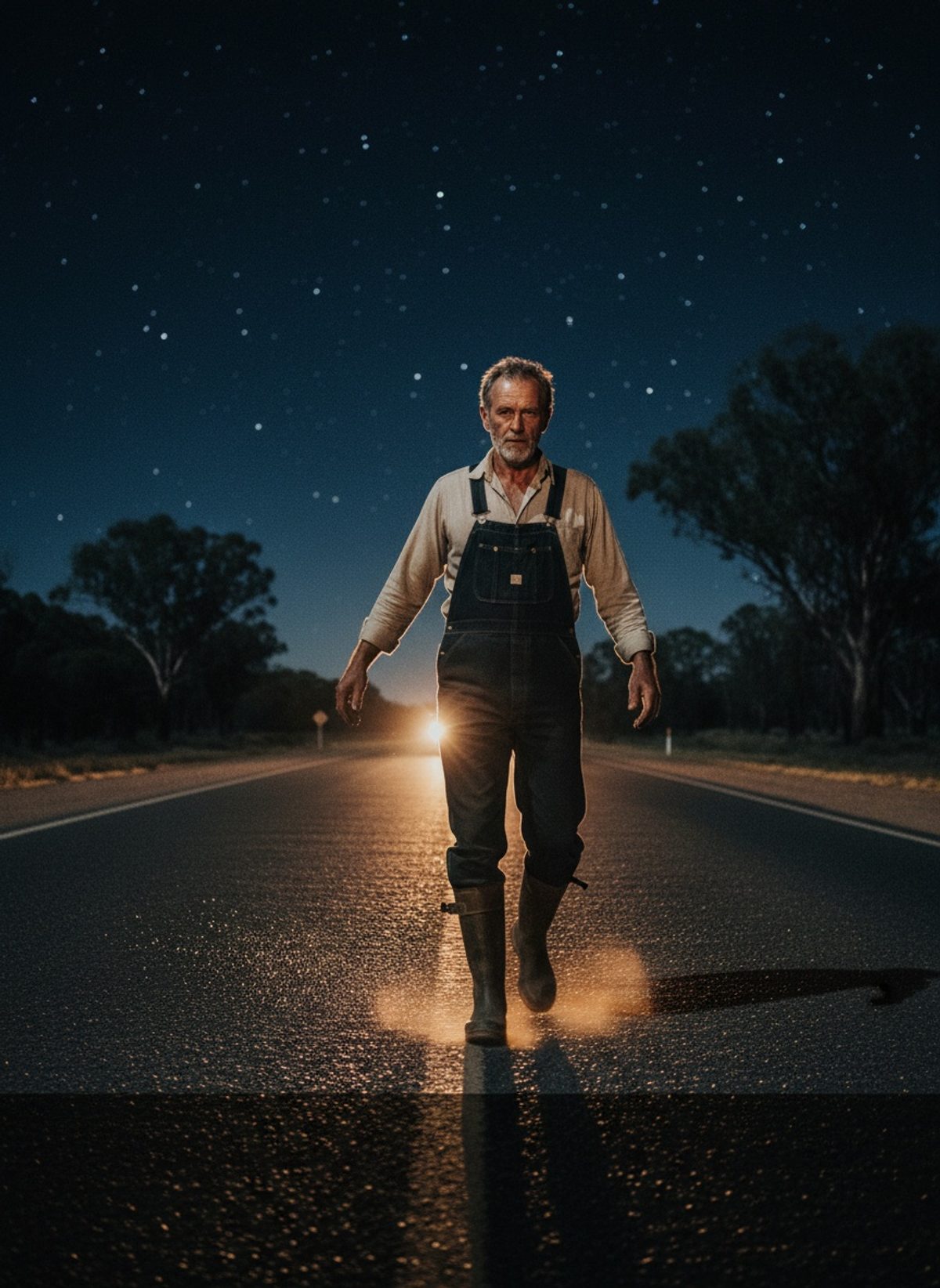
He was sixty-one years old. He ran in overalls and work boots. In 1983, Cliff Young, a humble sheep farmer from Beech Forest, Victoria, astounded the world by winning the inaugural Sydney to Melbourne Ultramarathon. His victory wasn't just a win; it shattered preconceived notions of athleticism and endurance.
A Humble Beginning
Cliff Young's story begins far from the world of competitive sports. Born on February 8, 1922, in the midst of the Great Depression, Young grew up on a 2,000-acre farm in Beech Forest. The family farm, with its 2,000 sheep, provided little luxury and taught Young the tenacity and endurance that would later define his athletic endeavors. The Youngs couldn't afford horses, so rounding up sheep meant running across sprawling fields, his feet his only mode of transportation.
Despite the strenuous work required on the farm, it created a solid foundation for Young's physical stamina. His childhood was not filled with dreams of marathons or sporting accolades. Instead, it was spent in survival mode, caring for the family business. Yet, the physical demands of his early life inadvertently set the stage for an unexpected athletic career.
The Accidental Athlete
Young's transition into athletics was anything but conventional. It wasn't until he was in his late fifties that he began joining organized races. In 1979, the 56-year-old entered the Adidas Sun Superun 16-kilometer race in Melbourne, impressing many with a completion time of just 64 minutes. This spark of interest led him to participate in the Melbourne Marathon consecutively from 1979 to 1982, achieving a personal best of 3:02:53 in 1980.
Read next: Scopas Built the Tomb. The World Called It a Wonder.
These races introduced Young to the world of running, albeit decades after most athletes began their careers. Undeterred by his age, he built his strength running through the rugged terrains of the Otway Ranges. In late 1982, Young audaciously attempted to break the world record for 1,000 miles, but had to abandon the effort at the halfway mark. Reflecting later, he noted that the failed attempt was due to inexperience and inadequate preparation. Little did he know, this setback was preparing him for something much greater.
Defying the Odds
When Young showed up to the starting line of the Sydney to Melbourne Ultramarathon in 1983, he attracted attention for all the wrong reasons. Clad in overalls and work boots, this veteran of the fields was a stark contrast to his highly trained and outfitted competitors. The 875-kilometer race between Westfield Parramatta in Sydney and Westfield Doncaster in Melbourne was uncharted territory for many, let alone a 61-year-old novice athlete.
The professional fields echoed with laughter as Young took his place among younger, seasoned runners. What they didn’t realize, however, was that Young had stumbled upon a strategy born out of necessity and survival. While they ran, rested for six hours, and repeated the cycle, Young pressed on tirelessly, relying on unyielding determination and memories of chasing sheep during storms.
During the first day, he trailed behind; his pace was slow but steady. The rest of the competitors adhered to the standard regimen, retreating for slumber. But Young, by mistake or ingenuity, continued through the night, gaining ground while others slept. It was not until dawn broke that they realized Young had taken the lead, a lead he would not relinquish.
The Unlikely Victory
What set Young apart was his unorthodox approach. Rather than succumbing to exhaustion, he embodied relentless persistence. Over five days, fifteen hours, and four minutes, Young traversed the distance between Sydney and Melbourne without sleep. He crossed the finish line nearly two days ahead of the record, averaging a speed of 6.5 kilometers per hour.
Those who were initially quick to mock were now silenced by awe and admiration. Young had not just won; he had transformed the race and, in many ways, the sport of ultramarathons itself. His victory wasn't supported by high-tech gear or rigorous training regimens but was fueled by sheer endurance and the humble work of a farmer. While other athletes strategized, Young's approach defied the norm, and his success was a testament to determination over design.
With prize money of A$10,000 in his hands, Young once again showcased his integrity. Unaware there was a prize to be won, he divvied it up, sharing the spoils with the remaining competitors. This act of generosity was perhaps as remarkable as his win, embodying the spirit of camaraderie and fairness.
The Legacy of an Unorthodox Legend
Cliff Young's triumph in the Sydney to Melbourne Ultramarathon reshaped ideas of age and ability in athletics. His story illuminates a profound truth: the boundaries of human limitation are often self-imposed. In a world where age often dictates ability, Young's triumph remains a compelling example of perseverance against the odds.
Young's legacy is a reminder of the potential within each of us to redefine what is possible. Overalls and work boots became symbols of an unyielding spirit, always moving forward. Cliff Young didn't just run a race; he changed the narrative. His journey suggests that greatness knows no age, and endurance is not just a physical capability but an attitude toward life's challenges.