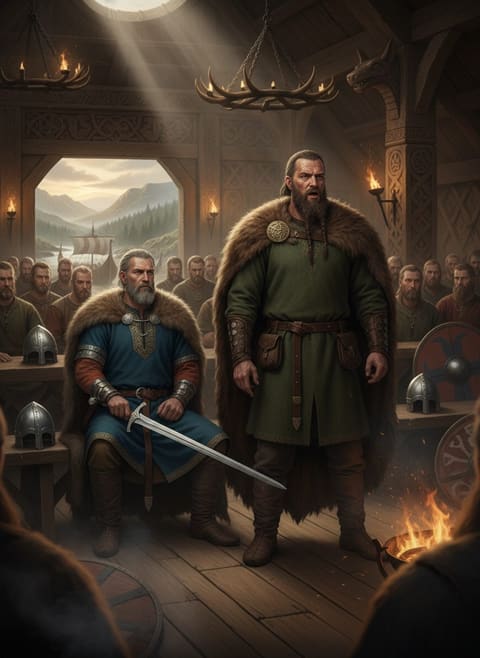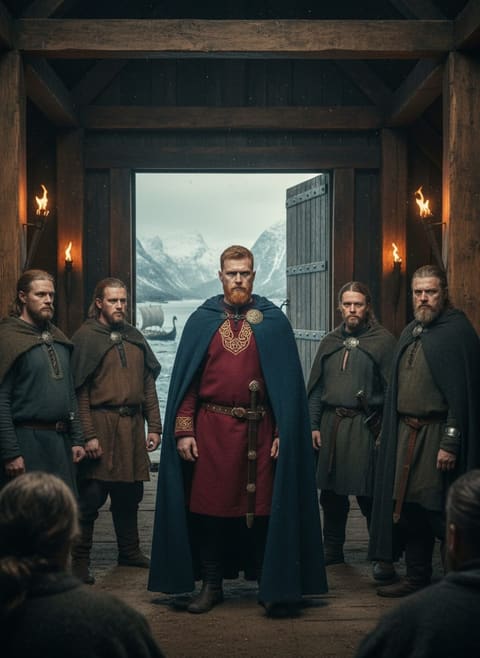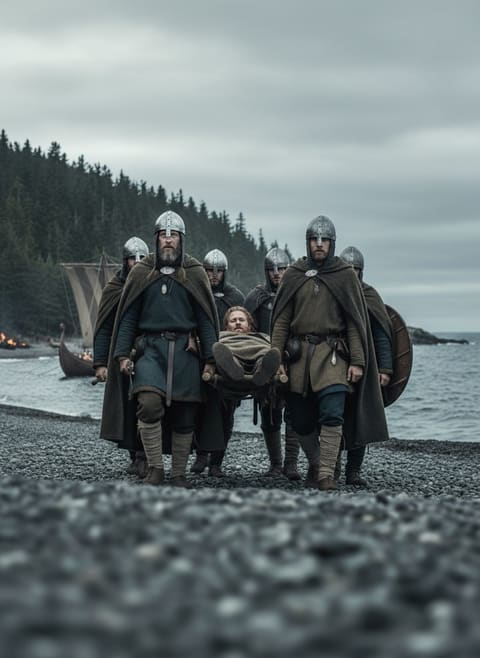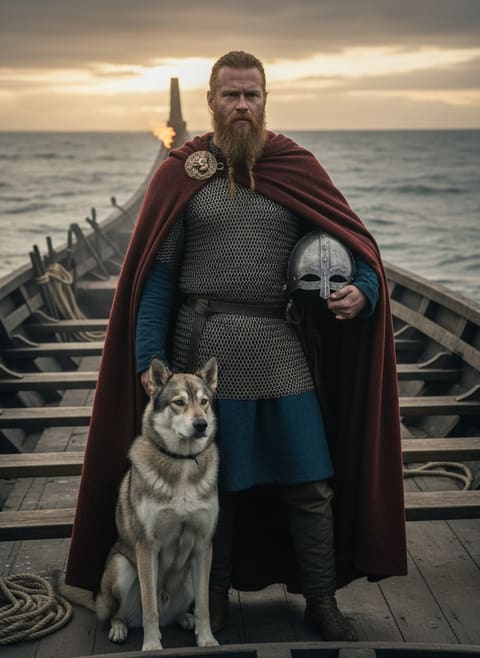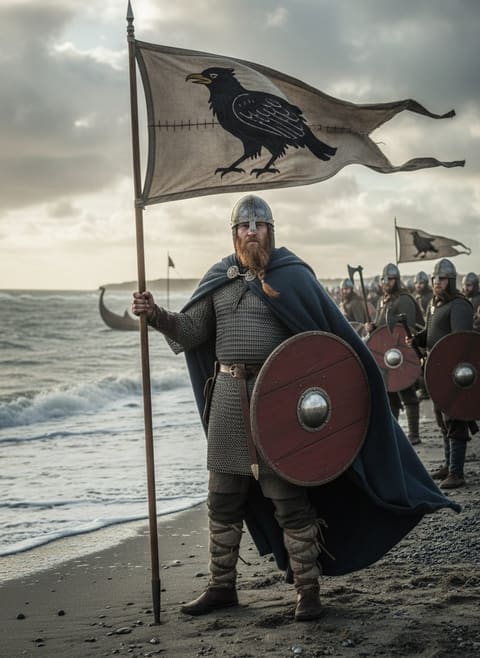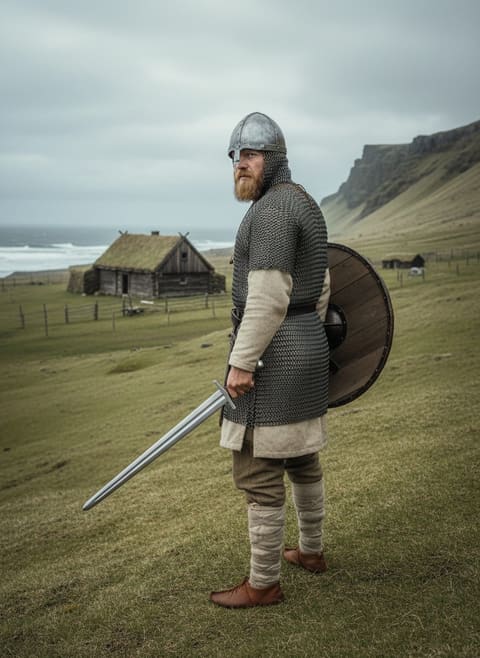
The crackle of burning wood and the acrid scent of smoke hung in the air as Rollo's Norsemen stormed through the remains of the town on the lower Seine. They moved like shadows in the dim light, their haunting cries echoing through the empty streets.
This was not the first town to feel the wrath of Rollo the Walker, nor would it be the last. Yet in 911 AD, his relentless march through Frankish lands reached a juncture that would alter the history of Europe forever.
The Siege That Sealed a Fate
Among the resounding tales of the Viking Age, the siege of Paris in 885 AD stands out as an audacious attempt at conquest. Numerous Viking raids had struck terror into the heart of Frankia, but none were as bold as the attack led in part by Rollo. His ambitions were as wide as the Seine, and the city of Paris, rich and unprotected, was a temptress in his path.
Rollo, driven by the promise of plunder, joined forces with a coalition of Viking chieftains. They arrived at the city's gates with some 700 ships, carrying thousands of ferocious warriors. For months, the city withstood their onslaught, its fortifications proving stronger than anticipated. Even the Franks were taken by surprise at their own resilience.
Read next: Leif Eriksson's Pilot Bjarni Herjólfsson Sighted America First
Despite their failure to breach Paris, the siege solidified Rollo’s reputation. His command over the Norse warriors was unquestionable, and his ability to galvanize men into action was unparalleled. These qualities would serve him well when destiny demanded a pivot from raider to ruler.
From Conqueror to Count
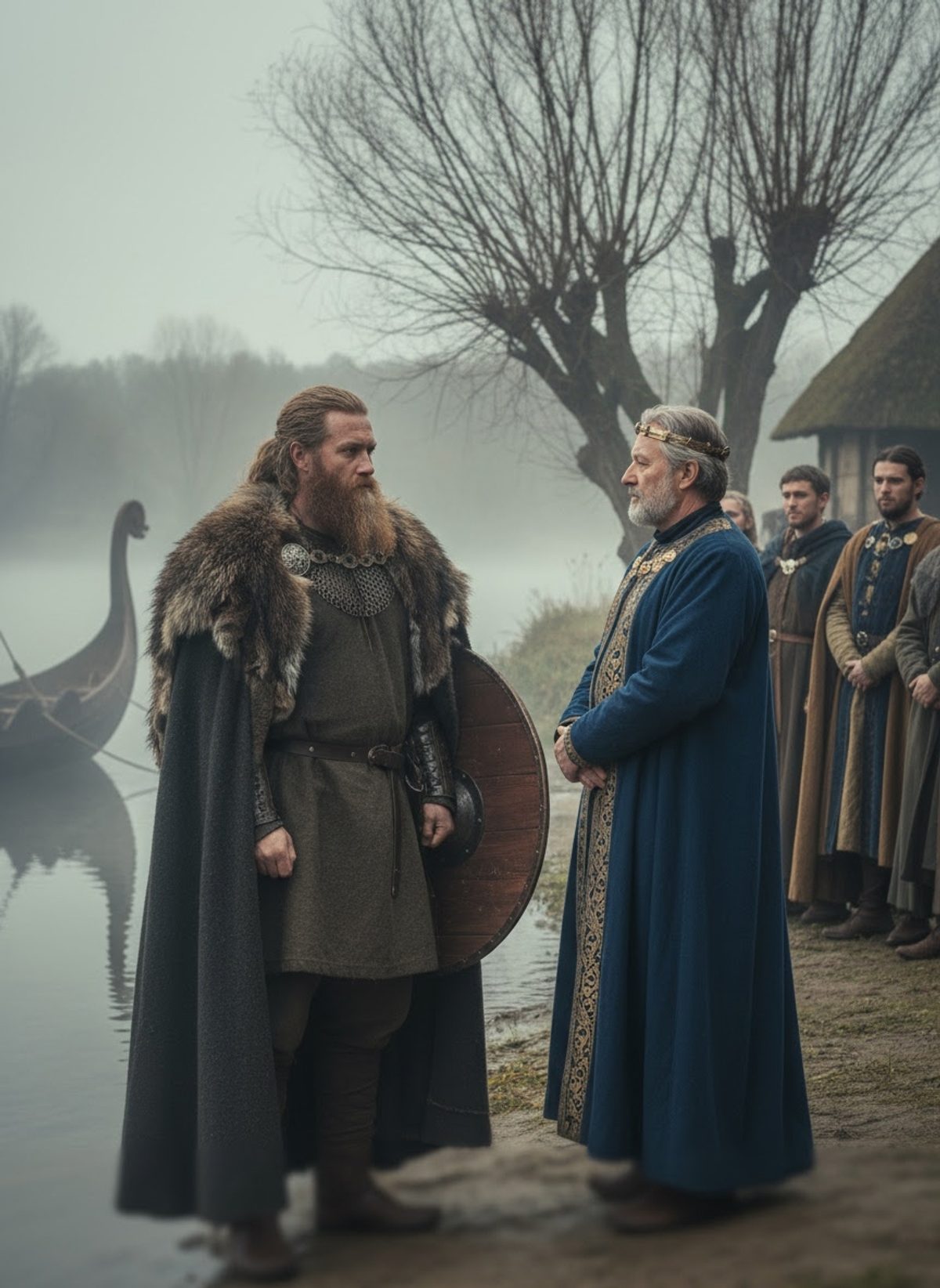
After years of laying waste to villages and towns from the Seine to the Loire, Rollo faced an unexpected crossroads. The 911 siege of Chartres, although ultimately unsuccessful for the Vikings, became a turning point. This defeat prompted a remarkable proposal from king Charles the Simple of West Francia. The king, desperate to stabilize his realm, offered Rollo a piece of land in exchange for peace.
This was no ordinary tract; it was a strategic region bounded by the river Epte and the sea. The Treaty of Saint-Clair-sur-Epte foresaw Rollo not only stopping his raids but also becoming a baptized Christian and a defender of the realm against further Norse incursions.
The deal was sealed with an unusual ritual — Rollo, not keen on bending the knee, reportedly had one of his men perform the act instead. It was a fitting compromise from a leader who had thrived on his own terms.
Rollo accepted the offer, thus exchanging his unpredictable life of raiding for power sanctioned by the crown. This was no mere acquiescence; it marked the inception of the Duchy of Normandy, a powerful European entity. Rollo's baptism, taking the name Robert, symbolized a fascinating synthesis of Norse and Frankish cultures that would ultimately reshape the region's destiny.
The Seeds of a Dynasty
Even as Rollo traded his longship for a ducal mantle, he leveraged his Nordic roots to maintain his authority. His followers, steeped in Viking traditions, soon embraced the settled life, melding with the local Frankish populace. This integration gave rise to the Normans, a formidable offshoot that would impact more than just their immediate environs.
Under Rollo's leadership, the once war-torn Normandy thrived. His son, William Longsword, inherited the duchy, continuing the legacy of his father long after Rollo had passed away around 933 AD. The region’s strategic importance, combined with its fertile lands, furnished the Normans with the wealth and resources they needed to become a dominant force.
Normandy’s transformation under Rollo and his descendants transcended mere land management. The Normans rapidly expanded their influence beyond the Seine, their legacy echoing in campaigns that would see the emergence of a new realm across the English Channel.
Read next: Gudrid Thorbjarnardóttir Sailed to Vinland and Gave Birth There
Conquest Beyond Borders
Rollo’s descendants proved to be even more ambitious than their illustrious forebear. In 1066, less than two centuries after Rollo traded his raider past for dukedom, his great-great-great-grandson, William the Conqueror, launched the Norman Conquest of England. This profoundly altered the fabric of English society, leaving an indelible mark that endures to this day.
But England was not the only realm touched by Norman ambition. They expanded across the Mediterranean, establishing principalities in Italy, Sicily, and even Antioch. These campaigns showcased the Norman’s adaptability, bridging Scandinavian martial prowess with the administrative acumen of the Franks.
Such exploits were not only feats of arms but testament to Rollo’s foundational choice. By forging Normandy, Rollo had unwittingly sewn the seeds of a powerful new entity, one capable of shaping the future rather than merely plundering the present.
In the annals of history, Rollo’s name resonates beyond his lifetime. His acceptance of Charles the Simple’s proposition exemplifies a pivotal transformation in the Viking Age — from marauders to monarchs. This shift marked one of the earliest instances where Vikings eschewed their seafaring tumult in favor of the sophisticated machinations of European power structures.
Rollo’s legacy is etched into the chronicles of Europe, a testament to the dynamic winds of history that could turn even the fiercest Norsemen into landholding dukes. It is a story of how adaptability and foresight can forge a legacy that stretches across centuries, defying the very chaos from which it emerged.