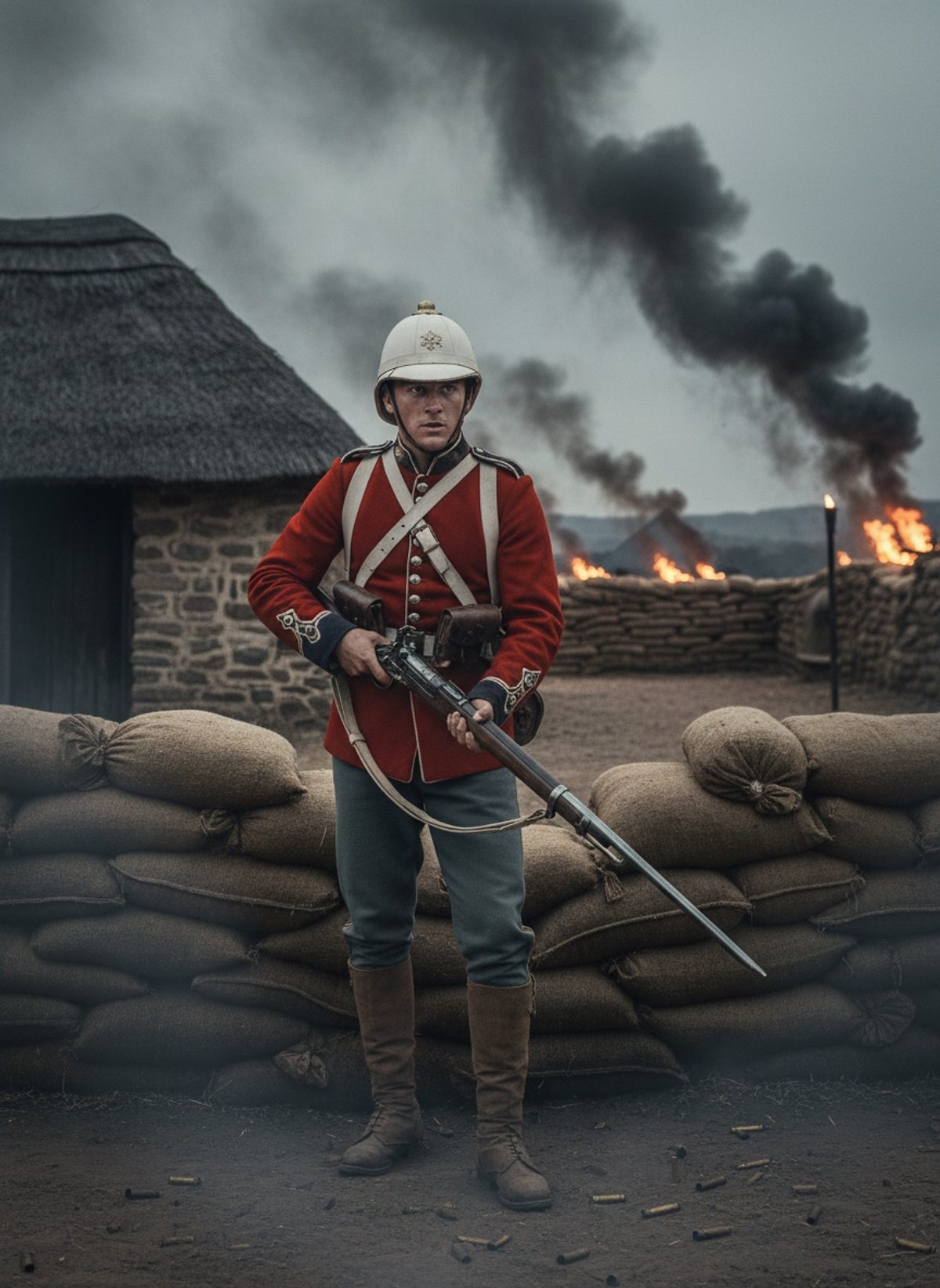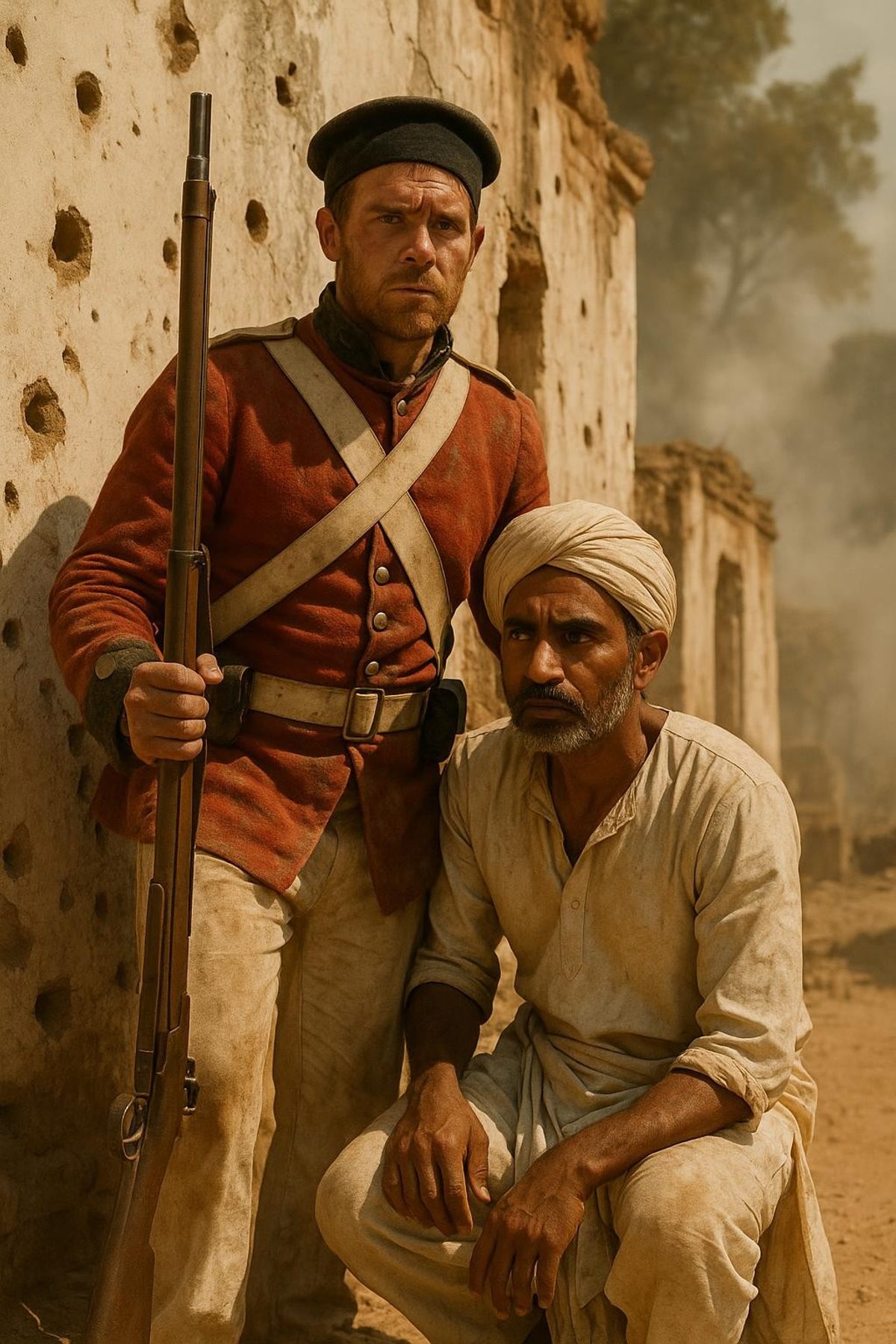
The man who saved another at Lucknow was not an officer. He was an ordinary soldier who had once been a cobbler in Manchester. That day, he offered more than just his life; he offered a moment of unparalleled bravery amid chaos.
Beneath the Broken Walls
Lucknow, August 1857, a city blistered by the harsh reality of conflict and the August sun. Inside the crumbling Residency, the din of cannon fire mingled with the moans of the wounded, transforming the compound into a surreal purgatory. Night and day merged into one endless twilight of terror. Among the weary defenders was a young British private from Manchester, a man whose previous life had been devoted not to warfare, but to the humble trade of shoemaking. Inside those pockmarked walls, he stood alongside sepoys, Sikhs, and British regulars, united in survival against overwhelming odds.
The siege of the Residency was unlike any other. The defenders found themselves trapped, cut off from the outside world with dwindling supplies and an eroding will. Theirs was a strange brotherhood – men of different languages, creeds, and colors bound to a single, desperate cause. It was a place where the rules of uniform and rank blurred under the pall of smoke and fear, where acts of humanity flickered through the darkness like rare, precious embers.
It was within this mosaic of desperation and courage that our unnamed soldier witnessed a moment of profound humanity. As rations grew scarce and tensions flared, an Indian man found himself facing the grim prospect of execution for an alleged act of disloyalty. The charge was as flimsy as the morale it threatened to decimate, yet in that time and place, accusations alone could seal one's fate. As the firing squad lifted their arms, hearts grew heavy with the tangled emotions of duty and doubt.
Read next: When Piper Laidlaw Played Into No Man's Land, 1915
The Offer
One can hardly fathom what level of resolve or madness inspired the British soldier to step forward. In a setting where life and death decisions had become all too routine, his action was anything but ordinary. As silence choked the air, he volunteered to take the place of the condemned man. Words failed him at that moment, as they would fail historians seeking to capture such an act. It was a gambit played in the currency of camaraderie and compassion, one soul's wager against the unrelenting tide of retribution.
To the witnessing eyes, this gesture was a pronounced fracture in the rhetoric of "us and them" that encompassed the era. It was a silent defiance of the anonymity fear forced upon them. The officer in charge, shocked and contemplative, took a moment longer than protocol allowed. Finally, with a nod—a subtle but seismic concession—he spared them both. It was a decision not recorded in the official dispatches, its potency diluted in official accounts but reverberating through the hearts of all who bore witness. The private’s intervention was not an endorsement of insubordination but a testament to the shared humanity stifled beneath the banners of war.
Life at the Residency resumed its grim course, the siege would continue for months, yet the memory of that moment lingered in whispered stories and stolen glances. It humanized the embattled, offering a fleeting yet invaluable perspective beyond the hazy moral landscapes of imperial duty and loyalty.
The Price of Humanity
In the sepulcher silence between barrages, an unspoken question lingered: Why did he do it? To this day, the motive of the private remains as enigmatic as the man himself, his name lost to history, purposefully or not. Perhaps something about the accused Indian man reminded him of the simplicities of his former life, or maybe it was nothing more than a spur-of-the-moment manifestation of hope. Regardless, his gesture stands as a beacon of altruism amidst the turmoil, challenging notions that survival and sacrifice exist in opposition.
Though details remain scant and unsanctioned in the annals of official history, the story has not vanished—the fidelity of its surviving witnesses ensured it endured. This unnamed soldier likely returned to Manchester after the ceasefire, perhaps to tread the familiar streets as an everyday hero shrouded in anonymity. But in every recounting around campfires, among veterans, across generations, the tale transformed whispered lore into an enduring legend.
This story matters for one reason that transcends time: it reaffirms that even in war, humanity finds ways to emerge through the smallest of gestures. It punctures the cold armor of historical warfare narratives, infusing them with the life-affirming tendency of humans to reach across barriers seen and unseen. In an age defined by division—both then and now—this selfless act from Lucknow reminds us of the power that resides in stepping forward not just to survive, but to save another, etching its lesson on the tapestry of our shared human story.