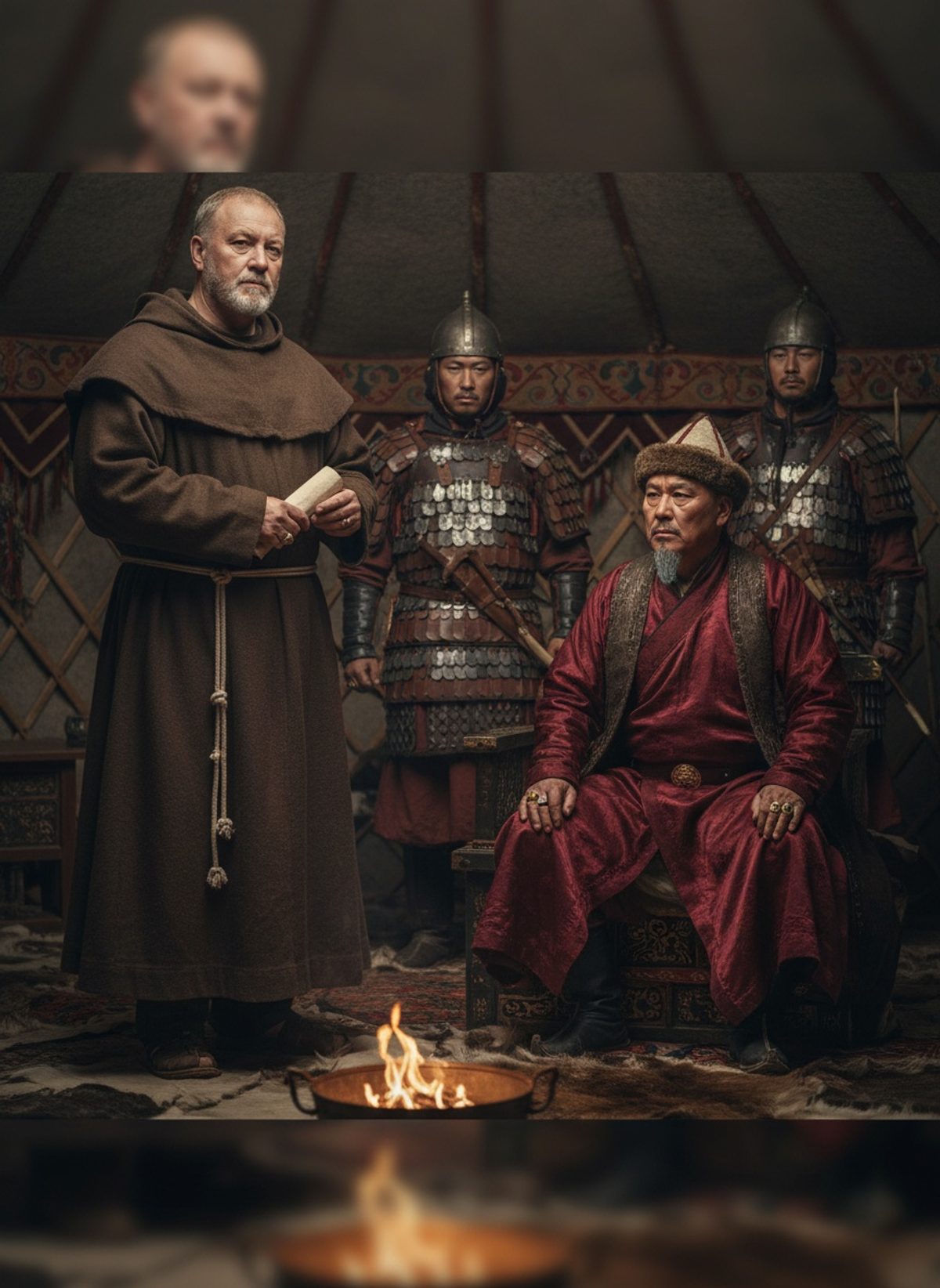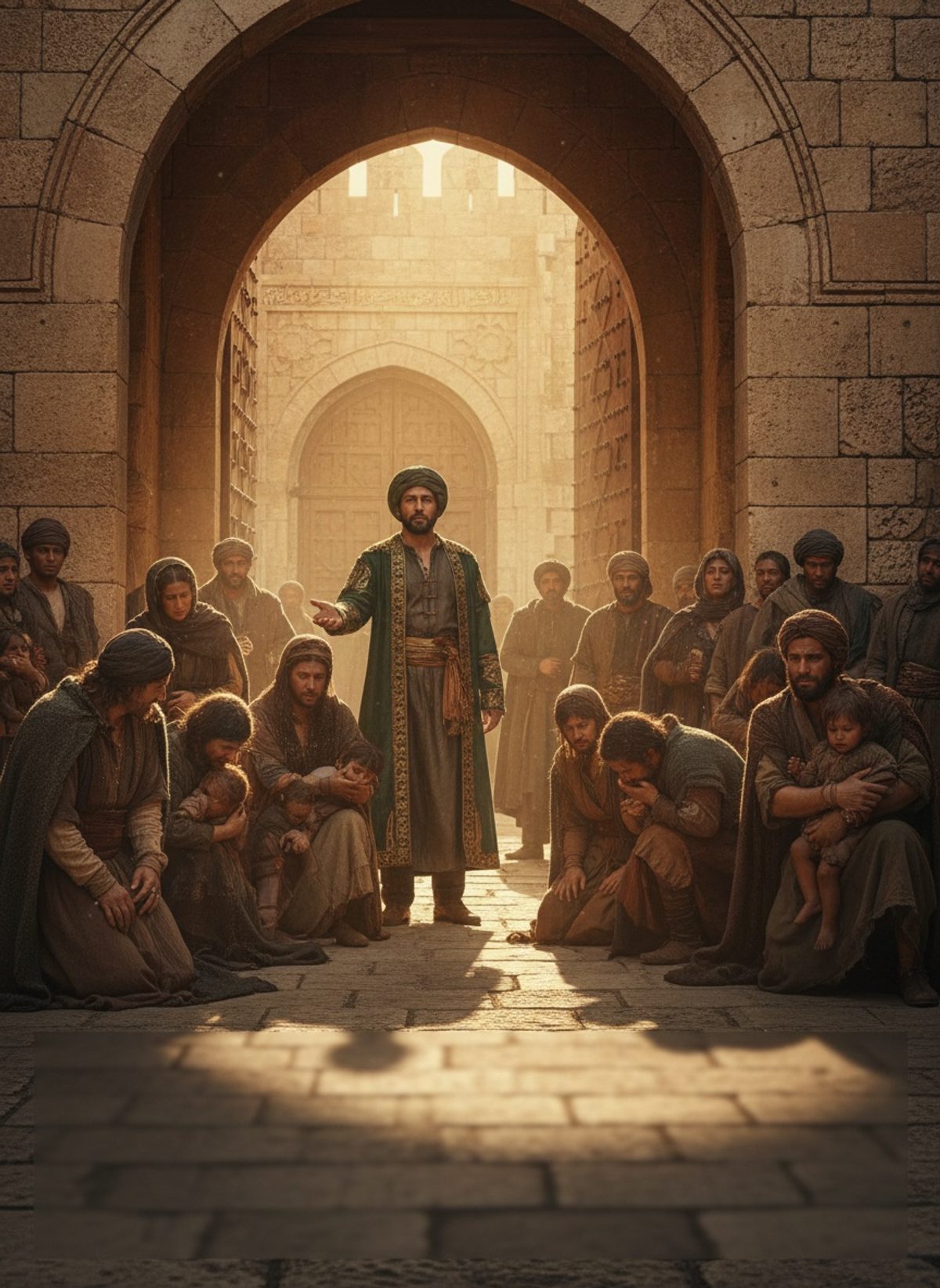
The desert wind whipped through the camp like a phantom, flicking grains of sand into faces bowed with exhaustion and defeat. Silence hung heavy, broken only by the soft clinking of chains as the captives knelt in the shadow of the Sultan's tent. The air was thick with the charged anticipation of what was to come, a clash not of swords but of wills and fates. In the heart of the encampment, Saladin, the Sultan of Egypt and Syria, rose to address his assembled generals and captives.
The Conquest of Jerusalem
In the autumn of 1187, the sacred city of Jerusalem found itself under new dominion. Saladin, having emerged victorious at the Battle of Hattin, now stood on the cusp of a monumental triumph: the reclaiming of Jerusalem, a city whose significance reverberated through the corridors of history and faith. It was a victory hard-won, one that had cost the lives of many and altered the landscape of the ongoing Crusader conflicts. The Christian forces, once confident and unyielding, were now diminished, their spirit broken amidst the ruins of their losses.
The capture of Jerusalem represented more than territorial gain; it was a profound statement in the clash of civilizations that defined the medieval world. Saladin's forces entered the city not in a frenzy of destruction, but in measured steps, echoing respect for the sanctity of this holy place. Among his troops and commanding officers was a sense of expectation. After all, the capture of such a city brought with it traditional spoils of war: wealth, leverage, and power. But for the thousands of Christian prisoners taken during the conflict, it could mean a fate of enslavement or execution.
The Expectation of Ransom
The custom of the era dictated that prisoners of war were a source of income for their captors. Each captive had a price, and their freedom lay in the hands of those willing to pay. For Saladin's generals, the potential ransom from these prisoners represented a treasure trove that could bolster their efforts and reward their struggles. Discussions among his ranks were focused on logistics — how much each prisoner would be worth, who among them could be traded for more strategic advantage, and how families could be contacted to secure their loved ones' release.
Read next: Saladin Held Jerusalem. He Chose Mercy Over Blood.
Yet standing before them was a leader whose vision often surpassed the immediate gains of his victories. Saladin was known not just for his shrewd military mind but also for his deep piety and sense of justice. His belief in the principles of Islam informed his actions, viewing his leadership as a service to a higher moral calling. His rule was characterized by acts of magnanimity unusual for an era steeped in bloodshed and reprisals. For Saladin, the conquering of Jerusalem was significant not just as a military achievement but as an opportunity to demonstrate the virtues of his faith.
The Unprecedented Act of Clemency
As Saladin surveyed the scene before him, he saw more than defeated enemies; he saw the faces of women who had lost husbands, children who had lost fathers, and the elderly who sought mercy in their last days. The sight was sobering, a stark reminder of the human cost intrinsic to the grand narratives of conquest. With a gesture that would echo through history, Saladin made his decision—a decision that stunned both friend and foe alike.
Despite the protestations and surprise of his generals, Saladin chose to grant clemency. The captives, instead of being held for ransom or sold into slavery, were set free. It was a decision informed as much by Saladin's strategic mind as by his compassion; a show of strength that could build bridges rather than burn them. In releasing the captives without ransom, Saladin aimed to engender goodwill and demonstrate the mercy espoused by his faith. It was an extraordinary act for the time, one that was meticulously recorded by contemporary chroniclers, including those from the Crusader side, who acknowledged the Sultan's unexpected leniency.
A Legacy of Mercy and Justice
This stunning gesture was not without its critics, both within Saladin's council and among those who sought to perpetuate cycles of war. Some saw it as a missed opportunity for political gain, while others lauded it as a triumph of humane leadership over barbarism. Yet, the impact of Saladin's decision rippled beyond the immediate aftermath. By choosing mercy over vengeance, he defied the expectations tethered to his role as a conqueror and laid a foundation for potential dialogue and reconciliation.
This act of clemency served not only as a moment of grace in a brutal age but also, perhaps, as a testament to the complex nature of leadership and the responsibilities that come with power. In a world driven by conquer-and-exploit narratives, Saladin's decision stands out as a rare moment where a ruler wielded compassion as a form of strength, reminding us of the profound capacities for empathy and justice, even amidst the harshest of times.
In an epoch where histories often revolve around battles and conquerors, the story of Saladin's mercy in the wake of Jerusalem's fall offers a narrative strand often overlooked — it speaks to the potential for humanity even in the ruthless theater of war, the kind of story they never taught you in school.