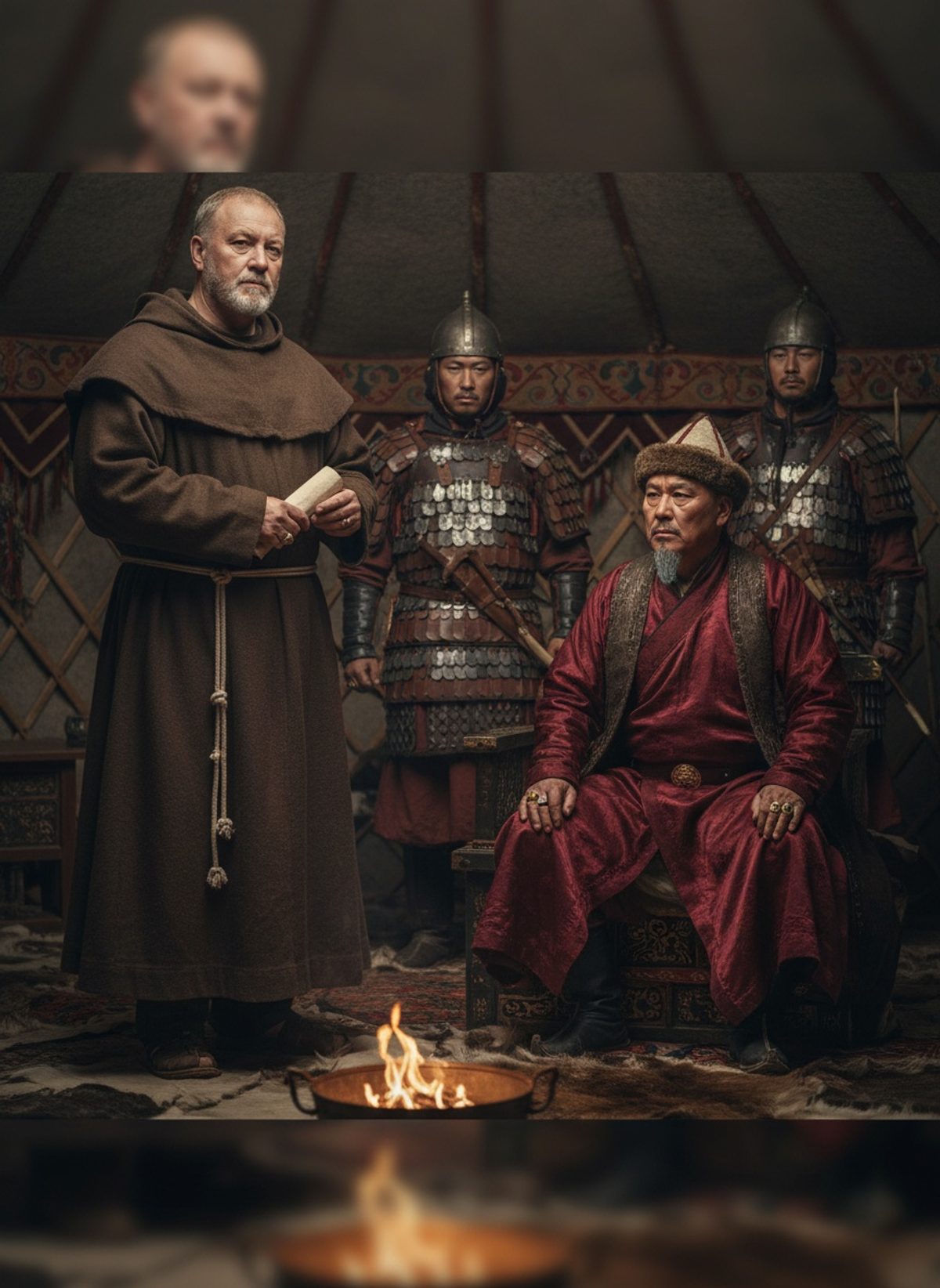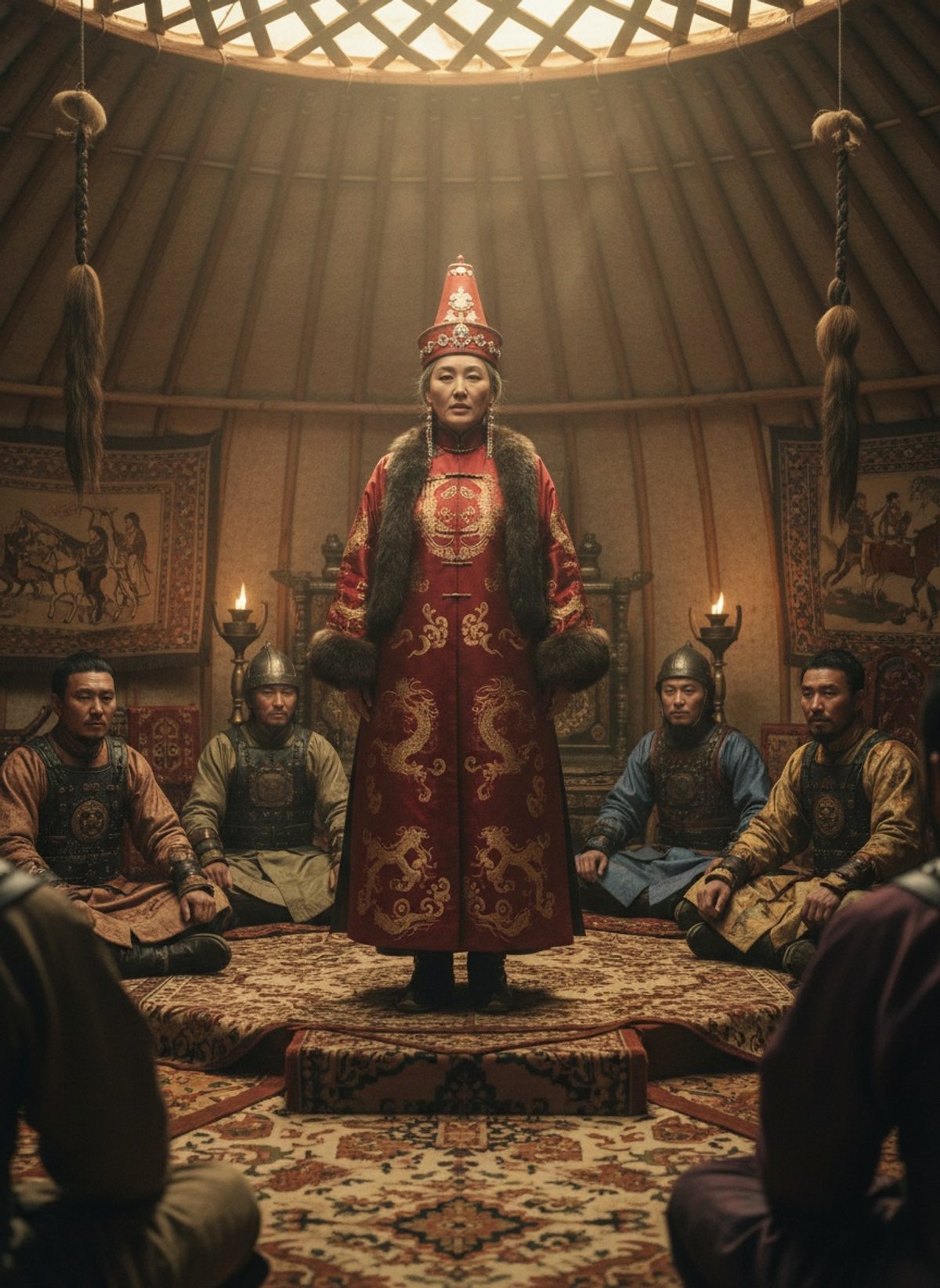
The air at Karakorum that morning was crisp and biting, typical of the Mongolian steppe in the heart of winter. Thin trails of smoke spiraled skyward from the city’s hearth fires, their warmth scant protection against the chill winds that swept down from the north. Here, in the capital of the Mongol Empire in 1246, the cadenced clatter of hooves underscored the urgency that weighed heavily in the atmosphere. It was a time of great political tension, for the transition of power was nigh, and the fate of one of the largest empires in history hung in precarious balance. Beneath great awnings of thick felt, warlords and dignitaries assembled, each vying to influence the future rulership. Yet, amidst a sea of power-hungry men stood Sorghaghtani Beki, a woman whose sharp gaze could pierce the steely resolve of even the most seasoned khans. She was here to speak for the dead—and to shape the destiny of the living.
The Shadow Behind the Throne
By the time Sorghaghtani Beki walked into the heart of Mongol power, she was no stranger to the art of politics. Born into the Keraites, a powerful tribe intertwined with the fate of Genghis Khan himself, she was well-versed in the labyrinthine paths of Mongol alliances. Upon marrying Tolui, Genghis Khan's fourth son, she became integral to the fabric of the Mongol elite. However, it was her intelligence and foresight, not just her lineage, that defined her legacy.
In the aftermath of Ögedei Khan's death, the Mongol Empire teetered on the brink of chaos. The question of succession was not merely a familial concern but a matter of international consequence. At stake was the stability of an empire that stretched from the steppes of Mongolia to the far reaches of Eastern Europe. While others jockeyed for power, Sorghaghtani observed with a calculated patience, choosing her moment with precision.
In a society where women were often relegated to the background, Sorghaghtani's influence was quietly monumental. She was never empress nor publicly acclaimed, but she wielded her power through her sons. With deft political acumen, she forged alliances with key figures across the empire, notably securing the support of Batu Khan, Ögedei's nephew and a potent force on the western frontier. Her narrative, though almost forgotten by history, is one of influence wrought through wisdom rather than war.
Read next: Jadwiga Owned a Crown. She Gave It to God Instead.
The Heart of the Empire
Karakorum itself was a testament to the might of the Mongol Empire. It stood as a cosmopolitan mosaic of cultures, where merchants and envoys from across the known world mingled. Their languages and customs merged into a symphony that filled the air with anticipation. It was within this vibrant chaos that Sorghaghtani Beki made her presence felt, quietly directing the course of events with a subtlety likened to an invisible hand turning the cogs of destiny.
Her choice of alliances proved pivotal. Sorghaghtani ensured her son Mongke was well-positioned to ascend the throne, albeit amidst great intrigue and danger. She cultivated relationships that crossed ethnic and geographical lines, dispelling tensions and navigating the complex dynamics of Mongol court politics with dexterity. The couriers bearing news and letters from distant lands were her lifeline, their intelligence and insights invaluable in her advisement and strategy.
While many sought favor through brute strength or extortion, Sorghaghtani exemplified the power of diplomacy and intellect. She was neither reigning from the throne nor brandishing a sword, but her strategic mind and commanding presence were unparalleled. In choosing Mongke Khan, she laid the groundwork for a leadership that would temper the empire's ferocious expansions with administrative acumen—an echo of her own balanced methodology.
The Legacy Unseen
By 1251, Mongke Khan was acknowledged as the Great Khan, a victory for both him and Sorghaghtani. Her deft negotiation and unwavering belief in her sons' capabilities had reasserted the dominance of Tolui's lineage over the empire. Yet, the true scope of her achievements lay not only in her sons' ascension but also in the stabilization of an empire often prone to fragmentation under less astute leadership.
Even in death, Sorghaghtani's influence reverberated through the corridors of power. Her efforts ensured that her descendants, including the famed Kublai Khan, would sit on thrones across Asia. Her legacy, quietly interwoven into the fabric of history, challenges the ancient perceptions of power and gender roles within the Mongol realm and beyond.
The story of Sorghaghtani Beki is a master class in leadership that transcends time. As history almost forgot her, the shadows reveal a figure who commanded respect, even amidst a patriarchal empire. Her gifts for diplomacy and governance, coupled with an indomitable spirit, nurtured a legacy that steered the Mongol Empire through one of its most tumultuous eras. Today, her story is a poignant reminder that true strength lies not in the wielding of force but in the subtle art of influence—proof that sometimes, those who speak for the dead wield the greatest power of all.