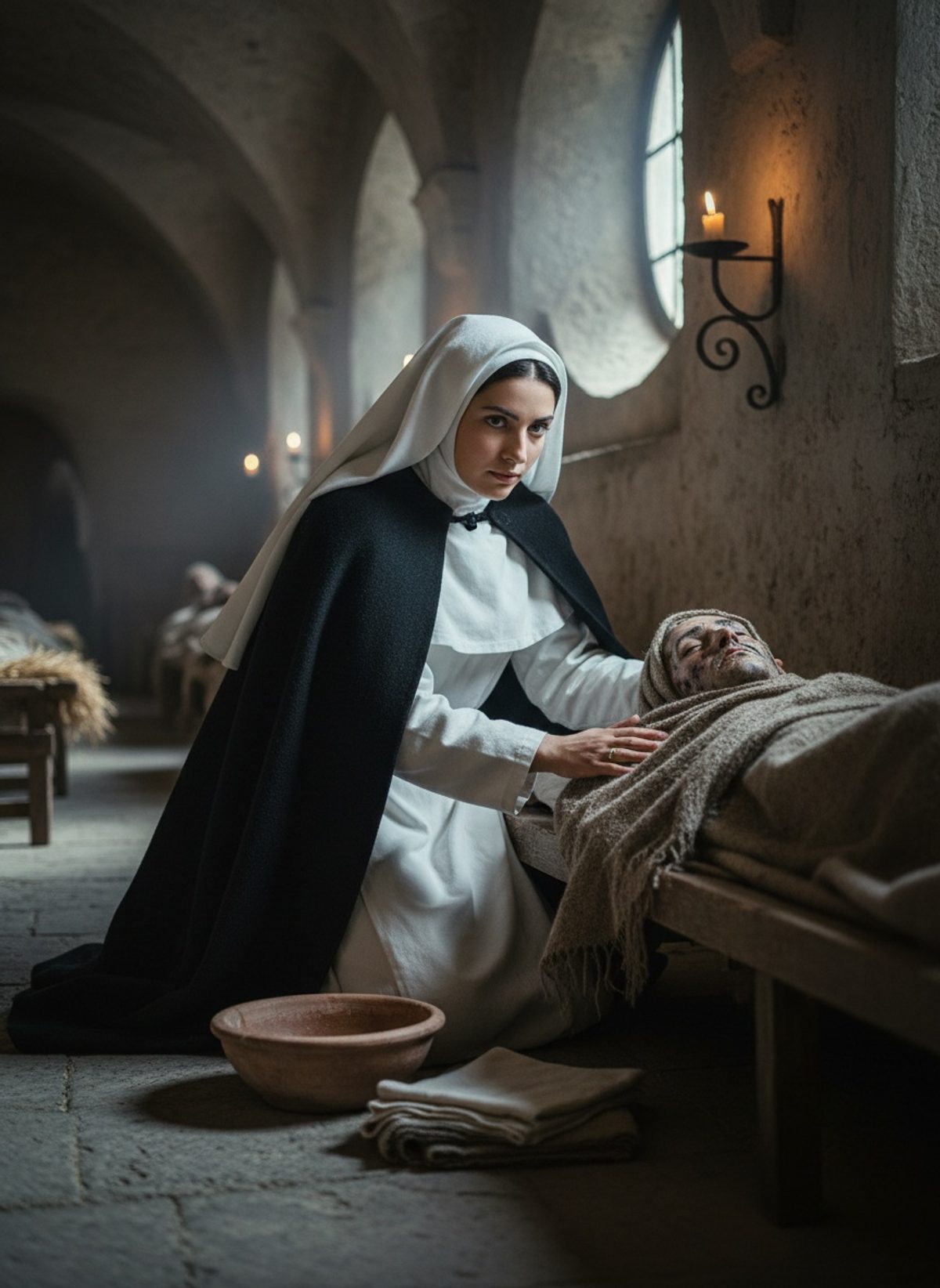
The acrid stench of fear mingled with the damp chill of disease as Catherine of Siena stepped through the threshold of the plague ward. Choked gasps and muted cries of suffering erupted sporadically, echoing between the stone walls darkened by shadow and despair. Her hands moved deftly, cooing assurances as she sponged foreheads, a gentle touch that left ethereal warmth in its wake. Her presence, humbly robed in austere simplicity, stood unfaltering amidst the desperation that had gripped Siena in 1374, a city once vibrant now shackled beneath the weight of the returning pestilence known as the Black Death.
The Plague Returns: A City Paralyzed
The return of the Black Death to Siena in 1374 forced the city into a suffocating silence. An epidemic that had previously decimated Europe in waves over the past few decades had come to terrible life again, haunting narrow alleys and bustling markets which now lay eerily deserted. The plague, an agent of chaos, struck indiscriminately, and with few left willing to confront the scourge, society faltered. Physicians barricaded in their homes, and priests recited last rites from doorways, preferring distance to comfort—choosing safety over succor.
Yet, amidst this abandonment, there stood one woman, Catherine of Siena, refusing to retreat. Born in Siena in 1347 to a modest family of dyers, she possessed an indomitable spirit and faith that not even the plague could quell. From adolescence, she had been deeply religious, reputed for expressing visions and devotion that had set her apart. By choosing to face the plague head-on, she transformed herself from a mere devout young woman into an emblem of steadfast courage—a contrast to the helplessness of the time.
Catherine's Unwavering Devotion
The plague spared no region of Siena, gnawing at its very fabric, but Catherine pursued her mission with unwavering resolve. Siena's populace watched as she entered the makeshift hospitals—hastily constructed shelters for the diseased—and embraced the unthinkable task of ministering to those society had forsaken. She washed and dressed festering wounds, whispered prayers of peace, and offered the sick a companion in death's presence. Her strength came not from physical prowess but from a metaphysical certainty in her purpose—a focusing lens of clarity amid the ever-deepening darkness.
Read next: Ibn Battuta Was Robbed of Everything. He Kept Walking.
This act of selflessness transcended her humble origins and drew the eyes of the city and beyond. In a panicked world consumed by fear and suspicion, Catherine seemed untouched by the dread gripping Siena, her radiance a beacon of hope. Her fame grew not only for her compassionate work but also for her firm influence in ecclesiastical matters. To the bewildered city, her acts were both a sanctuary and a beacon; they instigated whispers of divine intervention through human hands.
In Dialogue with Power
As word of her work spread, even the halls of Rome echoed with her name. The pope at the time, whose name and specific historical actions remain a silence protected under centuries, was deeply troubled by the plague's resurgence and its implications for Christendom. It is said that he implored Catherine to desist, fearing not only for her safety but for the unsettling contrast her courage drew with the church's impotence in the face of this inexplicable ordeal.
In the midst of her service and long after, Catherine wielded significant sway in ecclesiastical and temporal politics. Known for her correspondence with key religious and political figures, she urged reform and advocated for the spiritual renewal of the church. Her intimate role in the Western Schism later illustrated the breadth of her influence, a precursor to her canonization in 1461, long after her death in 1380.
Why Her Story Matters
Catherine's journey into the heart of pestilence, when flight was the norm, continues to stir the human heart across the chasm of centuries. She personified the critical intersection of faith and action, where moral conviction challenges the status quo and defies the contemplation of mortality's finality. Her legacy persists not as a mere historical figurehead but as a nuanced symbol of anyone choosing courage over comfort when darkness crowds in. It compels us to ponder what it truly means to hold fast to one's beliefs amidst life's most terrifying trials.
The resilience and determination embodied in Catherine of Siena’s steps through the plague-stricken streets remains a profound testament to the enduring capacity of the human spirit. Her life offers an invitation to re-evaluate our own responses to crises, challenging us to reflect on how we might manifest compassion and conviction when faced with the unyielding embrace of fear.