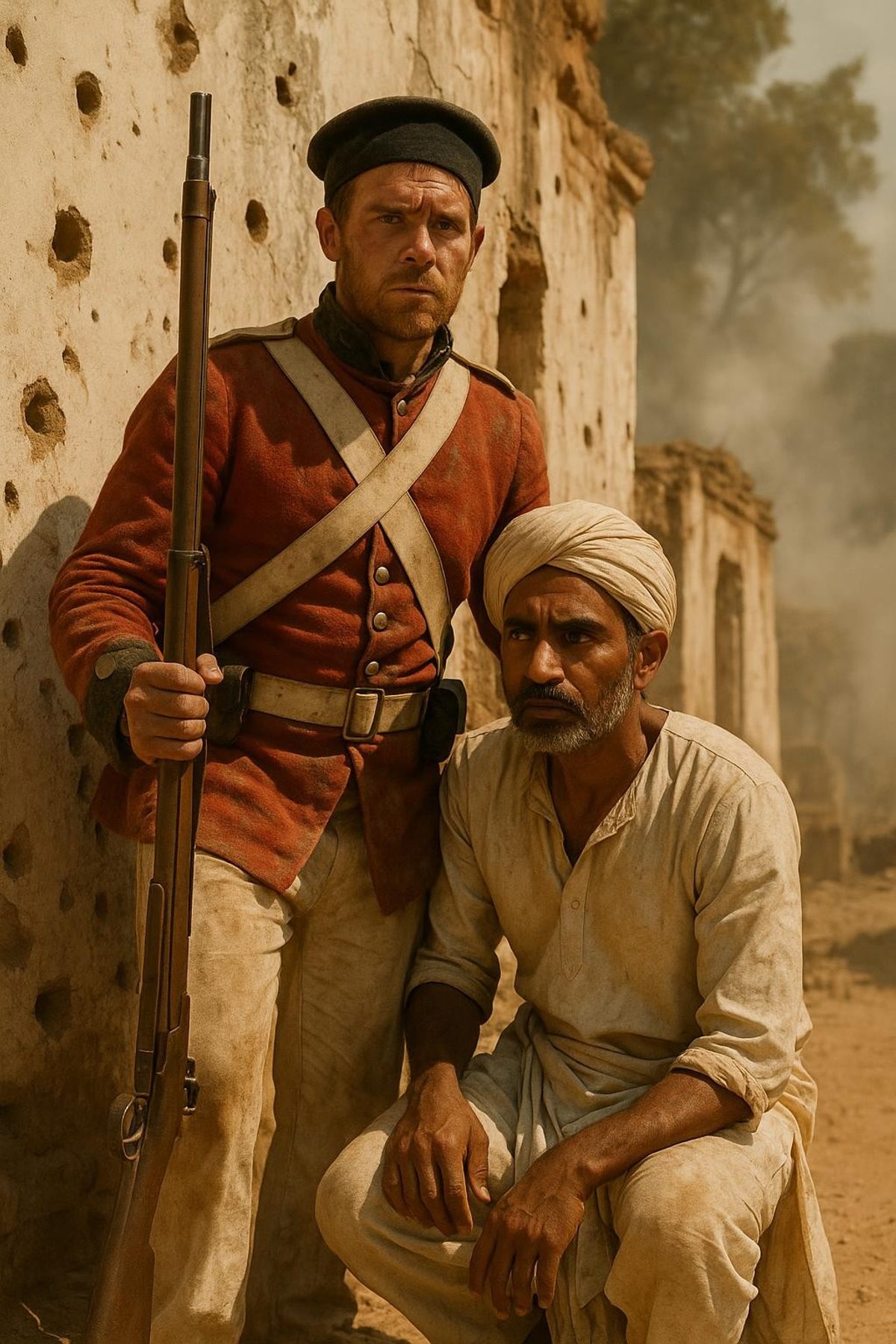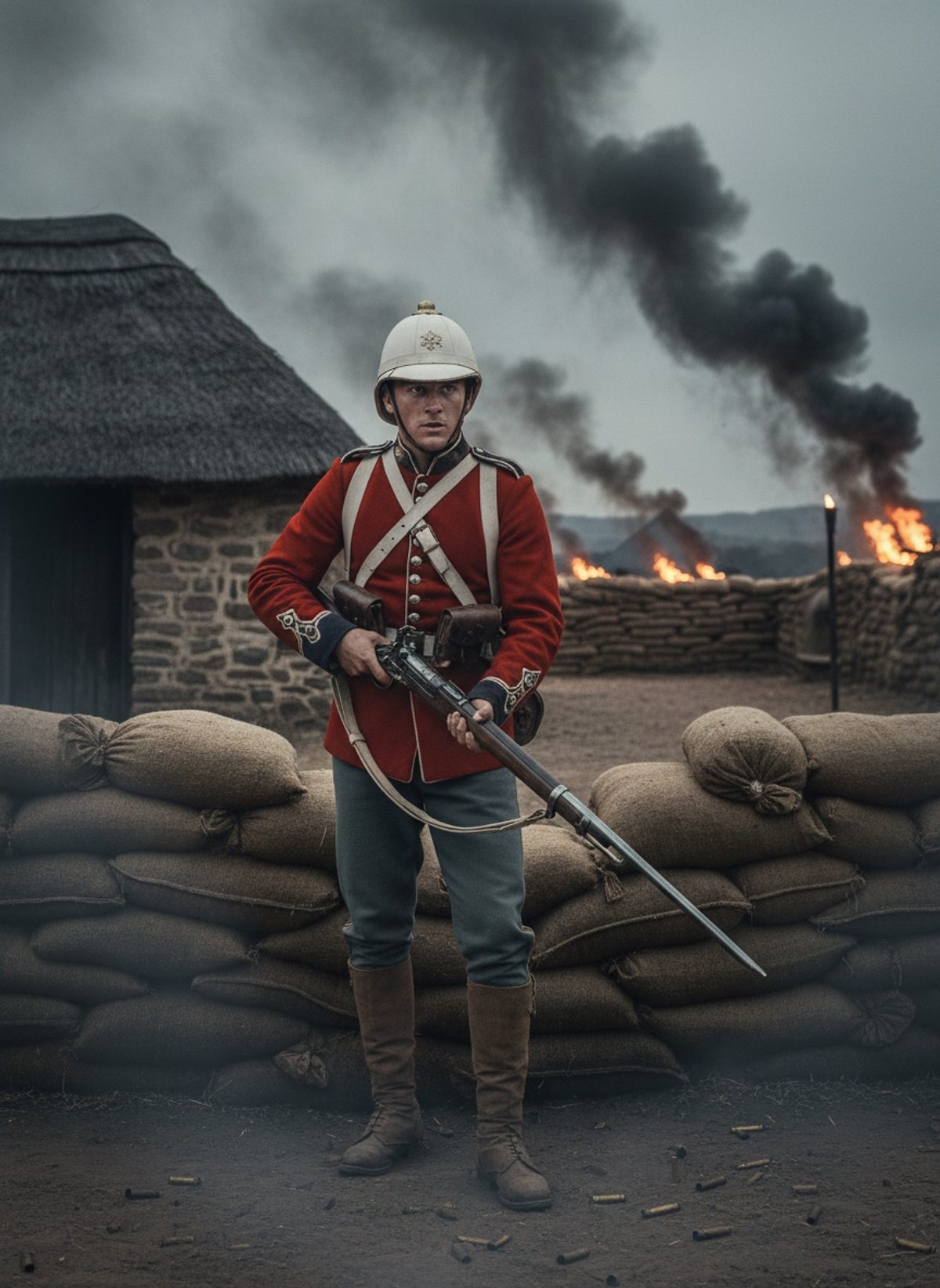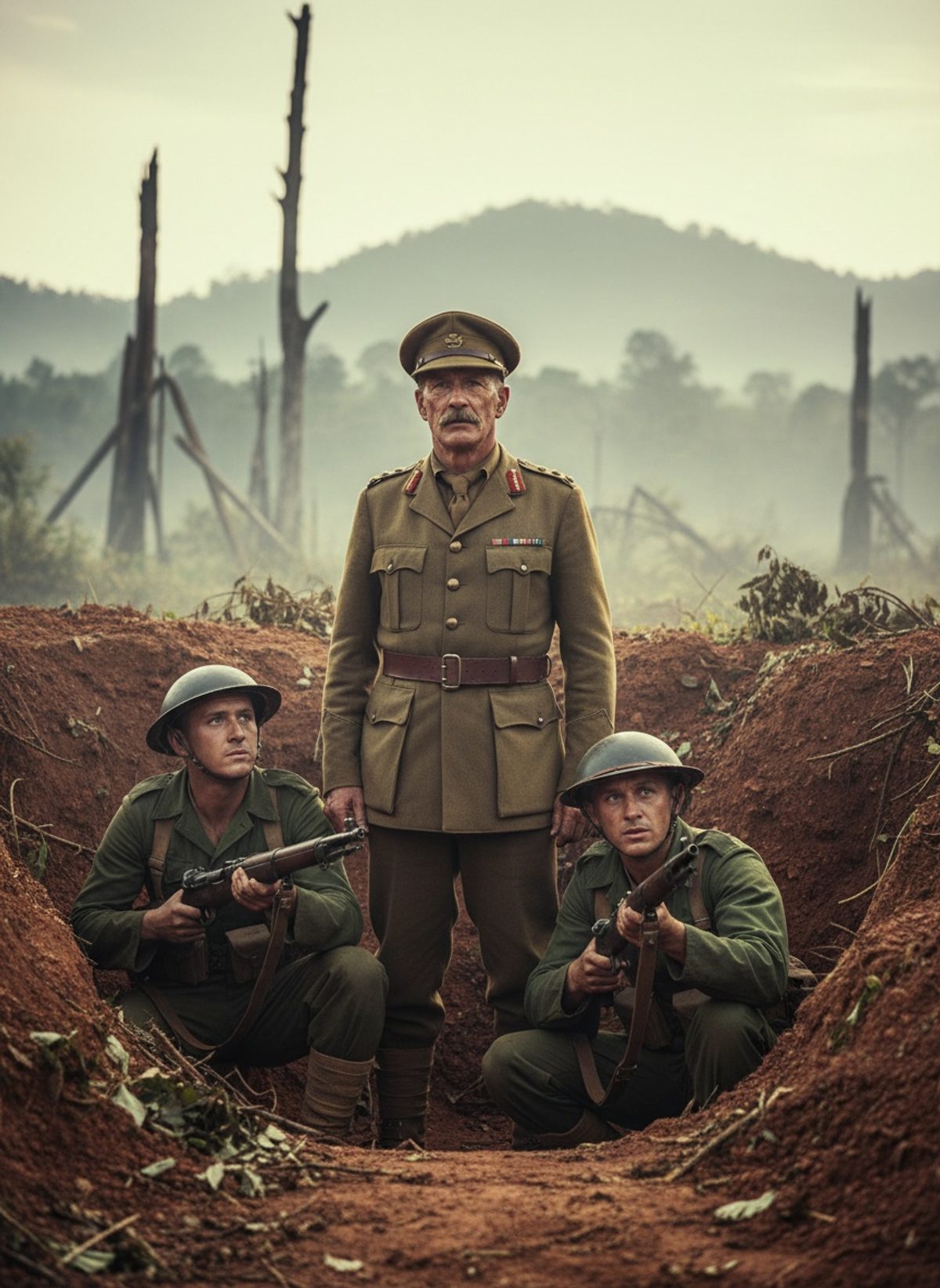
Kohima was a small town. But its significance in 1944 was enormous.
As the Japanese forces cut through Asia like a relentless tide, their sights turned towards India. Winning at Kohima would open the path to the vast Indian subcontinent, a jewel that, once taken, could not only shift the momentum of the Second World War but also alter the course of history in the region. The men stationed there understood this profound weight, perhaps none more so than Brigadier John Laverty.
Laverty was not the commander one might expect in the midst of a brutal siege. At 58, his years outstripped many of his men, but he also faced an enemy more insidious than the soldiers he battled. The diagnosis was stark and unyielding: cancer had taken root, a silent war waging within him, with a predicted end looming mere months away. The doctors knew it. Laverty unquestioningly knew it. But his troops did not. And it was with this secret burden that he led them, rising each dawn to survey the front lines, entirely aware of the shells and bullets that could shatter him faster than the disease ever could.
In historical accounts of war, such paradoxes are not anomalies, but Laverty's story takes on a particular fervor at Kohima. As the Japanese forces pressed forward, the soldiers under Laverty’s command saw the enemy approaching in wave after determined wave. Defensive positions shrank under relentless pressure, contracting until the final holdout was no larger than a mere tennis court. Yet, each day, Laverty's presence in those narrow trenches became a linchpin of their collective resolve.
Read next: They Were Killing His Men: Bhanbhagta Gurung at Snowdon
The harsh realities of war forged every man with fire and steel, but for Laverty, the enemy was relentless erosion — not just of the earth around him, but within him. To the men, he was an indomitable figure, often the first light they saw each morning. It wasn’t an act of obligatory inspection but rather a manifestation of solidarity, threading an invisible line of courage and determination through the ranks as tangible as lead through the barrel.
The Japanese siege of Kohima was as much a battle of endurance as of weaponry, with one side intent on conquest and the other driven by the unyielding tenet of defense. Supply lines cut, ammunition scarce, and the prospect of reinforcements slim, the defenders knew that their stand was not merely a geographical boundary but a psychological bulwark against Japanese expansionism. Each sliver of land maintained was precious; each day held out, a victory against overwhelming odds.
This scenario was amplified by Laverty's peculiar form of leadership. Not content to sit back and command from a safe distance, he moved forward. His defiance of the conventions dictated by his health was mirrored in his defiance on the battlefield. The men who walked alongside him felt the unspoken weight of their shared secret, a visceral truth stronger than any rallying cry. Descriptions of the battles fought at Kohima seldom mention Laverty’s name, but his quiet fortitude bore into the walls of history, a resonance still felt in the unspoken echoes of war stories not told.
But what had forged Laverty into such a figure of stoic bravery? A life lived through the angular shifts of global conflict, honed in an epoch where the specters of trench and field had already carved deep lines into the souls of those who took part. Laverty belonged to an era where honor was often writ large in the small interactions between men: a lantern lit for comradeship in the densest darkness. And at Kohima, this ethos distilled into every decision, every measured step along the dew-strewn lines of waiting soldiers.
The battle for Kohima stretched on with a tension that felt unending, but the presence of Laverty lived in the fortitude of the troops. His footsteps, dragging subtly from the fatigue of all-consuming illness, cemented a legacy. For when the siege lifted and the hills breathed freedom once more, it was Laverty who captured the narrative of resistance simply through being there: a living contradiction waging two wars with a singular, unwavering focus.
Yet even as the Japanese forces receded, Laverty’s personal war raged on. History records victories in the stark divisions of won and lost, yet Laverty's ultimate defeat in his private battle writes a deep, poignant layer into the narrative tapestry of the Second World War. He did not see the eventual end of the broader conflict, but his contribution lay not in the length of his battle, but in its depth.
At its core, Kohima was more than a military campaign; it was the canvas for unimaginable human feats. The space where one man, knowing the death lurking beneath each breath might outmatch even that of gunfire, chose to stand firm. Laverty's decision was not motivated by accolades or medals, for none knew of his condition until the war's afterword painted his actions with reflective admiration. Instead, it was the dignity of purposeful resolve, the conviction that those who follow do so best when their leader walks the same perilous path.
In the story of Brigadier John Laverty, we find not merely a footnote in the text of an epic war but the very definition of leadership under pressure. He fought his battles on two fronts — one visible, one hidden — and through choice, not obligation, became the guardian of a strategic crux that shifted tides thousands of miles away. And so Kohima's legacy is also his, whispered across the annals of history as a testament that sometimes the hero we remember is the one who simply chose to stand.