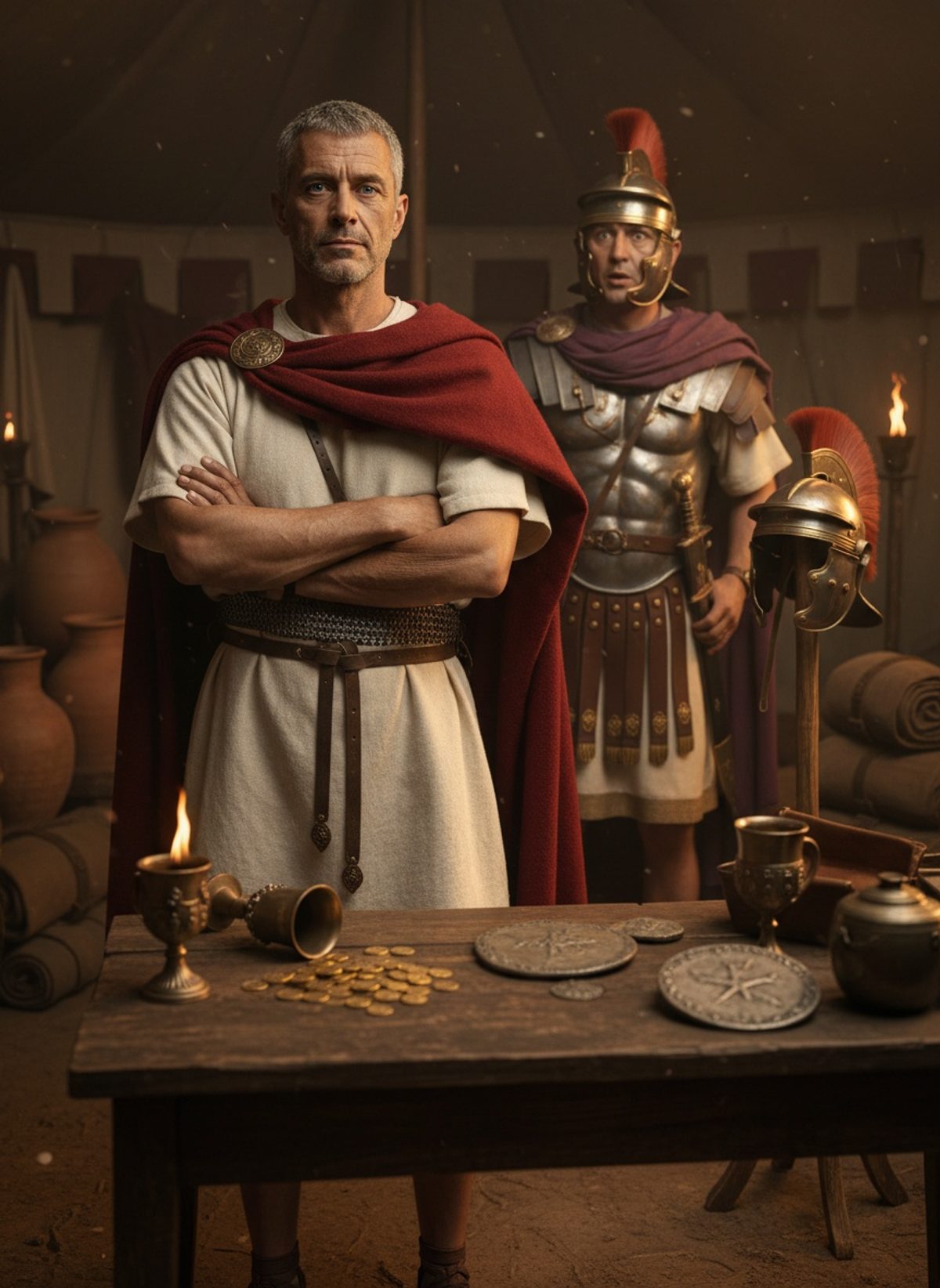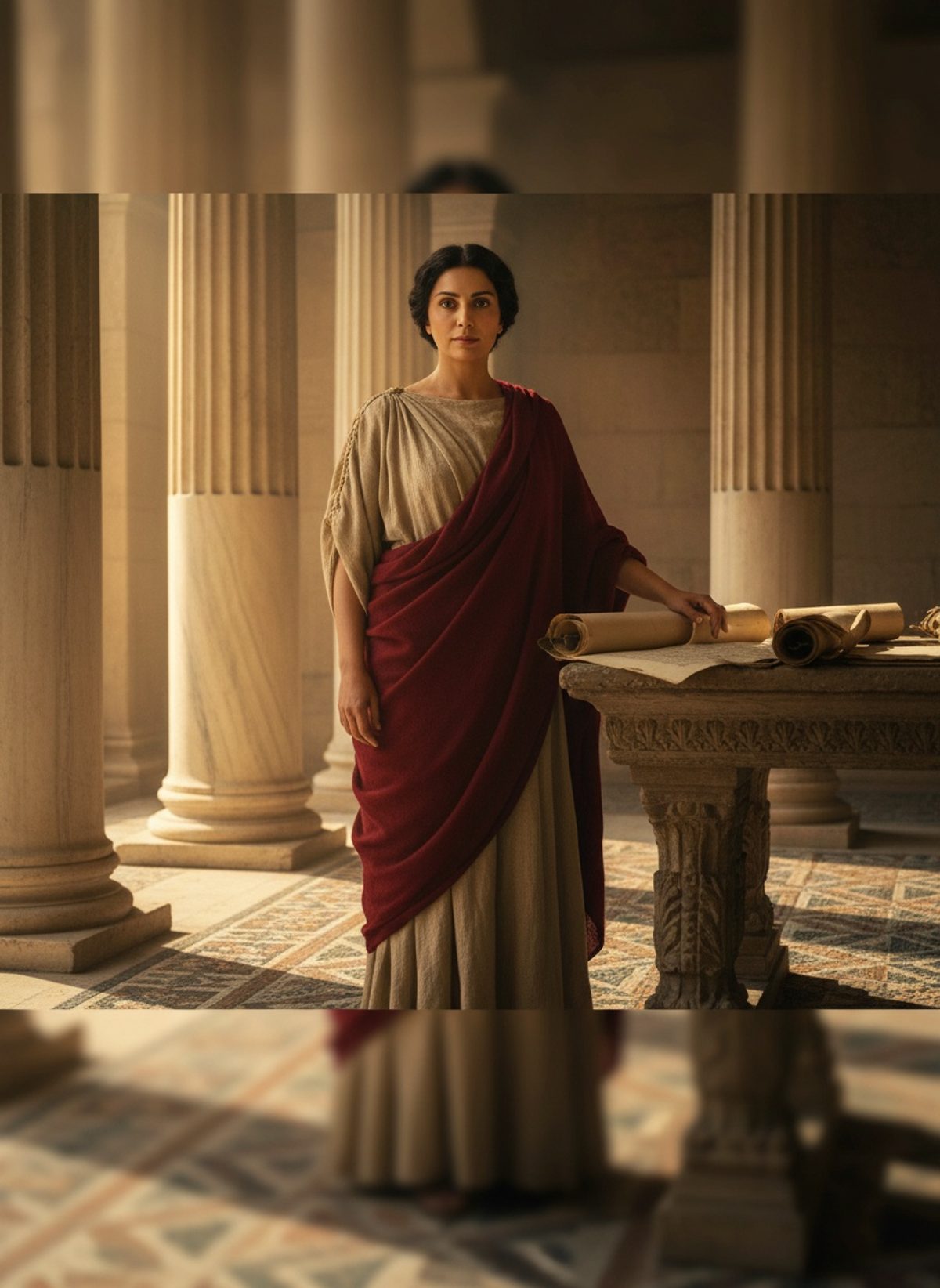
Her hands knew geometry better than her own mind. Hypatia was so skilled and renowned that even in a world dominated by men, her fame reached across the Roman Empire.
The Lighthouse and the Scholar
The city of Alexandria was much like a living library itself, hosting a symphony of voices and cultures in the heart of the Late Roman Empire. Known for its breathtaking Lighthouse, one of the Seven Wonders of the World, and previously for its great library, it attracted scholars and students like moths to a flame. Among them stood Hypatia, a luminary whose intellect cast a long shadow across the ancient world. She was a philosopher, an astronomer, and above all, a mathematician—a trinity of wisdom in female form in an era when women were often relegated to the shadows.
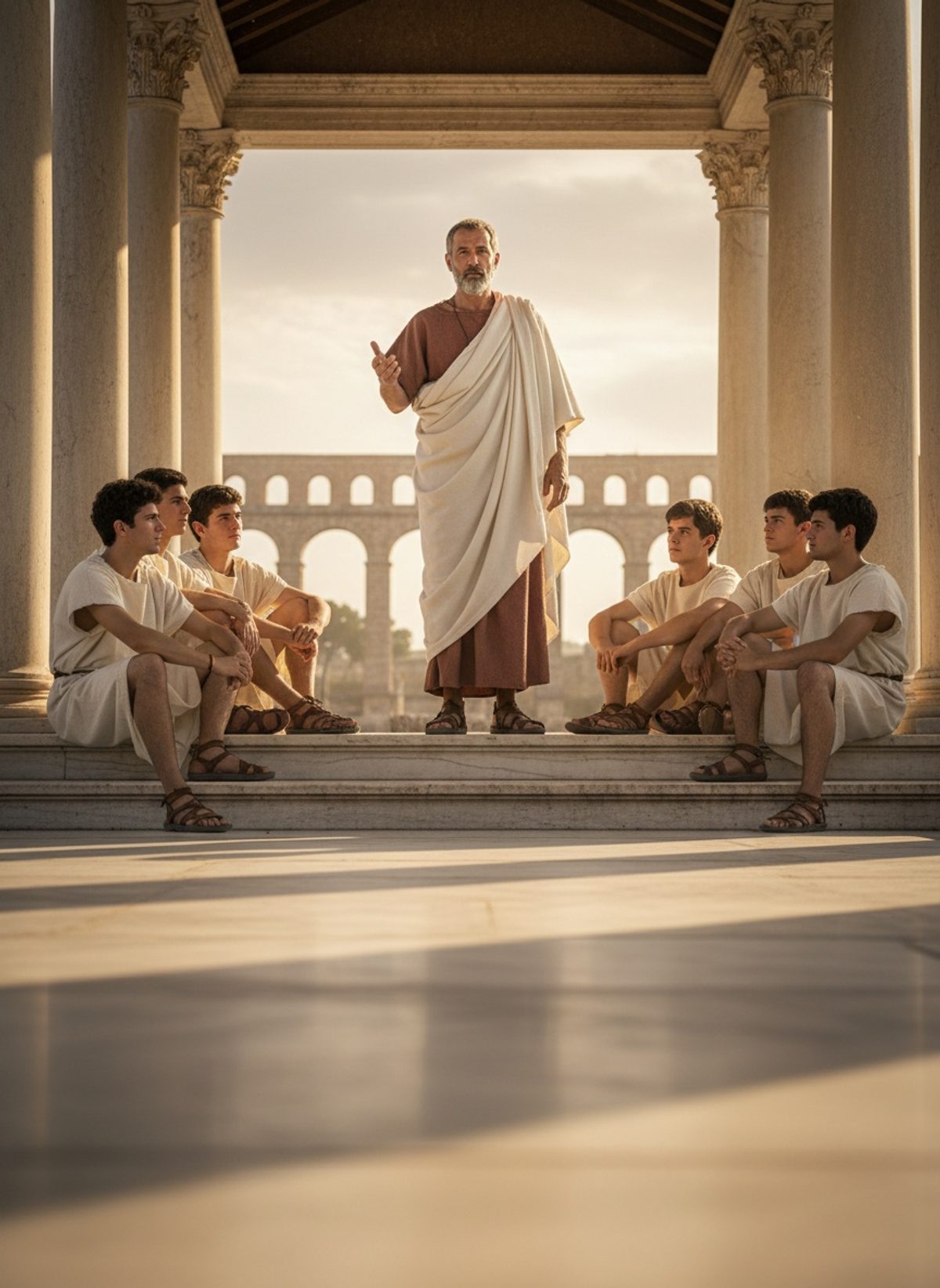
Hypatia's father, Theon, was a celebrated mathematician and philosopher, and much like a sculptor chiseling stone to reveal the beauty beneath, he shaped Hypatia, endowing her with a mastery of knowledge and an insatiable curiosity. At her school, which was now the epicenter of mathematical and philosophical thought in Alexandria, she taught a wide array of subjects, from Neoplatonism and astronomy to practical mathematics. Students traveled from across the empire, eager to sit in her lecture hall, tucked away on Alexandria's storied streets.
Her progressive view that knowledge should be free for all rang through the corridors, echoing from wall to eager ear, as she bent the minds of anyone brave enough to challenge the status quo. Hypatia was not simply a sage of theory; she deeply respected empirical evidence, a precursor to the scientific method that many of her male counterparts overlooked.
Read next: Researcher Burns Star Wars Scrolls to Crack Ancient Roman Library Mystery
She fiercely held her ground, insisting on secular knowledge in a world increasingly split by religious fervor. The great library was gone, but its legacy was defiant in her teachings, saturating her classroom with the aroma of ancient parchments and ink-stained fingers. Under her watchful eye, Hypatia's school had become a beacon of learned endeavor—a flicker of the past’s glory amidst the encroaching shadows of intolerance.
Politics and Piety
Amidst the marble columns and bustling marketplaces, Alexandria was a city in tension, grinding under the weight of religious schisms and fluctuating power. Christianity had emerged as a dominant force, challenging traditional Roman polytheism and gripping the city's heart with fervent zeal. In 415 CE, this fragile balance tipped dramatically.
The reverberations of political maneuvering reached even the peaceful sanctum of Hypatia's study. Her relationship with the city’s Prefect, Orestes, who sought her counsel, stirred the ire of Cyril, the bishop of Alexandria. To Cyril, Hypatia represented an infuriating obstacle—knowledge that tainted the purity of his ecclesiastical dominion with pagan allurements.
Yet, despite the tides of religious conviction rising around her, Hypatia remained steadfast and refused to renounce her beliefs or hide her teachings. For her, the preservation and propagation of knowledge transcended politics and piety—a commitment that would ultimately weigh heavily upon her and upon Alexandria itself.
The streets that sung with her accomplishments were now ominously lined with followers whose loyalty to Cyril transformed whispers of disapproval into shouted threats. The streets no longer held safety or sanctity for teachers like her in those fractious days.
The Mob and the Legacy
But the dire warning signs were all too late. On an ill-fated day in 415 CE, as Hypatia rode through the bustling streets of Alexandria, her chariot was intercepted by a mob—baying for what they deemed justice, but what bore the stains of intolerance and fear. They dragged her from her chariot, her cries flattened by hatred and fury.
What happened next was an orchestration of savageness; robbed of her life and her scholarly legacy, Hypatia's end was brutal and swift. Her books, the vessels of her teachings, bore the same fate, fueled by a fire of ignorance that sought to crush what it could not understand.
The loss was immeasurable. It was as if Alexandria, a city that once stood as a testament to human achievement and curiosity, had chosen a path of darkness, pulling Hypatia into the depths of its transformative anguish. The lighthouse still beamed, but its companion in wisdom no longer illuminated the learning halls of the city.
Yet, despite their efforts to erase her, Hypatia's influence lingered, whispering through the ages, challenging the narratives written by those who condemned her. Her story, a fragment of a lost era, serves as both a cautionary tale and a beacon—reminding us how easily the fires of fanaticism can consume truth and progress, but also how the seeds of knowledge persist, sparkling in the shadows, waiting to be rekindled. The sparks of such brilliance lie dormant in every scroll, every classroom, awaiting those brave enough to uncover, understand, and uphold them.