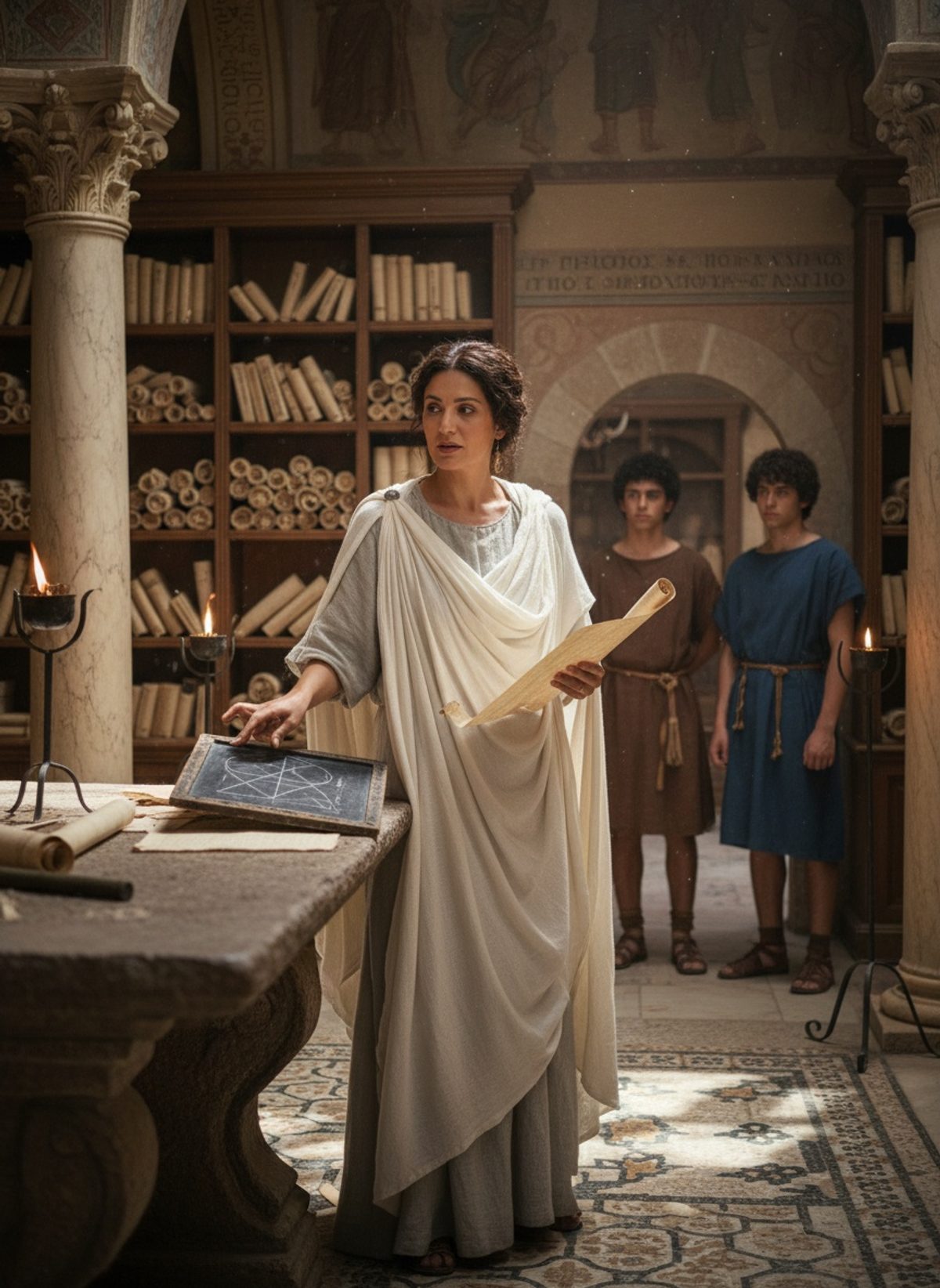
The sands of Alexandria swirled chaotically in the street as Hypatia heard the unmistakable clamor of an approaching mob. She remained steady, her mind as clear as the day she first solved the mysteries of the stars. Dust smeared her pupils like storm clouds over a calm sea, yet there she stood, unaffected, poised like a statue among the chaos. Inside the dimly lit confines of her academy, the smell of parchment and ink filled the air—fragile whispers of ancient wisdom waiting to be silenced.
The Philosopher of Alexandria
Hypatia, in the heart of Alexandria during the late 4th and early 5th centuries CE, was a beacon of knowledge and freedom. The daughter of Theon, a respected mathematician and astronomer, Hypatia inherited not just scrolls and instruments but a passion for the intellectual pursuit of truth. Alexandria, with its grand library, was a city alive with innovation and philosophical debate, and Hypatia seized this opportunity by leading lectures across the city’s public spaces.
As she walked through the bustling streets adorned with relics of Hellenistic architecture, Hypatia attracted scholars and philosophers eager to learn from her unparalleled intellect. Her teachings in mathematics, astronomy, and Neoplatonic philosophy not only captivated the keen minds of her era but also inspired respect and adoration. To her students, she was the protector of the Platonic heritage, seamlessly merging scientific inquiry with metaphysical exploration.
Hypatia’s independence and authority challenged the societal norms of the time. A woman answering to no man—a notion radical enough to inspire admiration in some and hostility in others. Those unaware of her luminous teachings might find this peculiar; yet, her intellect defied convention, weaving a tapestry of logic and celestial wonder in a world where myth often overshadowed reason.
Read next: The Map Was Buried for 1,500 Years. It Changed Everything.
The Gathering Storm
The serenity of Hypatia’s scholastic life was threatened by the undercurrents of political and religious strife. In Alexandria, a city where cultures and beliefs intertwined with complexity, the same streets that had once been her classroom began to breed antagonism. The rise of Christianity as a dominant force in the Roman Empire marked the inevitable clash with the traditionalists and pagans who had, for centuries, cherished the Smyrna breath of Greco-Roman wisdom.
Hypatia, a figure of unflinching logic, had unwittingly become embroiled in the political tensions between Cyril, the patriarch of Alexandria, and Orestes, the Roman prefect. As rumors spread, branding her a witch and a symbol of pagan idolatry, suspicion eclipsed her reputation. In the year 415 CE, the shadows of scholastic pursuit became tinged with the fiery hues of impending violence.
One fateful day, the doors of Hypatia’s sanctuary were breached by a rabble fuelled by fervor and fanaticism. In their eyes, her allegiance to reason was a form of heresy. They viewed her vast assemblage of books and scrolls not as treasures of human achievement, but threats to their burgeoning ideology. The scent of smoke mingled with the acrid fear that permeated the walls, books fleeing into the secrecy of darkness as violent hands tore at the very fabric of Alexandria’s learning.
The Silence of the Scrolls
In the wake of Hypatia’s tragic death, much of her work was scattered, destroyed, or absorbed into the shadows of history. Like a treasure chest submerged beneath unforgiving waves, the knowledge she had painstakingly nurtured was thought lost to antiquity. Her teachings endured at the fringes, whispered among the surviving pupils whose memories served as living libraries.
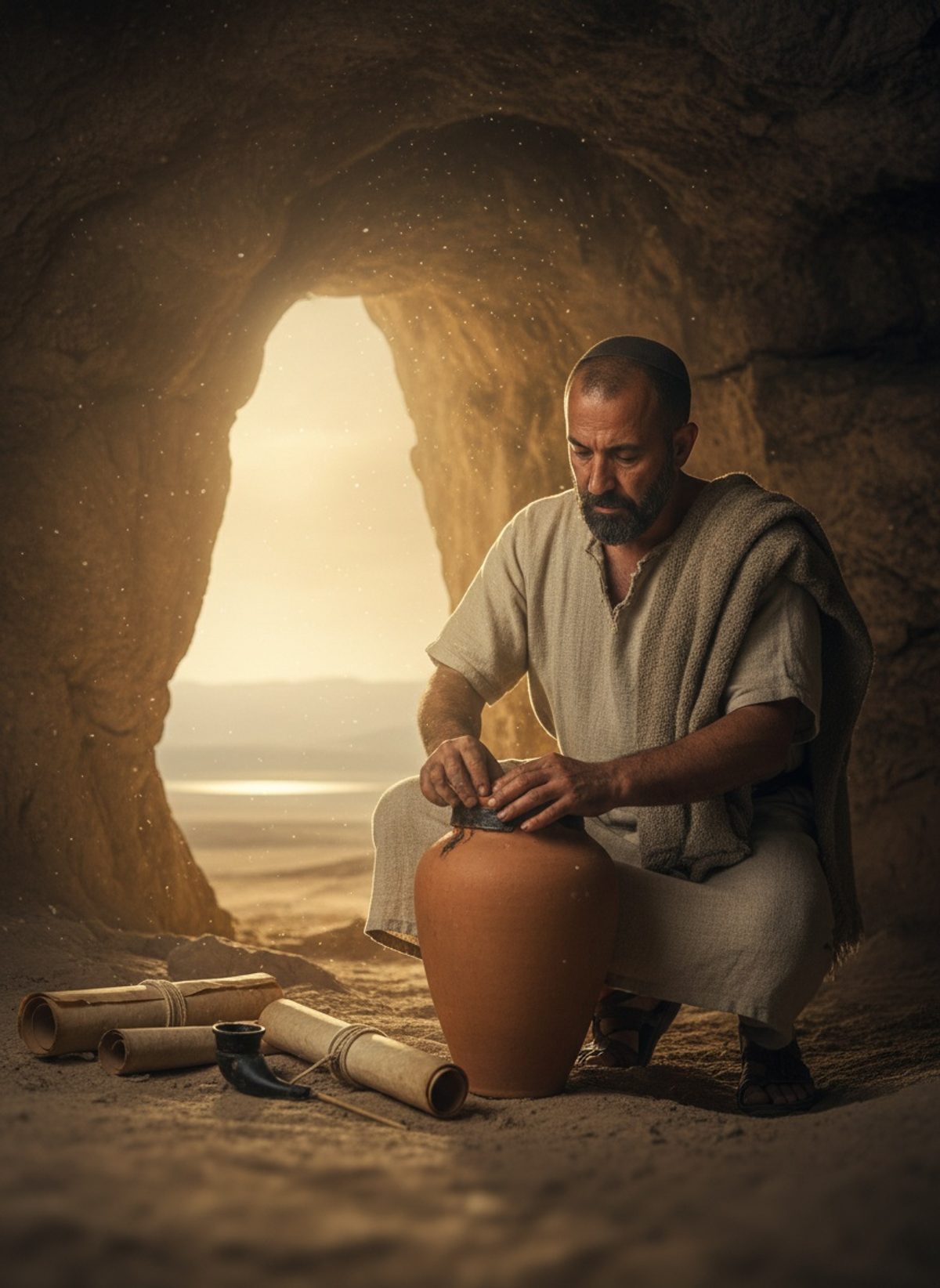
Yet, fate, ever a fickle mistress, had not entirely eradicated Hypatia’s legacy. Among the chaos and rubble, a single knot of scrolls survived—its survival as miraculous as the knowledge engrained within. The scrolls' existence whispered through time, a faint echo resisting the tide of oblivion. Generations passed down stories, preserving the knowledge that had once illuminated Alexandria’s streets.
While the scrolls awaited their revival, they slept fitfully within the sands—an immovable testament to Hypatia's endeavor. The manuscripts became entwined with myth until scholarship and legend blurred seamlessly as one. They spoke of fragmented wisdom, enigmatic and cryptic, reserved for discovery by future seekers of truth capable of unveiling their hidden depths.
The Rediscovered Voice
Centuries passed before remnants of Hypatia’s thought would reemerge, piquing the curiosity of historians and philosophers who dreamt of unearthing the unknown borderlands of early scientific thought. The rediscovery of these ancient texts in dusty archives and obscure libraries reignited a flickering torch of admiration for Alexandria’s most enigmatic woman.
As scholars began to decipher the scrolls, they marveled at the warp and weft of mathematics interlaced with philosophical musings reminiscent of a serene symphony. The writing revealed Hypatia’s pioneering ideas, gestures towards scientific principles far ahead of her time. It was as if the ragged parchment preserved her voice amidst history’s deafening silence.
In the scrolls, the attribution of ideas lost became less significant than understanding the resilience of Hypatia’s legacy—a narrative of learning and tenacity silhouetted against the backdrop of an age teetering between enlightenment and darkness. This voice, a susurration reborn from Alexandria’s wellspring, compelled the world to reconsider the landscape of learning it had once paved over.
Today, Hypatia stands not only as a paragon of intellect and courage but as a reminder that knowledge, no matter how threatened, holds an enduring allure. Her story, mirroring the eternal spark of curiosity, encourages the continued pursuit of truth—undaunted by the veils of time and oblivion. Thus, she speaks still: not from silence, but through the voices she inspired, transcending the ages with wisdom preserved anew.