458 BC. Dust hung in the air over Rome’s farms. The city’s future rested on humble soil.
While senators convened anxiously, a farmer named Lucius Quinctius Cincinnatus stood waist-deep in furrows outside the city. His hands were calloused from toil, a reflection of the life he had embraced after turning away from Roman politics.
Yet, on this quiet day, Cincinnatus was not summoned by the charms of agrarian life alone. Rome was in peril, trapped in the icy grip of the Aequi, and her only hope lay with him. The life of every soldier caught in a mountain pass screamed for his immediate leadership.
A Call to Duty
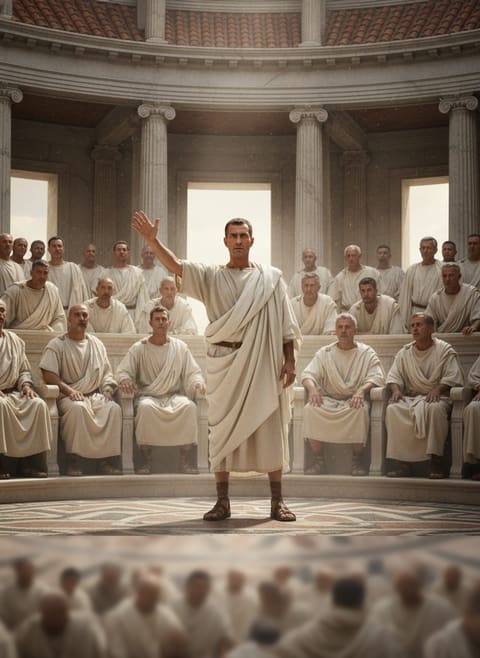
The Aequi, a fierce tribe from the Apennine Mountains, had penned the Roman army in a deadly vise, a mountain pass near Mount Algidus. Rome itself shuddered under the specter of invasion. Never had the need for decisive leadership been more urgent. Word reached the Roman Senate that a dictator was needed—a man able to seize undivided control quickly and effectively. They knew where to look.
Read next: Servilius Faced the Bribe. He Laughed Rome to Shame.
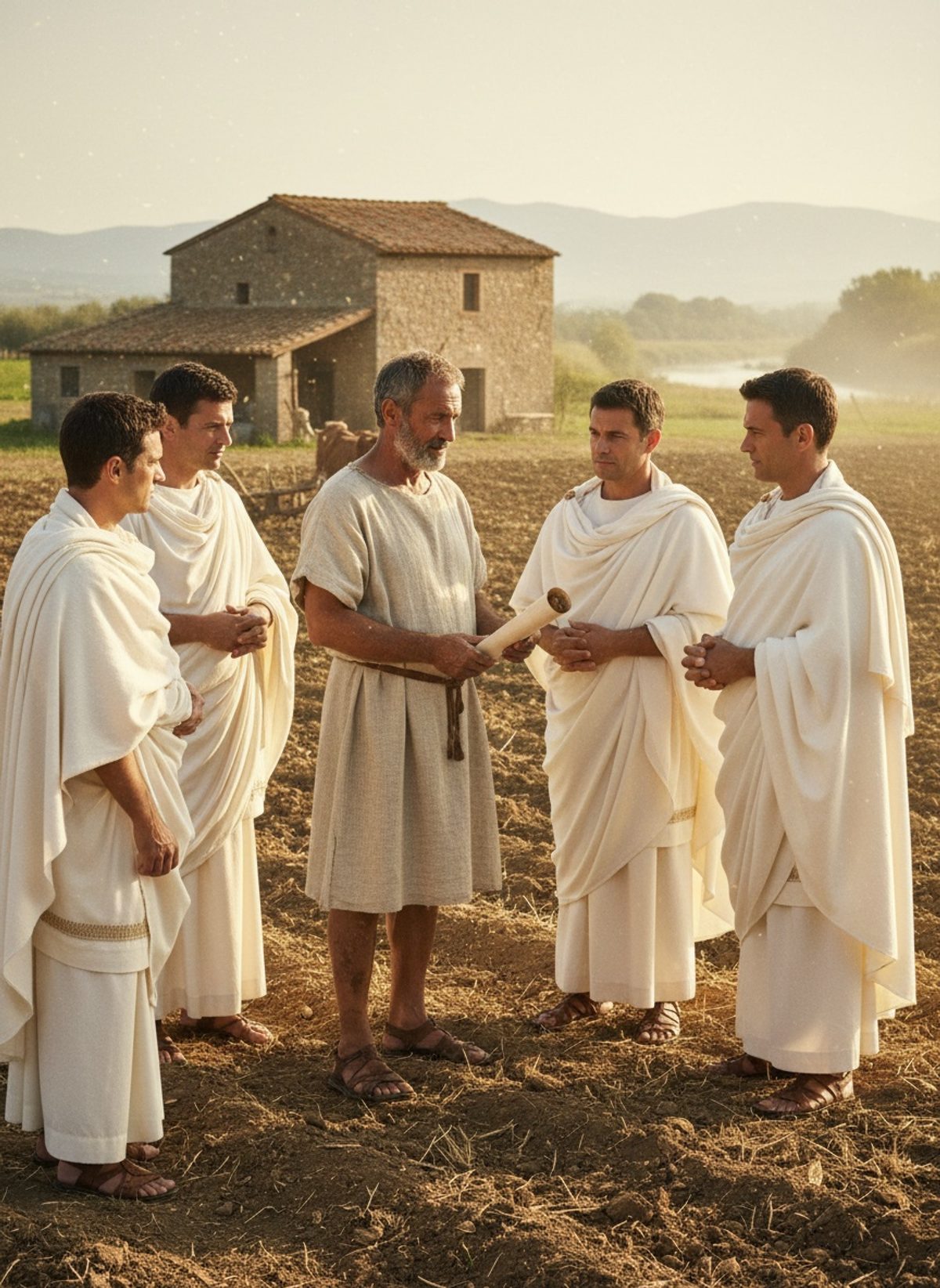
When the senators arrived at Cincinnatus's farmstead, they found a figure far removed from the grandeur of Rome's political heart. Clad in worn garb and soaked in earthy sweat, Cincinnatus appeared a peculiar choice.
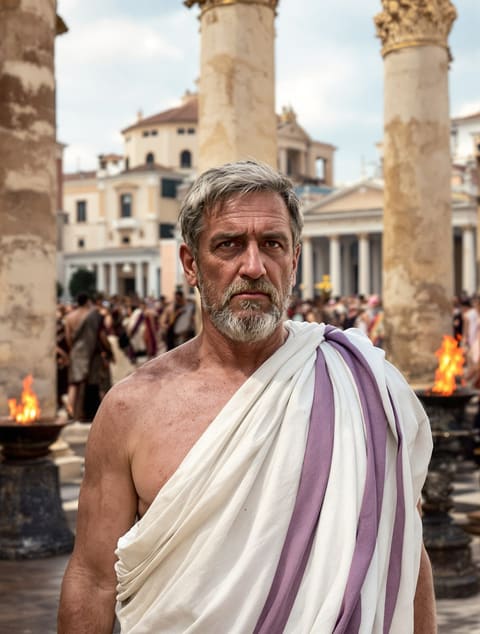
But beneath the dust and labor lay a man whose previous service and reputation for integrity preceded him. He was a patrician, a statesman who once held the office of consul, infamous perhaps for his opposition to plebeian reforms, but legendary for his unwavering duty to the republic.
With the persistence of seasoned statesmen, the senators conveyed the gravity of Rome’s despair. Reluctantly, Cincinnatus washed the dirt from his hands and prepared to shoulder the weight of Rome’s fate. It took but a moment for this retired consul to transform into Rome’s appointed dictator. The news spread, igniting hope across Roman lands. They sensed the dawn of salvation.
A Blitz of Brilliance
Cincinnatus left his plough to gather an army from among Roman citizens. He understood that only a rapid, decisive campaign could break the Aequi’s hold before the beleaguered forces perished. Within hours, messengers darted through the streets, summoning able-bodied men to fight. The transformation was swift—farmers to soldiers, citizens to warriors.
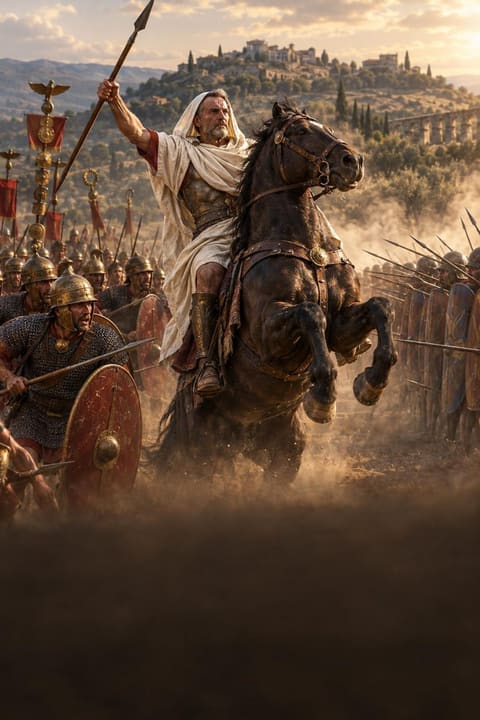
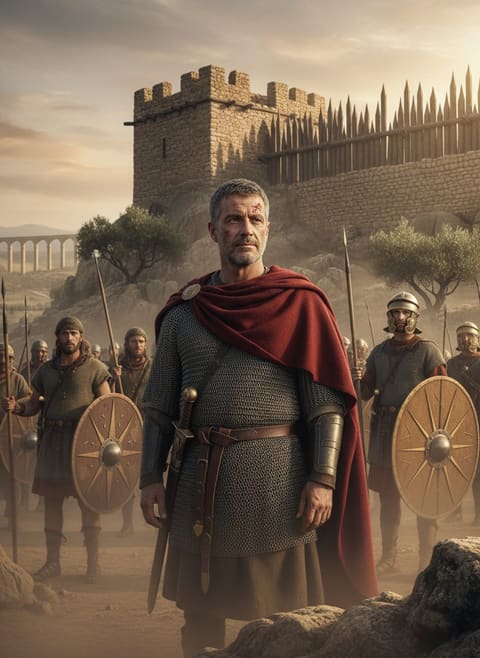
On reaching the mountain pass, Cincinnatus wasted no time. Under the cloak of night, the Roman troops fell upon the unsuspecting Aequi. It was a blitz governed by strategy and resolve, a reminder that Cincinnatus's loyalty to the republic had never wavered. Reeling in surprise, the Aequi succumbed to the fierceness of Rome's resurgence. The siege lifted, the Roman forces, once captives, now stood as victors, looking up to the leader whose brilliance delivered them.
This was not merely a battle won but a testament to discipline and the coherent might of a united Rome. But Cincinnatus’s victory was not solely attributed to his tactical acumen. It was his immediate relinquishment of power that etched his name into the annals of Roman virtue. Chief among his accolades was his swift and bloodless resolution to a conflict that threatened Rome’s very existence.
Read next: He Was Outnumbered 50 to 1. He Held the Bridge Alone.
A Legacy Plowed into History
Just as swiftly as he had risen to power, Cincinnatus resigned as dictator after the victory. To the astounded city, he returned the insignia of dictatorship and rode back to his acres. Lesser leaders might have been seduced by the allure of power, but for Cincinnatus, the fields still called. Power had not been his prize; peace was his purpose, service his reward.
The legacy of Lucius Quinctius Cincinnatus inspired not just his contemporaries but reverberated through history as a paradigm of civic virtue. His actions illuminated what many consider the ideal citizen in a republic: one who serves wholeheartedly without greed for power.
Yet, history reveals his complexity. Cincinnatus was an opponent of plebeian rights. His resolved opposition to the codification of laws reflected patrician biases that linger as a controversial part of his legacy. His son Caeso's violent stance against reforms added layers to Cincinnatus's narrative as both noble and politically fractious. Perhaps it is this very complexity that makes his story enduring. It serves as a reminder that virtuous acts echo in the long corridors of time, despite human imperfections.
In examining Cincinnatus, we see not just an ancient tale but the nuanced shadow of governance itself, an illustration that true leadership is not about the glamour of command but the humility of service. The tale of Cincinnatus beckons a reflection on what it means to lead and what we should demand from those who take up the mantle.