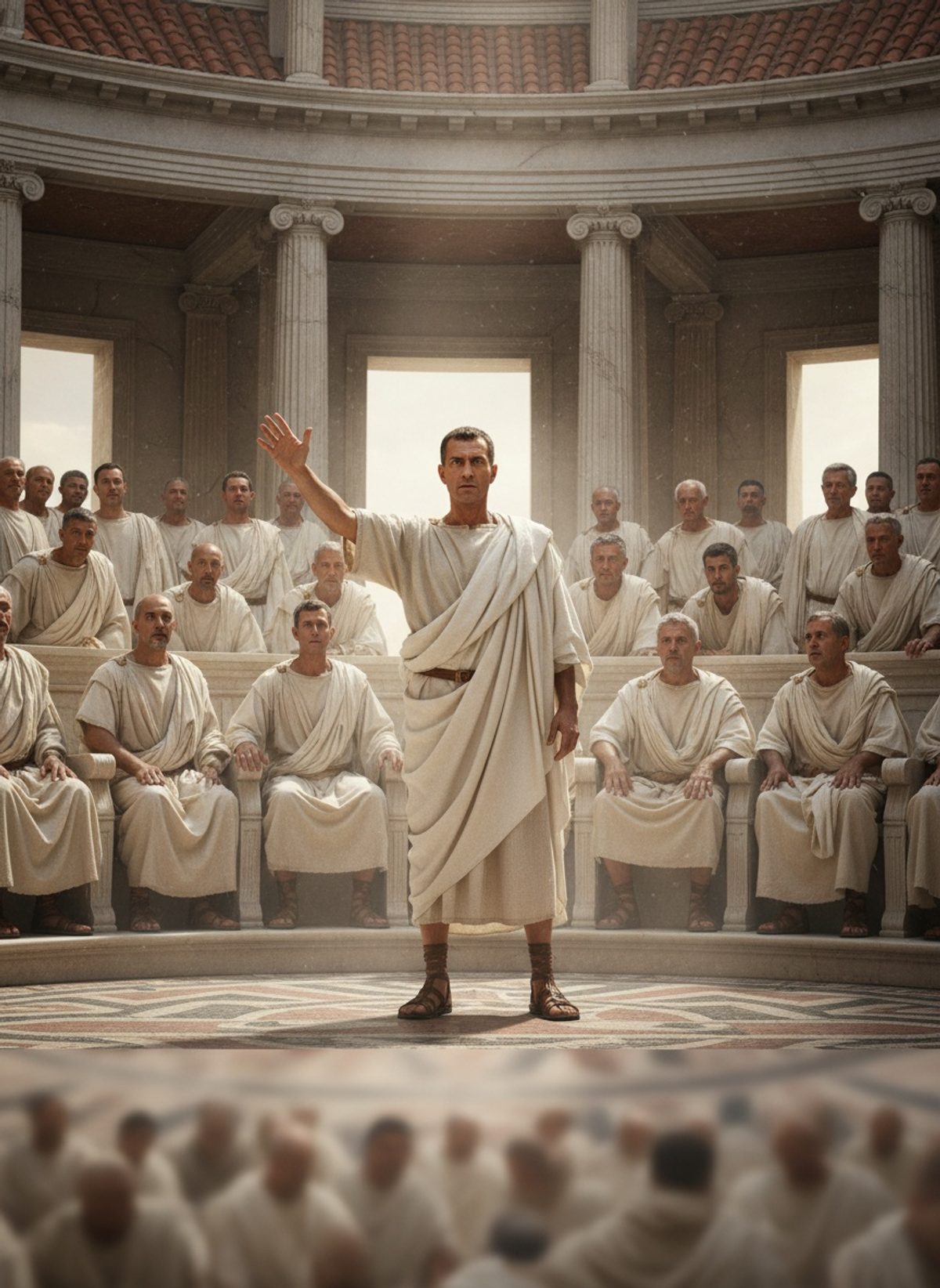
September, 63 BC. The air inside the Roman Senate was stifling.
The Conspiracy Unfolds
It was a Rome caught in the throes of fear and uncertainty. The great city, a hub of culture, power, and influence, was under threat—not from a foreign army massed at its gates, but from the shadows within. In this year, the whispers of an insidious conspiracy grew louder, borne on the anxious winds that swept through the sprawling cityscape.
At the heart of this conspiracy was a senator named Lucius Sergius Catilina, better known as Catiline. Ambitious and disgraced, he had his sights set on the highest offices of the Republic. Failing in his democratic pursuits to ascend to the consulship, Catiline’s aspirations turned sinister. The conspiracy he nurtured called for nothing short of Rome's destruction and rebirth—with him at its helm.
The conspiracy was audacious, involving plans to set fire to the city, assassinate key senators, and incite a revolt that would sweep away the old order. The citizens, ever perceptive to the subtle tremors of political upheaval, were gripped by a tense anticipation. To them, the threat seemed as palpable as the stones of the Forum.
Read next: Regulus Was Offered His Freedom. He Walked Back to Die.
As the city buzzed with speculation, one man stood at the center of it all, gathering unraveled threads of information and painstakingly stitching them into a tapestry of damning evidence. This man was Marcus Tullius Cicero, a senator and the serving consul of Rome, known for his eloquence and intellect.
Cicero's Stand
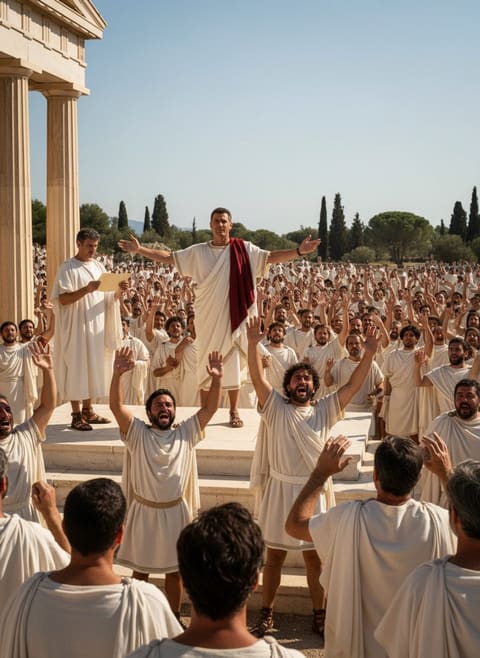
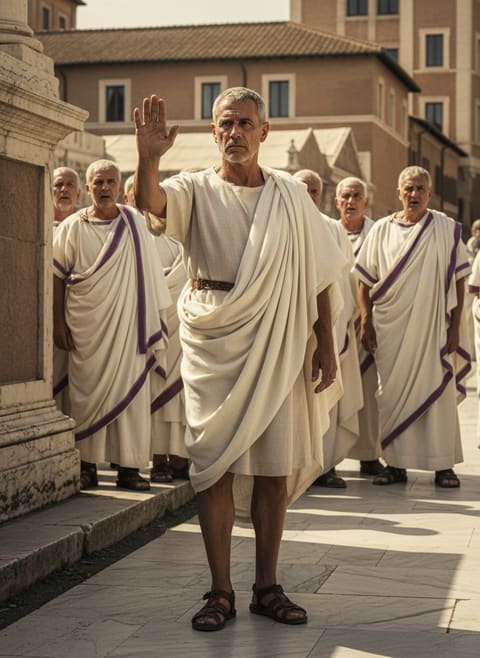
In the Senate, a thick silence prevailed as Cicero rose to speak. Heads turned, eyes focused intensely upon him, and the weight of expectation settled heavily over the assembly. Here was a man about to confront the turmoil head-on, to name the enemies of Rome within the very heart of its government.
Cicero, with evidence in hand and fortified by unwavering resolve, delivered a series of speeches that would echo through the annals of history. Known as the *Catilinarian Orations*, these speeches were not just infused with Cicero's characteristic oratorical flair but also with an urgent gravity. He called the conspiracy actors by name, sparing no effort to lay bare their treachery before the Senate's eyes.
Their plots were intricate, woven with deceit and betrayal, but Cicero’s unrelenting words sliced through the layers of intrigue like a sharp Roman gladius. In that moment, he was not just a representative of Rome's ruling class but a gladiator in the arena of political drama. His audacity and the sheer force of his conviction lent truth to his words, striking fear into those who had once believed themselves untouchable in the Senate's revered halls.
The chamber remained transfixed, a stunned silence punctuated only by the rustling of Cicero's toga, the severity of the moment resting on every senator’s shoulders. This confrontation was not just about uncovering a conspiracy but also about defining the moral compass of those who governed the Republic.
Read next: Fabricius Stood Before Pyrrhus. He Refused the Bribe.
Echoes of a Turning Point
The ramifications of Cicero’s courageous stand were swift and far-reaching. The exposure of the conspiracy sent shockwaves throughout Rome, leading to the swift execution of several conspirators and the eventual flight of Catiline, who would meet his fate on a battlefield rather than in the Senate's halls. The immediate threat to Rome had been staved off, and Cicero was hailed as *pater patriae*, the father of the fatherland, for his instrumental role in preserving the Republic.
Yet, this was far from the end. Cicero’s actions underscored a critical moment in Roman history, a moment when the very foundations of the Republic were tested. It provided the citizens and rulers of Rome with a stark reminder of the fragility of political ideals when confronted by ambition’s corrosive influence.
Cicero's audacity in naming each traitor resonated through Roman society, highlighting the importance of accountability and the power of one voice in the face of tyranny. His actions on that fateful day exemplified the delicate balance between law, order, and the often volatile realm of politics in ancient Rome.
As the years passed, the Republic would face further trials, and Rome itself would evolve into an empire. However, the legacy of Cicero’s stand before the Senate served as an enduring lesson on the value of integrity and courage. Even today, in modern discourse, his story symbolizes the perpetual struggle to uphold principles in the face of overwhelming odds. In an era when leaders routinely confront crises of integrity, Cicero's unwavering resolve continues to inspire, reminding us all that the price of freedom and democracy is eternal vigilance.