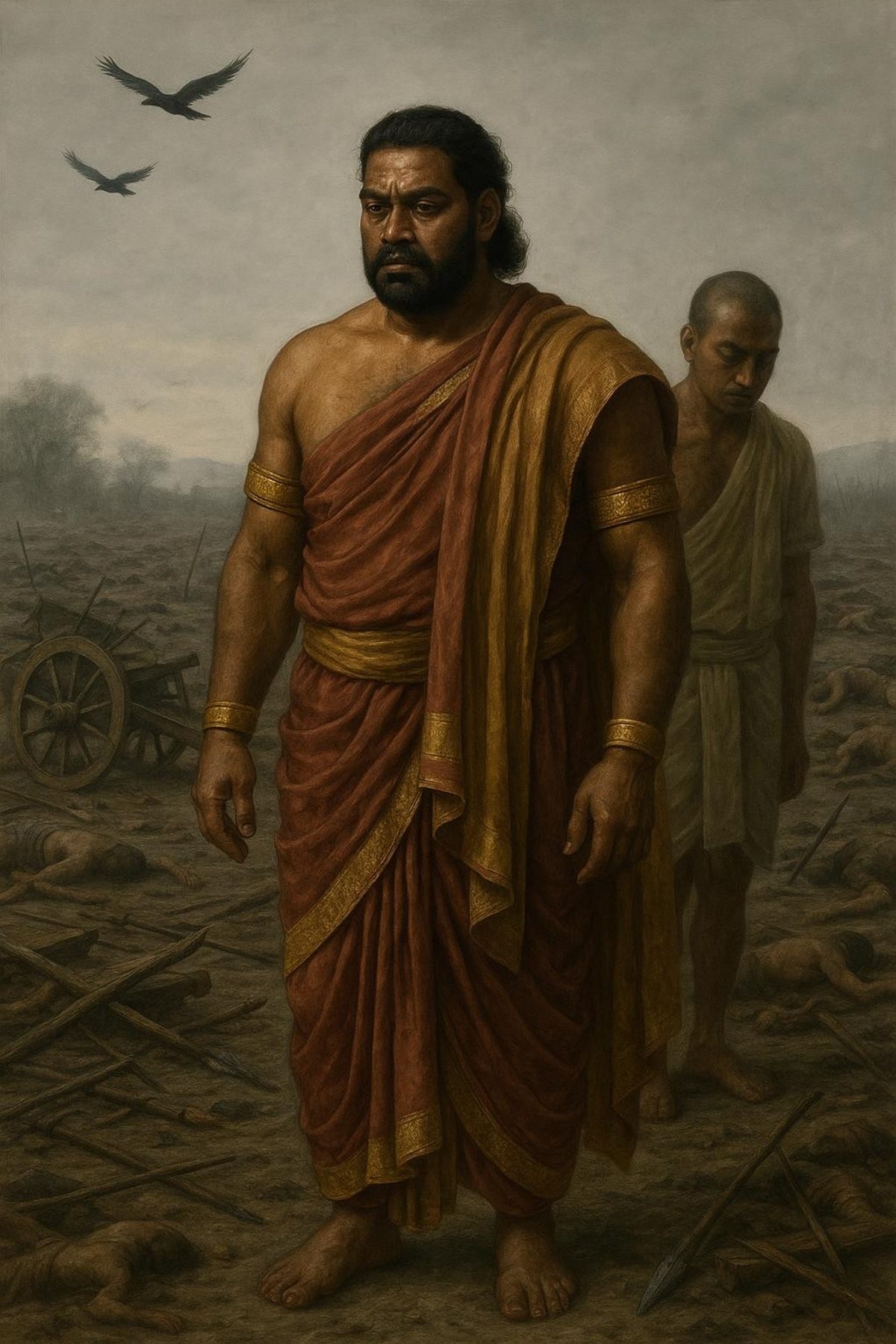
August 2, 216 BCE. The field at Cannae was littered with the remnants of war — splintered spears, discarded shields, and lifeless bodies. The dust and carnage of battle settled under a sullen sky as one of the greatest military maneuvers in history came to a close. Hannibal Barca, the Carthaginian general, had orchestrated a stunning victory against the Roman Republic, annihilating a formidable Roman army and shaking the very foundations of Rome itself. Yet, in the moments following this triumphant display of tactical brilliance, a crucial decision was made that would alter the course of history.
A Costly Opportunity
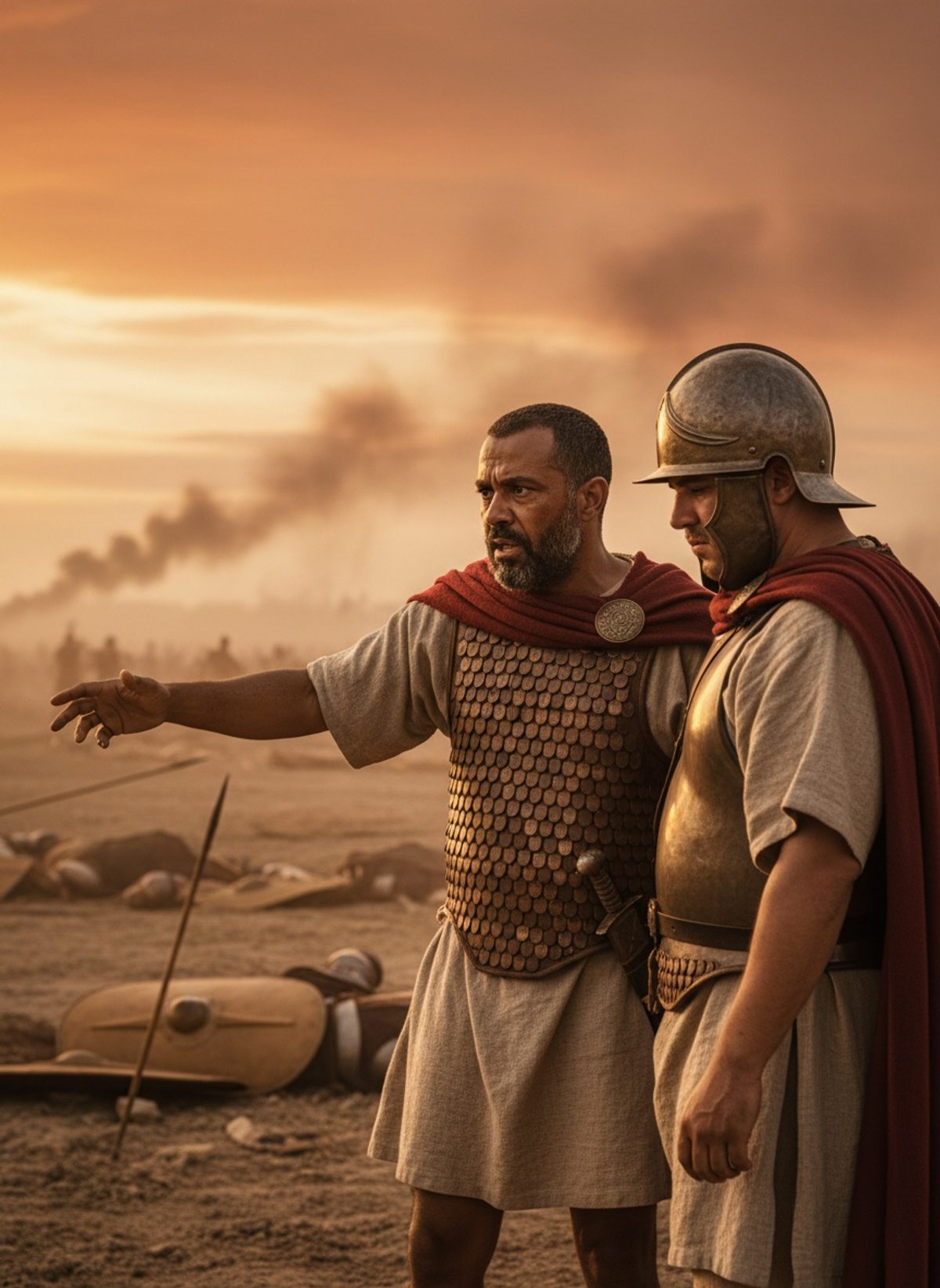
Having decimated the Roman forces at Cannae, Hannibal stood at the precipice of victory. With approximately 70,000 Roman soldiers — perhaps more according to some historians — fallen on the battlefield, the path to Rome lay enticingly open. Maharbal, Hannibal’s trusted cavalry commander and confidante, understood the moment’s gravity. His Numidian cavalry had been instrumental in outflanking and encircling the Roman legions, actions that contributed heavily to the day's success. Now, surveying the devastation, Maharbal urged Hannibal to capitalize on the victory and march directly on Rome.
Maharbal, son of Himilco, was not just a cavalry commander; he was a seasoned strategist who had accompanied Hannibal throughout his Italian campaign. His foresight and swift actions often provided Hannibal the edge needed against a numerically superior foe. The idea of marching on Rome was not merely a bold proposal; it was a call to seize a once-in-a-generation opportunity. From the plains near the Po to the Falernian plains, Maharbal had seen the relentless advance of Carthaginian forces culminate in this moment of supreme tactical advantage.
However, Hannibal hesitated. He commended Maharbal's enthusiasm but chose to weigh his options carefully. Perhaps he envisioned a more comprehensive victory, one that involved a coalition of newly aligned Roman allies, or perhaps he feared overstretching his already exhausted troops. Maharbal's retort was both cutting and prophetic: "You, Hannibal, know how to gain a victory; you do not know how to use it." In those pointed words lay a critique that echoed through the corridors of history.
Read next: Solitude Yasuyori Was Exiled to an Island. He Built a Shrine.
The Siege That Never Was
The aftermath of Cannae stands as a pivotal juncture in the Second Punic War. With Rome's military might in disarray, the city's psychological and strategic defenses lay vulnerable. Maharbal's plea for an immediate advance on Rome speaks to what many historians consider a missed opportunity of monumental significance. Had Hannibal listened, he might have broken the will of Rome itself, potentially altering the trajectory of Western history.
Hannibal's hesitation did not eclipse his accomplishments, but it marked the beginning of a turning point in the conflict. Despite the resounding victory at Cannae, the war dragged on for nearly another decade, as Rome's resilience grew. The advantage in cavalry, wielded so effectively by Maharbal, was a considerable asset, yet without decisive follow-through, it failed to deliver the knockout blow to Rome.
This incident shines a light on Hannibal's complex persona. He was an unparalleled tactician, yet his strategic caution post-Cannae indicates a pragmatic side—perhaps informed by the logistical and political challenges of laying siege to a fortified and resolute city like Rome. Maharbal's admonition underscores the tension between battlefield proficiency and larger strategic vision; Hannibal’s focus on the immediate military victory possibly clouded his judgment on exploiting the broader situation fully.
Maharbal's proposal and Hannibal's rejection thereof have since been the subject of intensive scholarly debate. While some argue Hannibal's strategy in not attacking Rome was due to sound tactical reasoning, others view it as a squandered chance that allowed Rome the time to regroup and ultimately turn the war to its favor.
Echoes Through Time
The story of Maharbal's fateful advice to Hannibal encapsulates a moment where history trembled on the edge of an abyss. The Battle of Cannae demonstrated unrestrained military genius, yet its aftermath exemplified the complexities of translating battlefield victories into lasting strategic gains. Such moments prompt reflection on how singular decisions can ripple through time, altering the fate of civilizations.
The Second Punic War ended in Carthage’s defeat, and Rome emerged not only as the dominant power in the Mediterranean but also as a burgeoning empire that would lay the groundwork for Western civilization. The hesitation at Cannae — Maharbal's unheeded counsel — remains a poignant reminder of the fine line between opportunity exploited and opportunity lost.
In many ways, Hannibal’s legacy is dual: that of a brilliant tactician and a cautionary tale of unfulfilled potential. The haunting words of Maharbal have danced through history as a critique that speaks to leaders across ages: the challenge is not only to achieve victory but to understand the full extent of its potential — to use a victory wisely. This story matters because it reminds us that pivotal decisions often rest not just on the laurels of success but on the readiness to grasp the moment fully.