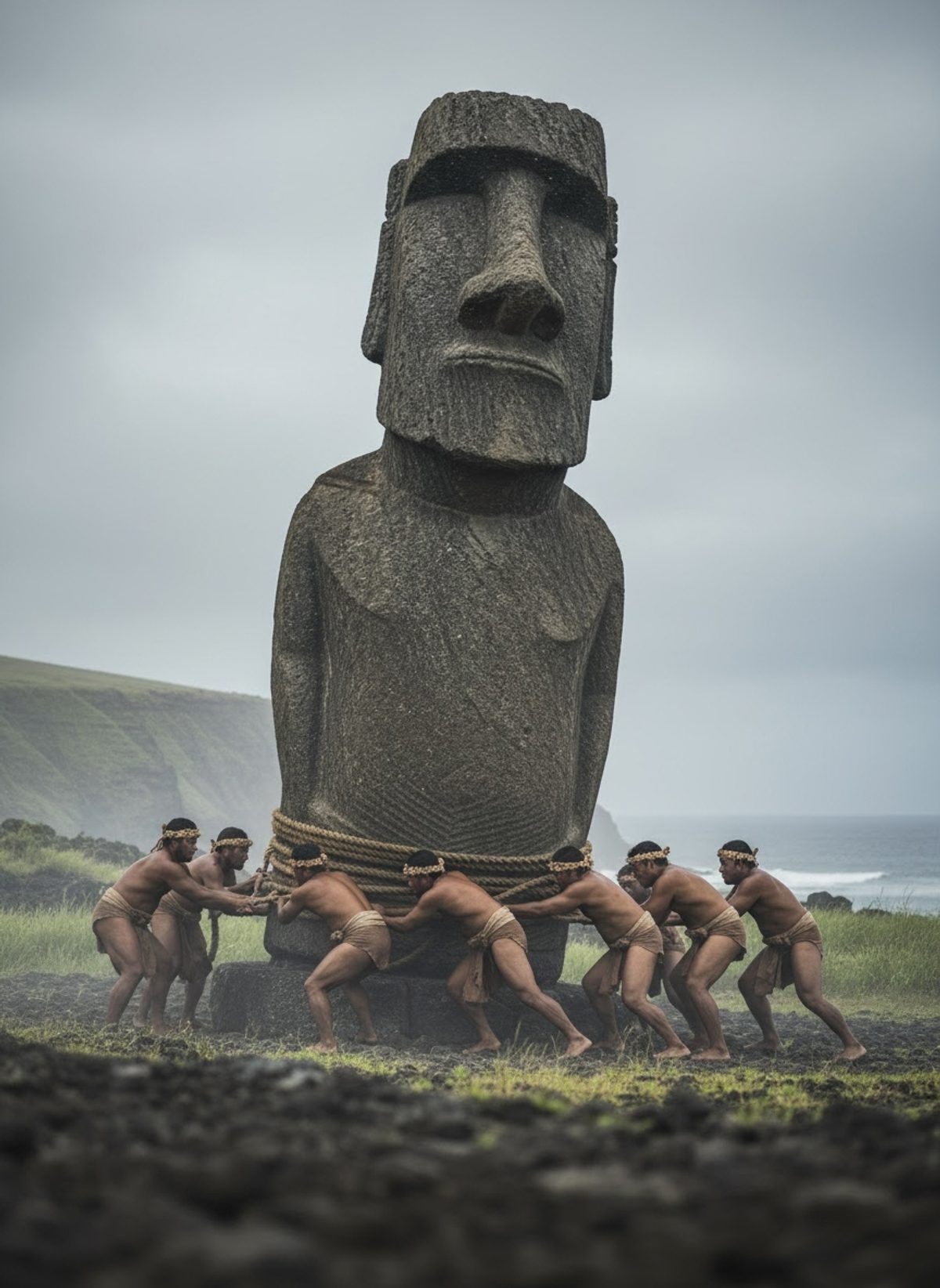
The massive figure rocked ever so slightly, its stone facade casting deep shadows in the early morning light. On the rugged terrain of Rapa Nui — known to the world as Easter Island — a team of determined islanders maneuvered the towering statue, or moai, with a combination of muscle, calloused hands gripping worn ropes, and an uncanny knowledge passed down through generations.
The sound of rhythmic chants accompanied the work, a haunting melody of coordination and tradition. They tilted the nearly 900 moai, each weighing several tons, moving them inch by inch across the undulating landscape, a feat executed without wheels, cranes, or draft animals.
The Land of Stone Giants
Lying isolated in the southeastern Pacific Ocean, Easter Island is among the world's most remote inhabited islands. Situated over 2,000 kilometers from Pitcairn Island and a staggering 3,512 kilometers from central Chile, Rapa Nui's isolation is legendary.
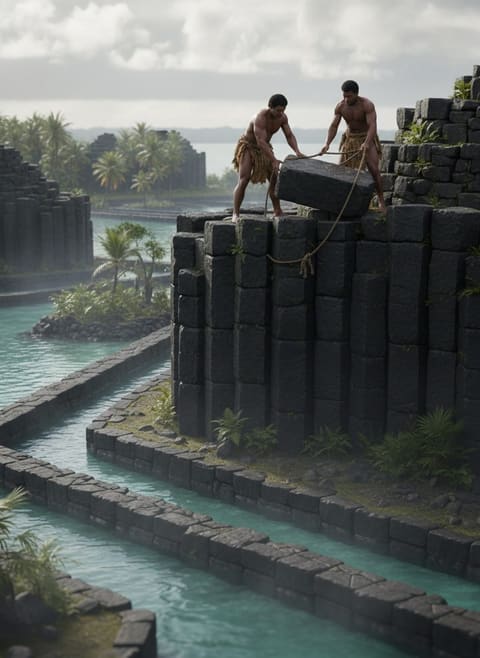
Yet within this limited scope, the Polynesian settlers who arrived around 1200 AD carved out a thriving culture. They faced challenges posed by their environment with ingenuity, crafting the towering moai from volcanic tuff quarried at Rano Raraku, a volcanic crater turned monumental workshop.
Read next: One Letter Closed the Canon. One Jar Saved What Survived.
The construction and transportation of these statues are as much a marvel as the moai themselves. While many speculated that the massive figures were laid on wooden sleds or logs and rolled into place, recent studies suggest a more intriguing theory.
The statues, with their characteristic elongated heads and disproportionate torsos, were likely *walked* to their final locations. By deftly rocking them side to side, much like moving an inanimate, stone mannequin, the islanders could "walk" the moai down the ancient paths, their progress measured in delicate tilts and steady steps.
This method stands in stark contrast to early European perceptions, who, upon encountering the island on Easter Sunday in 1722, puzzled over the functionality and purpose of these stone giants. The moai faced inland, looking over the villages, and were primarily erected upon ceremonial platforms known as ahu.
They bore witness to a rich tapestry of spiritual and social life, manifestations of a civilization's spirit and legacy. They were more than mere statues; they were connections to ancestors, embodiments of revered chiefs, and symbols of protection and authority.
Secrets Beneath the Surface
As the massive statues seemingly floated to their destinations, the engineering prowess of the Rapa Nui people remained hidden for generations, concealed by the mesmerizing presence of the moai. Long after they were erected, their secrets entered a web of mythos and mystery that intrigued and baffled explorers, historians, and modern tourists alike. How did they move such immense weight across the rocky, uneven island terrain with no animals or complex machinery?
This question has driven countless studies and experiments. Today, however, the consensus leans toward simple yet sophisticated techniques that capitalized on community effort and balanced forces. It wasn’t until combined efforts by historians and engineers, using insights from oral traditions and sound physics, revealed that walking the statues wasn't just a straightforward process, but it offered a remarkable engineering solution. It mirrored the island's sustainability ethos, using available resources with maximum efficacy.
Read next: The day King Oswy chose Easter and saved English Christianity
Moreover, while many attribute these achievements solely to brute force or luck, the truth underscores a deep understanding of physics and community effort. The Rapa Nui managed forests, crafted tools, and orchestrated coordinated logistics necessary to create and transport massive statues. They were not simply laborers but stewards of a complex cultural legacy, evidenced by the nearly 1,000 moai scattered across the island, each with its own story and significance.
A Timeless Testament
As centuries pass and we peel back layers of Rapa Nui's rich tapestry, the moai stand as silent sentinels to a once-flourishing society. In stark relief against deforestation and later societal collapse, these stone guardians maintain their solemn gaze over the island. European contact brought challenges that further strained the island's delicate resources, exacerbating deforestation and leading to population declines. The use of the island for slave raids in the 1800s further depleted its people.
Yet, with their ingenuity, these ancient Polynesians adapted to their circumstances, drawing from deep wells of cultural wisdom. As a testament to human creativity and resilience, the moai remind us of the potential of human collaboration and innovation. In today's world, where isolation and interconnectedness paradoxically define our experience, the story of Rapa Nui offers a poignant lesson.
Even the most isolated communities can create transcendent legacies, borne from cooperation and understanding within their constraints. As we contemplate our challenges, the achievement of walking the moai serves as a moment of reflection—a reminder that solutions sometimes lie not in complex technology, but in shared vision and tenacity. We can draw from history’s silent voices, recorded not in words, but in lasting stone and enduring spirit.