203 BCE. The desert sun bore down unforgivingly on the sands of North Africa. Cleansing, unyielding, it illuminated an empire on the brink, casting its long shadows over mighty Carthage as it staggered under the weight of encroaching doom. Amongst this turmoil, a woman of striking presence stood at the center of a political maelstrom, determined to write her own final chapter.
Sophoniba's story is woven into the very fabric of the Second Punic War, an ancient conflict as grandiose as it was destructive. Born into the highest echelons of Carthaginian society, she was the daughter of Hasdrubal Gisco, a formidable general who had seen Carthage rise with promises of triumph and prosperity. Her name, Ṣaponi-Baʿal, invoked the protection of Baʿal, a deity revered in her homeland, yet as her life unfolded, she would prove that it was her own steadfastness, rather than divine intervention, which sealed her fate.
From her earliest days, Sophonisba had been no stranger to the intricacies of diplomacy and warfare. Carthage, a bustling hub of commerce and culture situated on the northern coast of Africa, was embroiled in a relentless struggle for dominance with the burgeoning Roman Republic. A tale of empires locked in a brutal dance of conquest, the war saw legendary generals like Hannibal cross the Alps with war elephants, leaving a trail of destruction in their wake. Yet it was in the nuanced arena of alliances, rather than just military might, that Sophonisba's legacy was secured.
In a world governed by such shifting allegiances, Sophonisba's marriage to Syphax, King of the Masaesyli, was as much a strategic move as it was a matrimonial one. Syphax was an African chieftain, initially allied with Rome until his affections for Sophonisba – perhaps fuelled by her reported beauty and political acumen – led him to side with Carthage. The marriage, sealed in 206 BCE, was an emblem of unity between Carthage and the Masaesyli, designed to destabilize Roman influence on the African continent. Her diplomatic prowess vividly illustrated that power resided not solely in the clangor of swords, but in the whispers of courtiers and the ink of treaties.
Read next: Hanno Reached the Edge of the World. He Wrote It Down.
However, alliances were as fickle as the sands of the Sahara, and Syphax’s newfound allegiance to Carthage was insufficient to shift the tides of war. The conflict that had raged for nearly two decades had eroded Carthage's strength and resilience. As Roman fortunes mounted, a fresh alliance under General Scipio Africanus loomed ominously with Masinissa, whom Sophonisba had once been betrothed to, now aligning with Rome. Having admired him as a prospective husband before her political marriage to Syphax, this twist in allegiances set up a dramatic confrontation.
The pivotal moment came at the Battle of the Great Plains, a decisive engagement in 203 BCE where Syphax's troops, despite their valor, were overwhelmed by the combined Roman and Numidian force. Syphax was captured, paraded as a prisoner, a once-mighty king reduced to a symbol of Rome’s exerting supremacy. In defeat, the Carthaginian dream crumbled further. Yet amongst the chaos, Sophonisba's resolve remained unyielding. She wielded her influence with calculated precision, continuing to rally behind Carthage, refusing to cower to foreign chains despite her husband's fall.
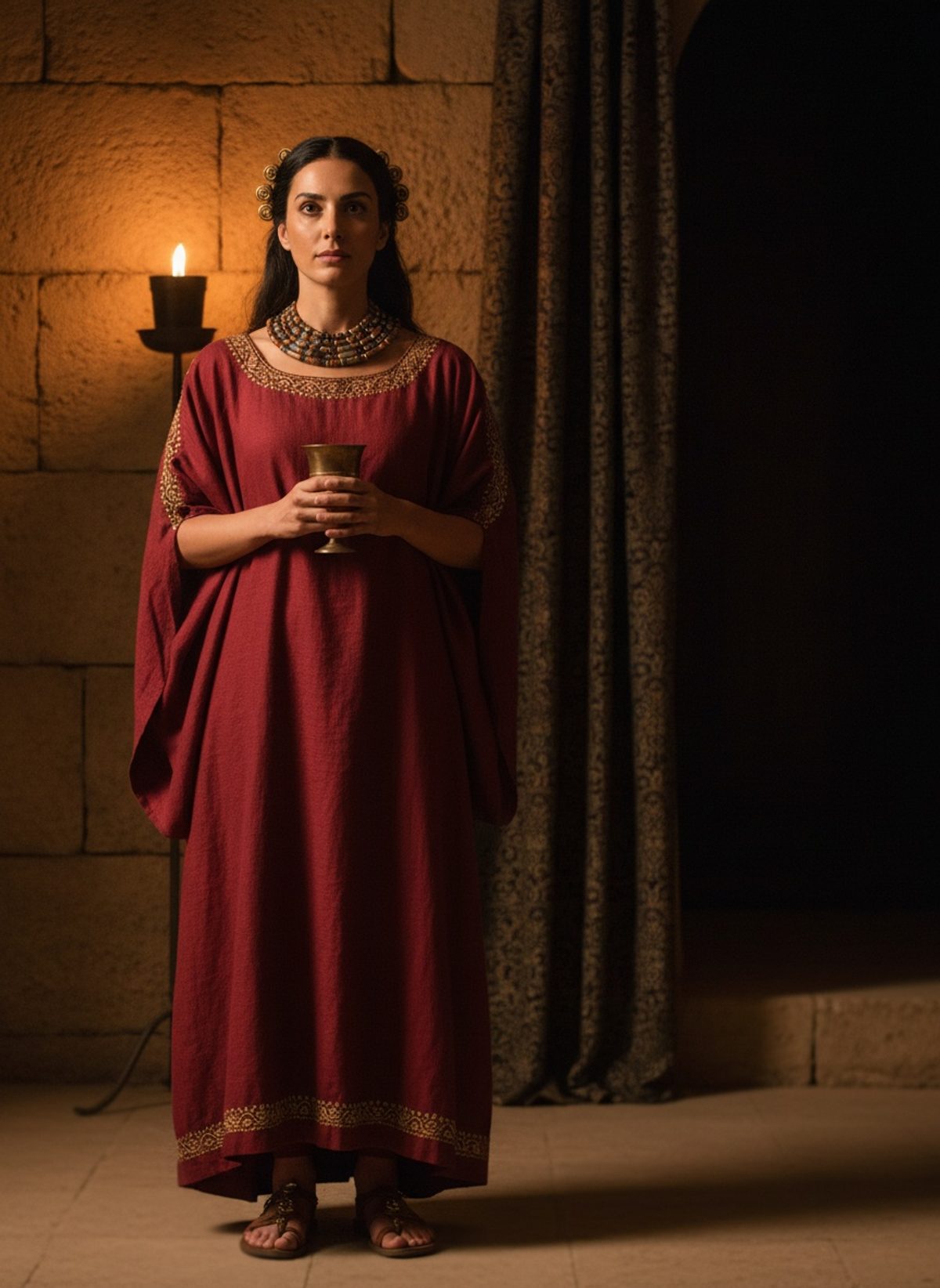
As Roman forces closed in, the inevitable humiliation of being paraded as a trophy became a looming reality. In an era where Roman triumph was synonymous with the display of the vanquished, being reduced to a spectacle of conquest was a fate worse than death for any noble, doubly so for someone of Sophonisba's stature. It was against this backdrop that her husband, Masinissa—albeit under Roman command—offered her perhaps the only gift that remained within his power to give: a cup of poison.
It was a vessel not merely filled with a deadly concoction, but laden with bittersweet symbolism and profound defiance. As she accepted the cup, Sophonisba understood the gravity with which each drop carried her own autonomy. Her choice was stark, grounded in the dignity which Rome sought to strip from her. Death was preferable to subjugation, and in that moment, a moment that was both a surrender and a final act of control, she drank.
Sophonisba's life ended with that cup, its potent contents ensuring that she would never adorn a Roman procession as a conquered queen. Her legacy, however, was never confined to the chains that never touched her. Instead, she became a symbol of defiance and stoicism. Her actions resonated beyond her era, retold by ancient historians and dramatists alike, immortalizing her as much by the life she led as by the death she chose.
The name Sophonisba surfaced through the ages, a muse for Renaissance artists and a subject in numerous plays, each account fixing her in the lens of the narrator’s time. Thomas Nabbes and Nathaniel Lee rendered her story in their works, caught in the tension between facts and artistic interpretation. Even Petrarch lent color to her tale, describing her in a manner echoing romantic ideals and personal valors. Yet amid the embellishments, the core of her story remained unchanged: her steadfast choice in the face of inevitable defeat.
The story of Sophonisba is more than just an ancient tale of war. It is a reflection on the dynamics of power and personal agency within epochs where women’s roles were often confined. Through political sagacity and emotional tenacity, Sophonisba left a mark not merely in history books but within the broader narrative of human struggle against subjugation. While the Roman Republic marched forward to eclipse Carthage, her memory remained a luminous beacon of resistance.
In her final act of refusal to be subjugated, Sophonisba did not just elude Roman captivity; she transcended the limitations of her time and place, leaving behind a legacy encouraging the celebration of autonomy and dignity. Her sacrifice represents the eternal human quest for freedom and the resistance against the imposition of chains—whether physical or symbolic. In drinking from that fatal cup, Sophonisba assured her place not under Rome’s yoke, but in the enduring record of undaunted spirits who have shaped the tapestry of history.