Pepi II began his reign at the tender age of six. Nonetheless, his rule would etch itself into the annals of history as the longest recorded sovereign reign — a staggering 94 years, they say. Yet this record comes with its shadows and doubts.
The Boy King and His Early Reign
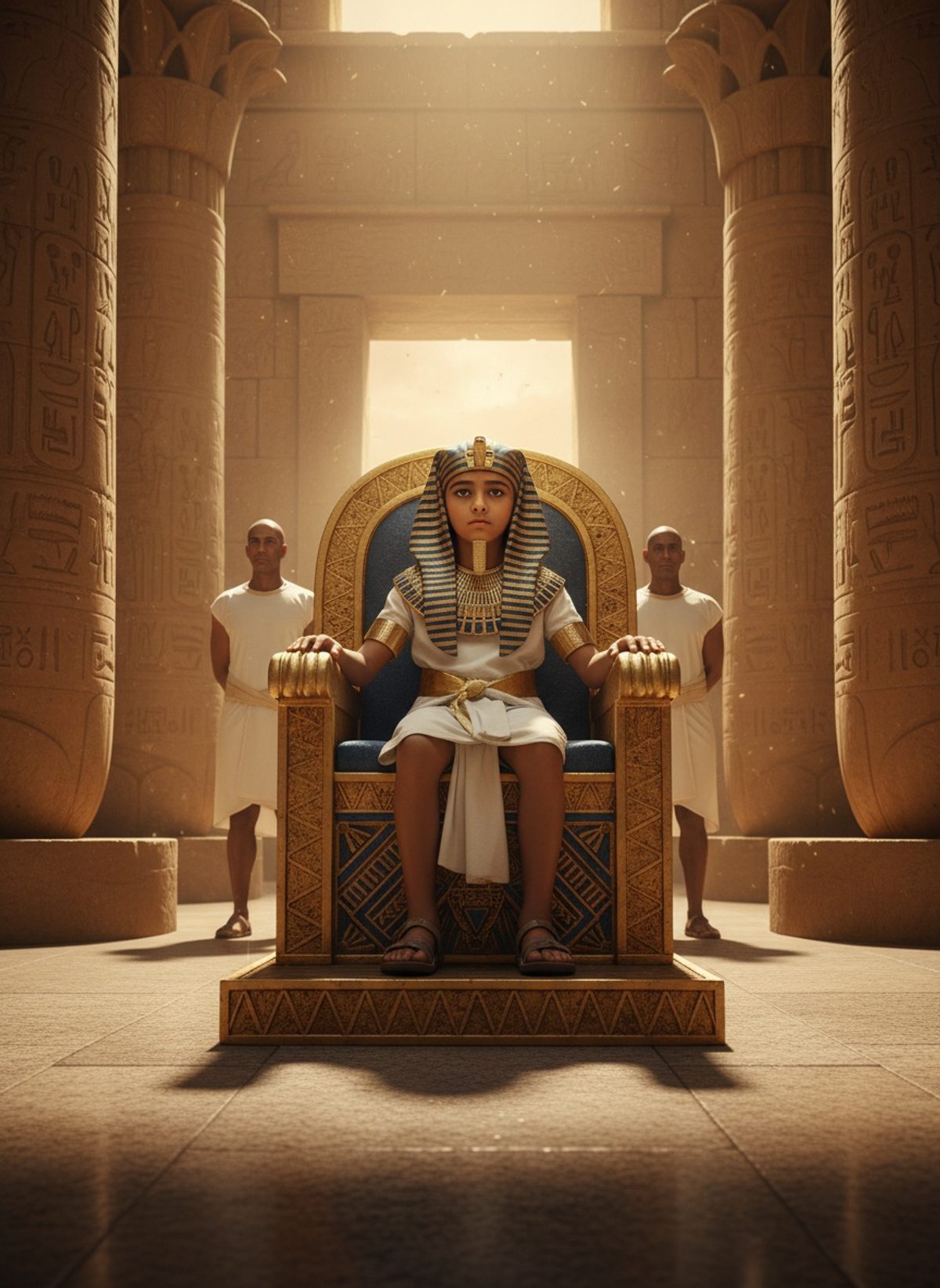
Imagine the sight: a six-year-old child sitting on the Egyptian throne, draped in the royal vestments, the towering double crown upon his head. This scene unfolded in Ancient Egypt circa 2278 BCE when Pepi II, also known as Neferkare, was crowned Pharaoh following the death of his likely father, Merenre Nemtyemsaf I. His name, "Neferkare," poetically translates to "Beautiful is the Ka of Re," hinting at the divine connection expected of him.
To the uninitiated, the image of a young boy commanding the great civilization of Egypt might seem bewildering. Yet, the customs of the time accepted child-rulers, with their power ordinarily exercised through regents and advisers. In Pepi II's case, his mother, Ankhesenpepi II, presumably ruled as regent. Her influence extended over the realm, assisted possibly by her brother Djau, a seasoned vizier.
A glimpse of Pepi II’s personality survives in a letter he penned to Harkhuf, the governor of Aswan. The missive is an eager plea to bring a "pygmy" back from Nubia alive, captured during a trading expedition. In the eyes of the young pharaoh, this captured figure promised wonder and amusement, a rare spectacle for his court. The letter's survival offers a touching personal insight, suggesting a child's delight amidst the heavy drapery of royal duty.
Read next: Anning Found the Monster. Science Took the Credit.
Authority and Challenges in His Long Reign
Pepi II’s reign, according to Manetho, lasted an epochal 94 years, although the Turin King List moderates this claim to 90 years, with documentary evidence affirming only up to the 62nd year. Regardless of the precise duration, such an extensive rule spanned dramatic shifts in Egyptian society.
Initially, the Pharaoh's sovereignty seemed unshakable, but as years turned into decades, Egypt's political landscape began to shift ominously. Nomarchs, local governors of the various nomes or districts, began to grow in power, causing the central authority to wane. As these local rulers gained autonomy, the once-unified kingdom fragmented. These centrifugal forces heralded the decline of Egypt's Old Kingdom.
Within the walls of the royal court, signs of diminishing influence were apparent. Pepi II's reign witnessed a scarcity of royal statuary — just three known sculptural representations of him survive. Some historians interpret this as indicative of a dwindling artisan class, intertwined perhaps with the court's diminishing resources and clout.
Despite such challenges, Pepi II's legacy wasn’t solely political decline. He fathered children with several wives, weaving bloodlines that would extend into Egypt's history. One of his consorts, Queen Neith, was not merely a wife but also a cousin and half-sister, indicative of the tangled familial ties among the royal lineage meant to preserve purity of blood and influence.
The Final Years and the Waning of an Era
By the twilight of Pepi II's rule, Egypt stood on the brink of transformation. The majestic Old Kingdom, once a symbol of unity and unassailable power, appeared frail under the weight of prolonged central weakness. The stage was set for the First Intermediate Period, a time characterized by disunity and local conflicts as the kingdom splintered into disparate territories, each ruled by powerful nomarchs.
In this turbulent backdrop, Pepi II’s death marked more than the end of a king's lengthy reign. It symbolized the waning light of the Old Kingdom, ushering in an era where Egypt's central monarchy diminished into an echo of its former glory. An emperor who outlived not only his enemies and generals but, it seems, the very strength of his empire.
So why does a story of such remarkable longevity matter? Pepi II's era offers a poignant reflection on the perils of prolonged rule and the intricate balance of power. In a world where nothing lasts forever, even the might of a Pharaoh revered as a living god is susceptible to the inexorable tide of history. It reminds us that the real crowns are worn not on the head but within the capacity to adapt, share power, and renew vision – a timeless narrative as relevant today as it was over four millennia ago.