Astronaut John Glenn trusted the technology that guided him through space. But not enough to trust it with his life.
The Hidden Figures of NASA
In the early 1960s, America was embroiled in a race against the Soviet Union to conquer the final frontier: space. The US space program was embodied by its daring astronauts, who became national heroes as they broke through the bonds of Earth. Yet, behind every successful mission was a cadre of unsung heroes, working tirelessly to ensure that these space pioneers returned home safely. Among these brilliant minds was Katherine Johnson, a mathematician whose extraordinary skills were critical during one of NASA's most significant missions.
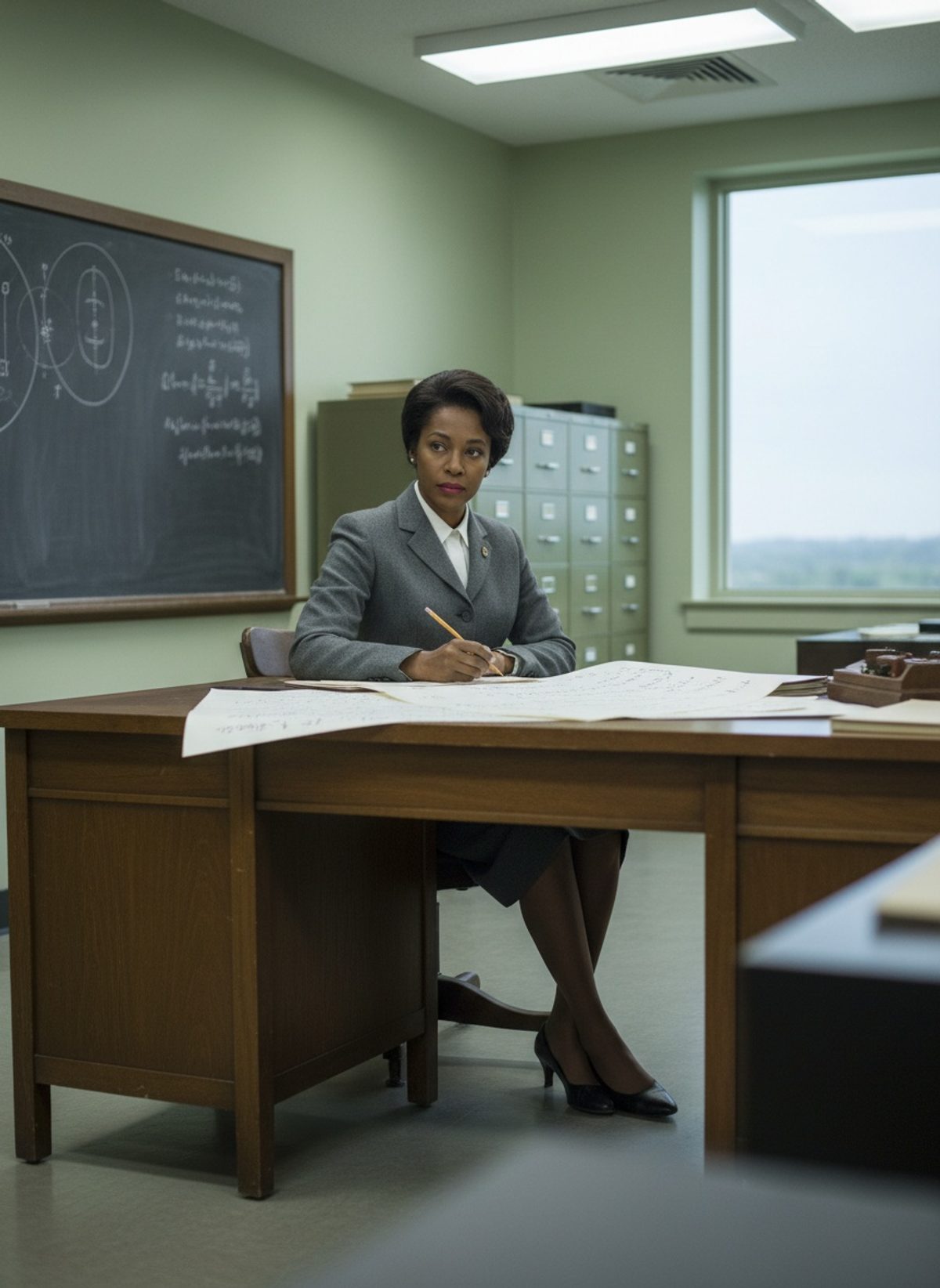
Johnson worked as a "computer" in an era before electronic computers were the norm. At NASA's Langley Research Center in Virginia, she was one of many women, particularly African Americans, who were hired to perform complex calculations. These human computers were tasked with ensuring that every number, every trajectory, every orbit was perfect. Desegregation laws had begun to take hold, yet the "Colored Computers" lab where she worked was still a separate establishment. Johnson's calculations played an indispensable role in the Mercury and Apollo missions, but it was during John Glenn's Friendship 7 flight that she truly left her mark on history.
Trust Beyond Machines
February 1962 marked a pivotal moment in the Space Race. The Soviet Union had launched the first human into orbit, Yuri Gagarin, the previous year. The United States was determined to catch up with, and eventually surpass, their Cold War adversary. Glenn’s mission was not just about entering space; it was about achieving the trust and confidence of a nation, cementing America's status as a world leader in space exploration, and turning the tide in this celestial contest.
Read next: The Flight Was Full of Doctors. She Needed Every One.
NASA had developed electronic computers to calculate the trajectories needed for a safe re-entry and splashdown. However, as groundbreaking as these machines were, they were still new. Glenn, a seasoned test pilot, was skeptical. Accustomed to the reliability of traditional flight instruments and cognizant of the stakes, he knew an error could prove catastrophic. As confidence in electronics had its limits back then, Glenn requested that Katherine Johnson manually check the orbital equations put forth by the computers. "Get the girl," he famously demanded, "If she says the numbers are good, I'm ready to go."
Johnson tackled the immense task with extraordinary precision and determination. Her mind, sharpened by years of meticulous work and nurtured by her passion for mathematics, navigated through the labyrinth of numbers and equations with grace. Every calculation was done by hand, every number subject to her scrutiny. In the span of her remarkable career, she had proven her prowess time and again. Yet, this mission required heightened precision and her calculations needed to be flawless.
The Heroine in the Shadows
Glenn’s trust in Johnson was well-founded. Her meticulous double-checking of the trajectories confirmed the computer's calculations, paving the way for a successful orbit. When Glenn took off on February 20, 1962, millions of Americans held their breath in collective anticipation. The world watched as Glenn's capsule soared into the sky, orbited the planet three times, and, as calculated, descended safely into the Atlantic Ocean.
The headlines rightly celebrated John Glenn as a hero. Yet, the silent, steadfast dedication of Katherine Johnson, whose work was crucial for Glenn's safe return, was largely overlooked at the time. Despite the apartheid social systems of the American South, Johnson had managed to carve a niche for herself in a predominantly male-dominated arena, overcoming both racial and gender barriers with her intellect and resilience.
Though her name remained confined to the shadows for decades, Katherine Johnson's contributions have, in recent years, been acknowledged and celebrated. The movie "Hidden Figures" brought widespread recognition to Johnson and her colleagues, highlighting the role of African American women in NASA's success. However, long before Hollywood shone a light on her remarkable achievements, her genius was already glistening in the pages of history, through every calculation she so diligently verified.
Today, as we venture further into space, the legacy of Katherine Johnson serves as a powerful testament to the human impact behind technological achievements. Her story provides insight into a critical era of space exploration and reminds us of the invaluable contributions from those who, against all odds, broke barriers and crafted the complex path from Earth to the stars. Johnson, with her pencil, paper, and brilliant mind, proved that sometimes trust must rest not in the technology we build, but in the humanity that wields it.