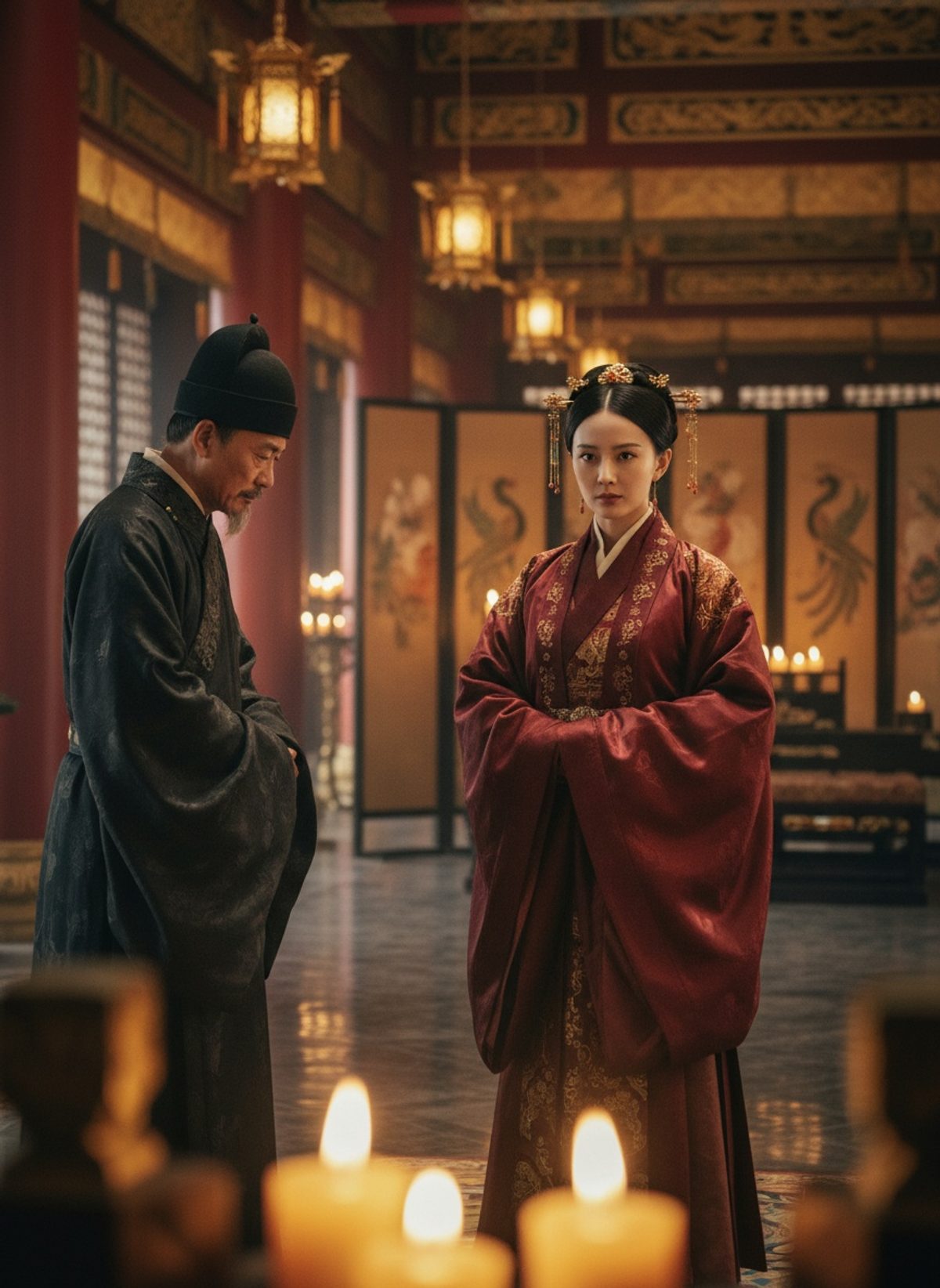
She was a woman in an era when voicelessness was the norm. Yet Wu Zetian spoke with authority that resonated through the halls of an empire.
The Silent Ascent
Stepping into a world ruled by men, Wu Zetian began her journey in the shadows of the imperial court. As a concubine, her existence was designed to be fleeting, her ambitions curtailed within the luxurious confines of the palace walls. When the emperor passed, she was destined to fade into insignificance, sentenced to a life of solitude among other forgotten women. Yet, Wu Zetian was not one to succumb to the confines of tradition or history's expectations.
In 655 CE, she defied conventions with a resilience that was as striking as it was unprecedented. Her intelligence and insight allowed her to adeptly navigate the treacherous labyrinth of court life. Utilizing the arts of diplomacy, cultivation of key allies, and an uncanny understanding of her rivals' weaknesses, Wu Zetian cleverly maneuvered through the court's complexities. Her rise was not about brute force or sheer chance. It was the calculated ascension of someone who understood the leverage of knowledge and personal relationships in a world overly obsessed with birthright and gender.
She left behind the passive role of concubine to embrace one that was unheard of for a woman in China: a ruler in her own right. The Empress Consort soon became the de facto power behind the throne, her influence so pervasive that no decision was made without her counsel. In a court known for its intrigue and peril, Wu Zetian demonstrated that the true key to power was the ability to understand the hidden depths of decorum and chaos, turning every situation to her advantage.
Read next: Mentuhotep Walked Into Exile. He Came Back a God.
Reshaping the Power Structure
Once Wu Zetian ascended to the position of Empress Consort, her hold over the Tang Dynasty's political realm tightened. The conspiracy theorists and traditionalists among the nobility were placed in a difficult position. Over time, she executed delicate political plays to remove obstacles from her path. Generals, high-ranking officials, and rival family factions found themselves outmaneuvered, losing their clout in the face of her strategic brilliance.
Her tenure saw the installation of loyalists in key government positions. The palace buzzed with whispers of her appointments, and even her detractors could not deny her uncanny ability to choose officials who reflected her vision for China. The administration under her guidance saw reforms that catalyzed advancements in both culture and political structure. Education, literature, and technology flourished, a direct reflection of her belief in the power of learning and innovation. She wasn't merely holding power; she was redefining its essence in a society where women were often deemed secondary.
Through a series of strategic marriages and alliances, Wu Zetian secured her progeny’s continued claim to the throne. She was a formidable force, proficient not only in consolidating her rule but in paving the way for future generations. Her skillful navigation of the delicate balance of court intrigues and imperial expansion bolstered the empire's might, an echo of her conviction jostling with the constraints of her gender.
The Chrysanthemum Throne
Her coup de grâce came as she assumed the title of Emperor in her own right, a genuine rarity. The year 690 marked a seismic shift not just in the annals of Chinese history but in the imagination of any woman who dared to dream of breaking the mold. Wu Zetian established a new dynasty, the Zhou, consciously distancing her reign from that of her predecessors. It was not merely symbolic but an assertion of power and an announcement of her new world order.
As China’s only female emperor, her reign was one of paradox — marked equally by ruthless pragmatism and innovative foresight. Her governance extended the Silk Road's prosperity, expanded the empire's territory, and fostered cultural amalgamations that enriched the imperial tapestry. Yet, her legacy is equally marred by the controversies of a reign marked by political purges and the suppression of dissidents.
The court historian’s pen danced between portraying her as a sovereign of innovation or an aberration of tradition, but history remains clear on one fact: Wu Zetian was a force of nature. By relentlessly pursuing her ambitions in a world that labelled her expendable, she transformed not only her destiny but the very structure of imperial power.
The story of Wu Zetian stands as a testament to the eternal battle between societal norms and personal agency. In an age defined by entrenched hierarchies, she carved her name into history as a living juxtaposition — simultaneously a product and a defier of her time. Her journey from concubine to emperor reminds us that the tides of history are often turned by those bold enough to challenge the very currents they sail.