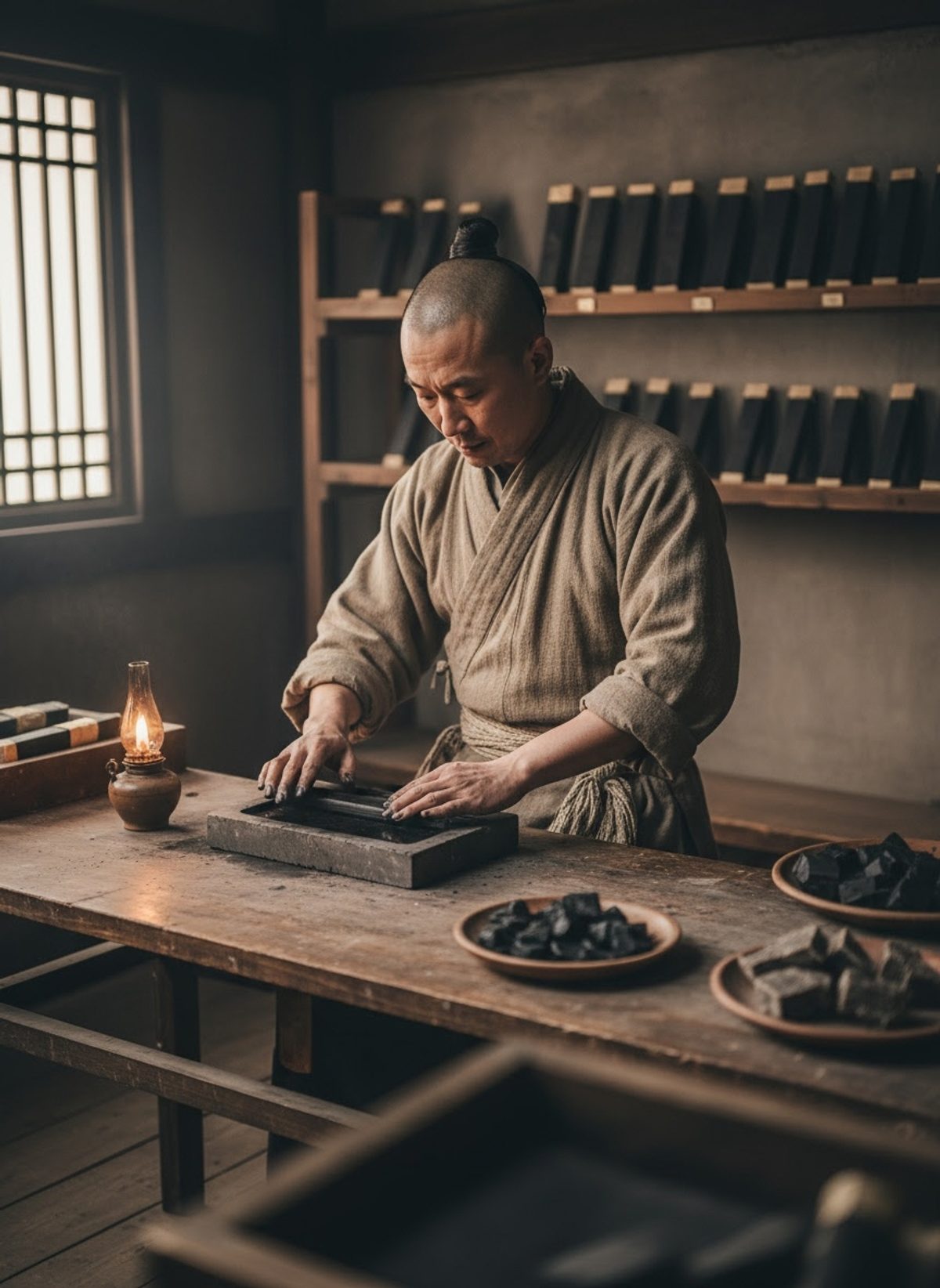
The workshop flickered under the dim candlelight as evening embraced Northern China in 1050 AD. A soft rustle stirred the chilled air, whispering secrets of ongoing toil. In the corner, where shadows danced with a flickering flame, the inkstick master worked tirelessly. The weight of a year’s worth of labor hinged on the harmony in his hands.
As he ground pine soot, sweat mingled with the sharp scent of hide glue and rare musk, creating an aura of fervent diligence. The inkstick had to be perfect — to ring like bronze when tapped — for if it crumbled, a year of work would be reduced to mere dust.
The Ancient Art of Inkstick Making
The Song Dynasty (960–1279 CE) was a period marked by cultural and technological flourishes, yet within its heart lay a craft that demanded the gentle balance of science and art: inkstick making. Unlike the liquid inks familiar to many today, the finest ink for scholarly pursuits came in solid form. The inkstick, revered by scribes, poets, and emperors alike, began its journey in workshops filled with the earthy smell of pine soot.
Masters of this ancient craft knew the value in the delicate process of inkstick creation. Pine soot, collected meticulously from pine trees, was mixed with animal hide glue and, occasionally, musk to imbue each stick with a rare, subtle fragrance. The magic, however, lay in the mortar — where ingredients transformed over forty relentless days of grinding. To reach perfection, dedication beyond the ordinary was necessary, as those involved in inkstick production sought balance through art and toil.
Read next: When Four British Sailors Washed Ashore at Ocracoke, 1942
Forty Days of Grinding
Why forty days? The precise period was more than tradition; it was an alchemical necessity. Grinding the mixture for this duration ensured the particles were ground fine enough, allowing the ink to dissolve smoothly when later used. For the inkstick master, it was an exhaustive test of endurance, often working without pause, challenged by the rhythm of the stone mortar echoing against raw earth.
The task was daunting — the slightest misstep could render the batch useless. It wasn't merely the ingredients that set a good inkstick apart from a bad one, but the time, patience, and unyielding dedication that contributed to a stick that resonated with a metallic ring. The sound was the harbinger of success, a clear trumpet declaring the inkstick's worth.
A Stake in Cultural Continuity
Inksticks were more than tools; they were conduits of creativity that spanned the Song Dynasty's vast intellectual landscape. The dynasty itself was an era of progress, marked by developments such as the first issued banknotes and gunpowder weaponry. In this age of advancement, the inkstick was essential, shaping the poems, calligraphy, and edicts that captured the ethos of an entire civilization.
Crafting an inkstick was a vital cultural task, and its success was intertwined with the daily lives of scholars and artists. The process connected individuals across time — an unbroken line of inquiry and expression. Emperor Taizu of Song, the dynasty's founder, and countless others engaged in the pursuits of elegance and intellect, relied on the commitment of unnamed craftsmen like the inkstick master who toiled for forty days to achieve perfection.
Read next: Medieval Candle Makers: The Most Dangerous Job in the Dark Ages
Perfect or Perish
The stakes were high. A finished inkstick that failed to meet the standard was not only a personal failure but represented a loss of potential knowledge, artistry, and governance. An inkstick that crumbled struck a discordant note in its user's life, its disintegration signaling wasted resources, time, and hope.
Despite this, the inkstick makers persevered. Their craft was a labor of love and a testament to the spirit of dedication. Each tap on the completed stick became more than just a test of quality; it was a ritual affirming the importance of craft in the fabric of a vibrant, evolving society. It was an unspoken oath, ensuring that future generations would have the tools they needed to forge their own paths through the ever-changing story of China's history.
Today, as we glimpse the past in artifacts and writings preserved across centuries, we find whispers of those who labored in obscurity yet shaped a culture rich in intellectual depth. The inksticks that rang true ensured that voices of the Song Dynasty spoke clearly and majestically, transcending the mere materials from which they were born. Their legacy teaches us about the intricate connection between precision and perseverance — a lesson that rings through to our own time.