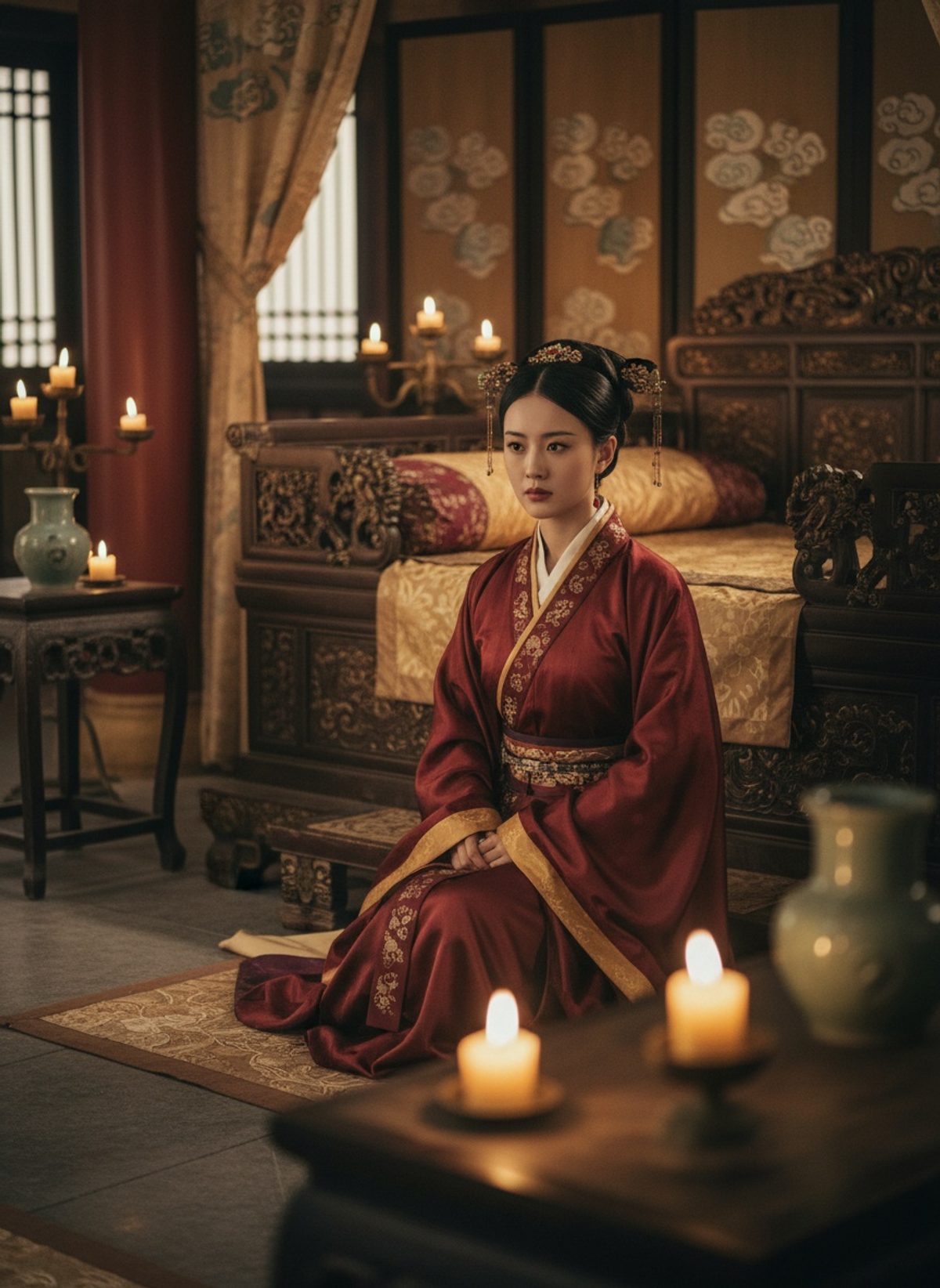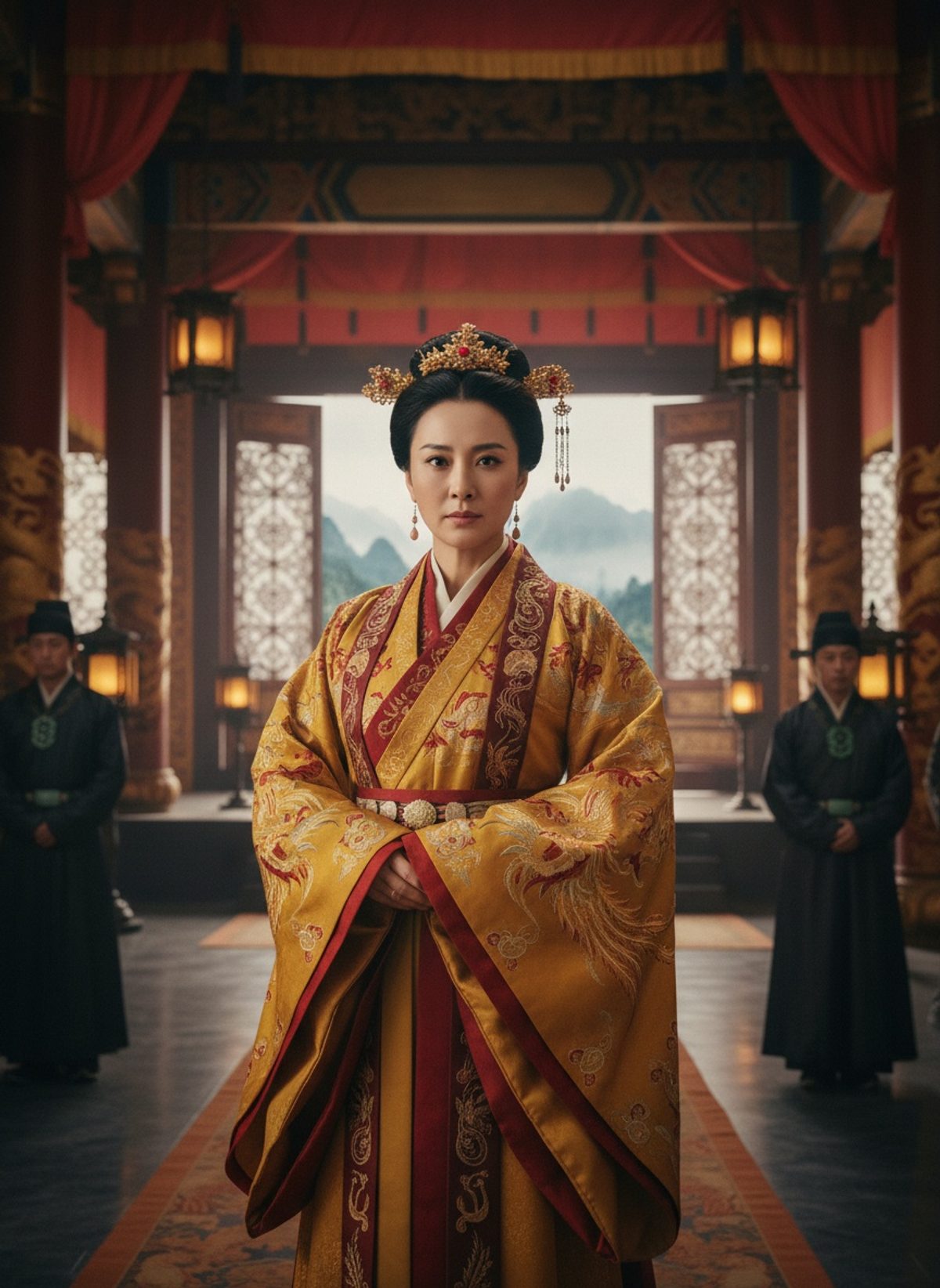
AD 655. The Tang court was a sea of silence, broken only by the soft rustling of silk robes.
The Unthinkable Silence
The grandeur of Tang Dynasty China was palpable across the imperial court. Gold-embellished pillars and intricate tapestries draped the vast hall, a testament to the empire's wealth and engineering prowess. Yet, amidst this opulence, the chamber's true power lay not in its adornments, but in its silence. A silence that seemed unshakeable until it was shattered by the resolute voice of a woman — Wu Zetian.
From the very beginning, Wu's journey was atypical. Born during the early years of the Tang Dynasty, she defied the expected roles of women in her society. Raised within an influential family, her keen intellect caught the attention of Emperor Taizong, who brought her to court as a concubine. This position, though prestigious, was not a seat of power. Yet, Wu’s quiet resilience in this fragmented world set the stage for what was to come.
A Voice of Reason Amongst Tradition
In an era when women's voices were more ornamental than influential, Wu Zetian broke long-held conventions. Within the patriarchal corridors of the Tang court, she inspired both awe and trepidation. On that fateful day in AD 655, every eye and ear was on her. Here was a woman, standing firm against centuries of male dominance, not with loud defiance but with articulate precision and strategic cunning.
Read next: Su Wu Was Given a Flock. He Refused to Kneel.
As she stood before the court, Wu articulated her vision — a vision that spoke not to conquest or tyranny, but to progress and stability. Her arguments were not just crafted from a desire for power but rooted in a deep understanding of governance, culture, and the intricate dynamics of the imperial system. Her ability to influence Emperor Gaozong, her husband, was not merely the product of personal persuasion but of her compelling reason and foresight.
The Emperor's Ear and the Court's Doubts
The trust granted to Wu Zetian by Emperor Gaozong was unprecedented. She was more than a consort or an empress; she became a co-ruler, wielding influence that extended far beyond mere symbol. Her detractors dismissed her initially, but her intricate readings of political tides and her ruthless efficiency soon garnered grudging respect.
Wu's keen political acumen allowed her to navigate the treacherous waters of court intrigue. She meticulously studied the strengths and weaknesses of her adversaries and allies alike, always with an eye on maintaining her position and advancing her agenda. Her strategies reflected a deep understanding of human nature and the complex web of desires and fears that governed men’s actions.
The Rise of an Unprecedented Empress
As Wu Zetian's influence grew, she shattered the barriers that had bound women to the peripheral edges of power. Historical records depict a ruler who did not merely bask in the glow of her husband’s favor but carved her destiny with strategic brilliance and audacious courage. Her rise was not without opposition. For many in the court, the idea of a female emperor was anathema — a challenge to the Confucian order, which precisely defined a woman's place. Yet, Wu Zetian harnessed the very tenets of those teachings to legitimize her power, framing her reign as a divine mandate.
Her reign saw reforms that addressed issues ranging from administration and agriculture to military prowess. Wu implemented measures that improved the examination system for selecting officials, allowing talent to rise above birthright, and she nurtured state Buddhism, using it to consolidate her rule further.
A Legacy of Eternal Echoes
For nearly half a century, Wu Zetian steered the sails of the Tang Dynasty. Her story ended not with a mythic fall, but with the quiet continuation of her family’s dynasty, leaving behind a China that was more unified and prosperous. Empress Wu was anomalous in her time; the only woman to ever rule China in her own right and her legacy a paradox — a blend of formidable power and lamented tyranny according to those who chronicled her reign.
Wu Zetian's life and reign challenge us to rethink the narratives that history has handed down. Her story is a shimmering mosaic of power dynamics, gender roles, and the human spirit's relentless push against the constraints of its own time. She rose not through inheritance but through sheer force of will, reshaping the destiny not just for herself but for an empire. This story, told in the court's silent halls, continues to echo through history, daring us to listen to those voices that tradition might silence.