750 CE. The sun cast its golden hue across the rooftops of Chang'an, illuminating the labyrinthine alleys and the bustling marketplaces. As the city came to life, the rhythmic clatter of looms echoed through the weaving districts. Here, in one of the world's great imperial capitals, women and men labored to produce silk — a fabric so coveted, it was equated with gold.
The Weaving Heart of an Empire
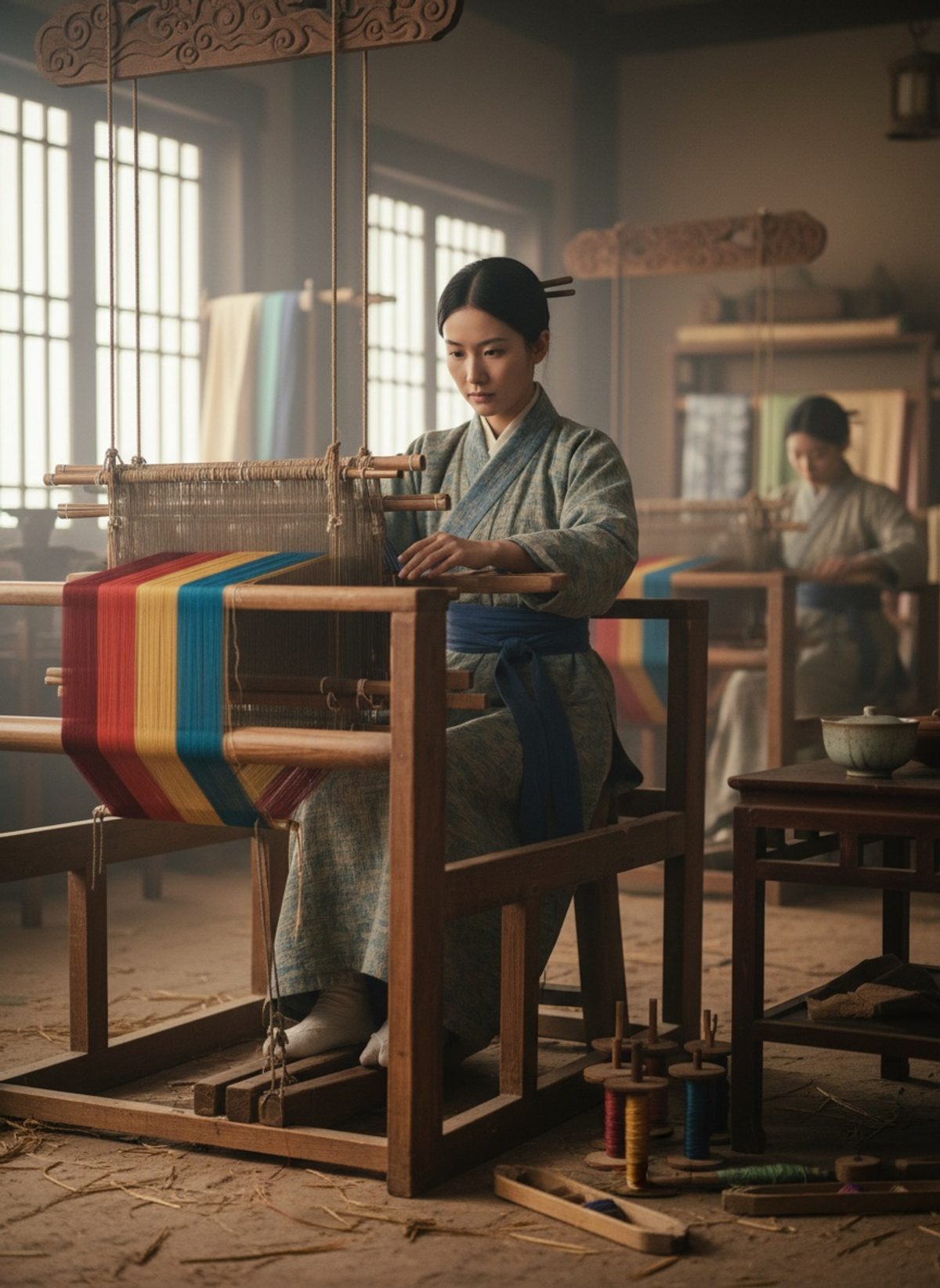
Chang'an, the thriving epicenter of the Tang Dynasty, was a beacon of culture and power. Home to nearly a million people, it was a cosmopolitan metropolis where the Silk Road began its tortuous journey westward. Within its weaving districts, women adeptly manipulated looms that towered above them, turning silken threads into magnificent textiles that could traverse continents.
Silk was more than just fabric; it was cultural currency, a symbol of sophistication, and a key to diplomacy. In the Tang Dynasty, silk was commonly used as an official form of tribute and taxation, with bolts of silk exchanged for troops, horses, or even political alliances. Its value was such that a single bolt could trade for a horse or buy precious metals and other commodities.
At the heart of this production was the mulberry silkworm, Bombyx mori. These domesticated creatures spun cocoons from which the prized silk threads were extracted with painstaking care. The entire process of sericulture—rearing silkworms and unwinding their cocoons—was an intricate art mastered by generations of Chinese artisans.
Read next: The Roman Thermopolium: Where Ancient Rome Ate Its Lunch
Unseen Artists of the Loom
In the weaving workshops, mostly staffed by women, the atmosphere was one of ceaseless activity. The looms were intricate marvels, capable of producing the complex patterns and textures demanded by Tang aristocracy and foreign princes alike. The weavers themselves, though their names have largely faded into obscurity, left behind a legacy woven into each fabric, testifying to their skill and artistry.
These women worked tirelessly, their hands dancing across threads to create textiles that were both functional and ornamental. Silk garments, robes, and banners were adorned with intricate designs, from the curving dragons and phoenixes that symbolized imperial majesty, to pastoral scenes and geometric patterns beloved by the elite. The varied tapestries told stories of myth and empire, of nature and the celestial.
Their labor might go uncredited by history, but the impact of their craftsmanship resonated far beyond their workshop walls. The silk they produced clothed emperors and empresses, traversed trade routes, and was instrumental in shaping both Eastern and Western fashion of the era.
A Tapestry of Trade and Influence
The influence of Tang Dynasty silk extended far beyond China's borders. As the Silk Road carried threads of commerce from Chang'an to places like Byzantium and Persia, Chinese silk became not just fabric, but an agent of cultural exchange. It introduced the Western world to the luxurious artistry of the East and brought back foreign influences that would be incorporated into Chinese design.
Read next: She Was Born Before Napoleon Fell. She Lived to See Cars.
Marco Polo and other explorers would later marvel at the grandeur of Chinese silk, with its fineness unmatched by any textile in Europe. Its desirability spurred rival powers to attempt to cultivate sericulture, but China's methods and the quality of its silk remained unparalleled for centuries. It was only much later that knowledge of silk production would spread due to Byzantine monks smuggling silkworm eggs inside their wooden staffs.
The silk trade also catalyzed the development of cities along the Silk Road, fostering not just economic prosperity but also the exchange of ideas, technologies, and beliefs. It was a route that not only carried goods but also currents of cultural transformation.
The Silent Legacy of Silk
As we look back upon this era, the silk weavers of the Tang Dynasty emerge as pivotal, if often invisible, figures. Their labor and skill created not only luxury items but played a vital role in the economic and cultural dynamics of the ancient world. They were artisans whose craft supported empires, linked continents, and bridged vastly different cultures and experiences.
While their names and individual stories may remain lost to history, the enduring nature of their creations speaks volumes. Tang Dynasty silk represented the very essence of connection, intertwining cultures and continents in a vibrant tapestry of human ingenuity and artistry. It is a reminder of how the diligence and creativity of the unseen can weave the fabric of history itself, drawing distant peoples and places into an intricate and enduring whole.