History often forgets whole peoples and their stories. But history is unpredictable; it thrives where you least expect it.
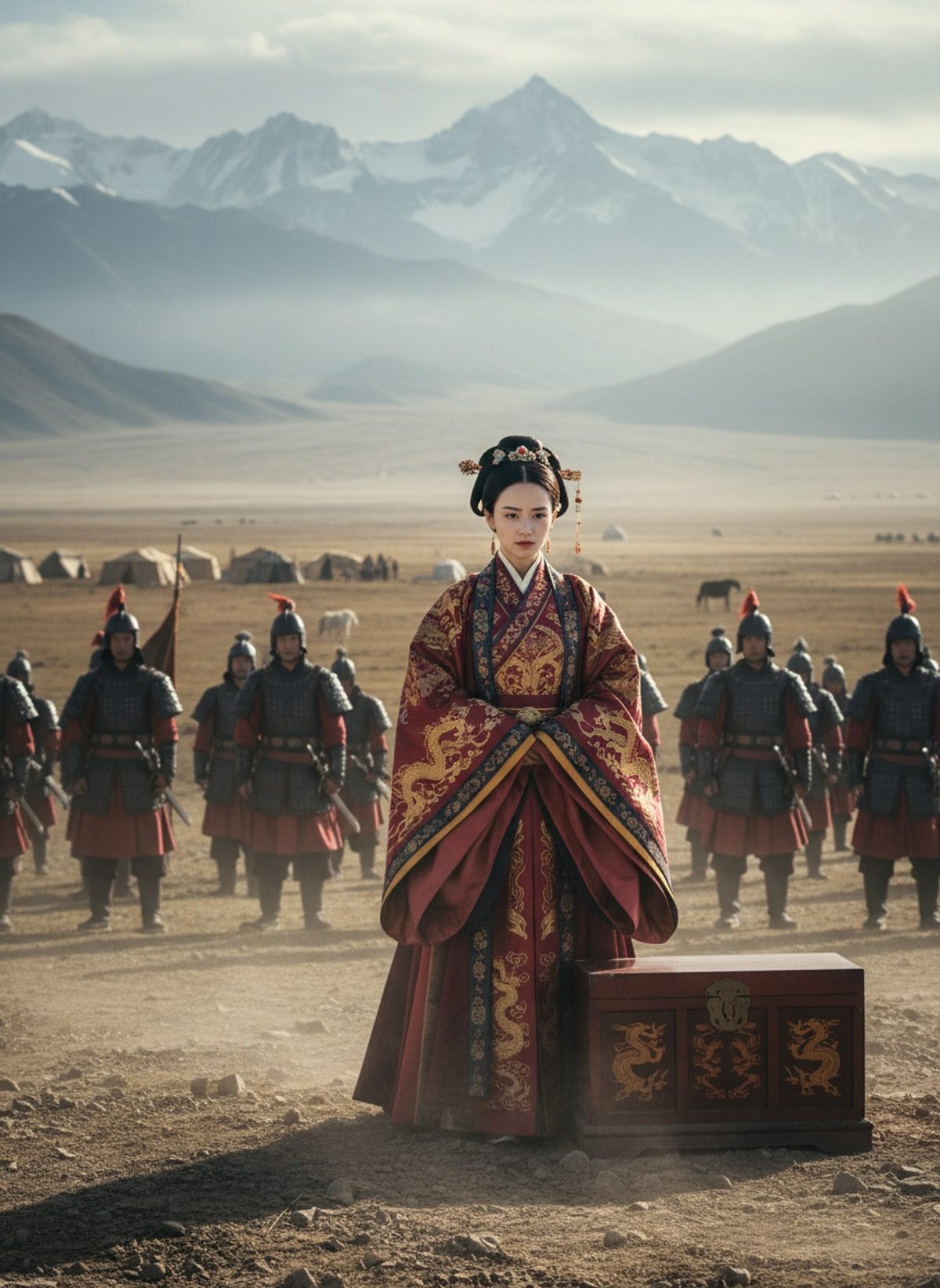
In the year 627 AD, at the heart of the mighty Tang Dynasty in China, Emperor Taizong sat upon his throne, wrapped in a silk brocade of the purest gold. His court shimmered around him — a spectacle of courtly grandeur that brimmed with ambassadors and dignitaries representing lands both near and far. Before the emperor stood Princess Wencheng, a figure whose slight frame belied the critical task at hand. With poise and determination, her mission was deceptively simple but profoundly impactful: to marry the Tibetan king Songtsen Gampo and secure an alliance that would forever alter the course of two mighty civilizations.
Wencheng did not tremble at the thought of her journey. She did not indulge in tearful farewells or lament her fate as many others might. Instead, she prepared herself with a characteristically Tang efficiency. Her trunks were filled not with mere silks and precious stones but with wisdom — books of knowledge and medicine authored by the greatest minds of her time. Among her belongings were seeds from China’s flourishing fields, symbolizing the gift of agriculture and a gesture toward a future of abundance in the fertile valleys of Tibet.
Thus, she embarked into the unknown, moving westward through the expansive wilderness that lay between the Tang Empire and the burgeoning empire of Tibet. It was a journey dictated by both politics and destiny, across unforgiving mountains and sweeping deserts. The landscape transformed from the ordered rhythm of Chinese civilization to the wild and untamed beauty of the Tibetan plateau. The air grew thin, and more than just the elements posed a threat. But Wencheng's resolve was unmoved. Her retinue — scholars, wise men, and skilled physicians — traveled with her, bearing the seeds that would plant not only crops but the roots of two entwined histories.
Read next: Sophonisba Was Given as a Trophy. She Refused.
When Wencheng arrived to meet Songtsen Gampo, she did so not as a mere bargaining chip but as a cultural ambassador. Songtsen Gampo, revered and feared in equal measure by neighboring regions, was a formidable leader with aspirations that soared as high as the Himalayan peaks. His kingdom, though rugged and isolated, was a tapestry of potential woven from an intricate blend of war and peace. Wencheng’s influence rippled through his court, as her background represented a wealth of knowledge that complemented Tibet’s own evolving narrative.
Tibet, at that time, was not the hermit kingdom it later became but a power negotiating its place in Asia's great game of thrones. Songtsen Gampo embraced Wencheng’s wisdom, her presence heralding an era of innovation. Her knowledge of Chinese governance and technology provided a framework that would echo through Tibetan corridors of power. From the construction of Buddhist temples beautifully crafted with Chinese techniques to the introduction of advanced crafts and agriculture, Wencheng's footprint grew wide and deep across the Tibetan highlands.
More than relics of architecture and agriculture, Wencheng brought Buddhism's ethereal wisdom to Tibet. Her devotion and patronage planted spiritual seeds, which under Songtsen Gampo's vigorous rule, blossomed into one of the kingdom's defining legacies: the proliferation of Buddhism along the Silk Roads. Together, they commissioned the first Buddhist temples in Lhasa, which became the deep spiritual nerve center in the heart of the Himalayas.
Yet, Wencheng's influence did not merely flow from China to Tibet; it was reciprocal. The exchange altered Tang China too. Tibetan culture and thought began to seep eastward through the conduits of trade and osmosis of ideology. Tibetan spices, dyes, and other exotic goods found their way into lively marketplaces of Chang’an (modern-day Xi'an), the Tang capital, deepening the cosmopolitan essence of the empire.
Despite her foreign surroundings, Wencheng's identity remained deeply tied to her roots. She became a dazzling bridge between worlds, embodying the syncretism of two rich traditions. Her life, far from the royal corridors of the Tang court, became a testament to the power of influential diplomacy — her marriage a masterstroke of soft power that changed the balance of power in the region.
Wencheng’s journey was not without personal cost. The harsh climate and stark landscapes of Tibet were far removed from the lush valleys of her homeland. Yet in adapting, she catalyzed a fusion that has endured for centuries. Her life signified more than political alliance; it marked the migration of ideals and values, creating legacies that adorn both Chinese and Tibetan cultures today.
The tale of Princess Wencheng serves not only as a historic linchpin that redefined two nations but also as a reminder of the vitality that lies in cross-cultural exchanges. Her remarkable journey from a palace to the Himalayas illuminates the profound potential harbored within movements, not marked by the clash of swords but by the whispered promises of enduring peace and mutual growth. In a world defined by division as much as by meeting of minds, her story finds new resonance today — a testament to the power of understanding and the extraordinary results when people dare to walk new paths.