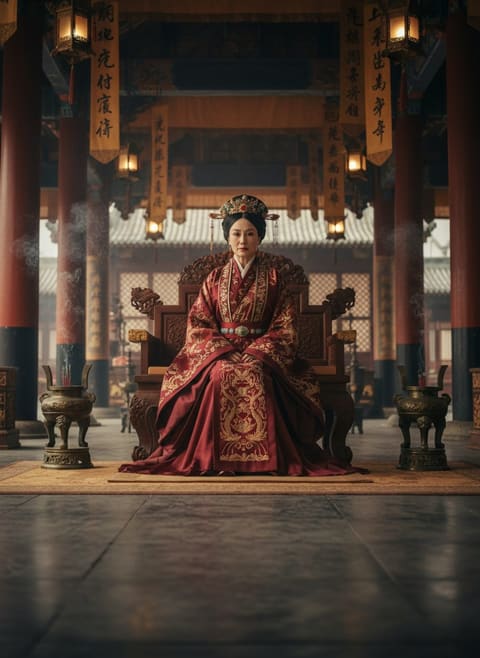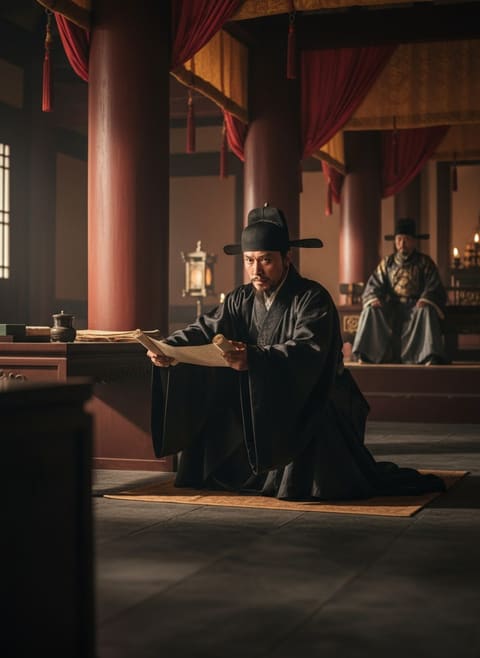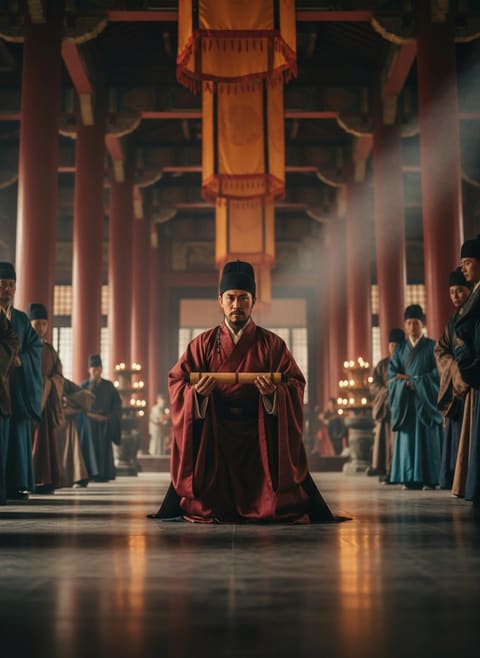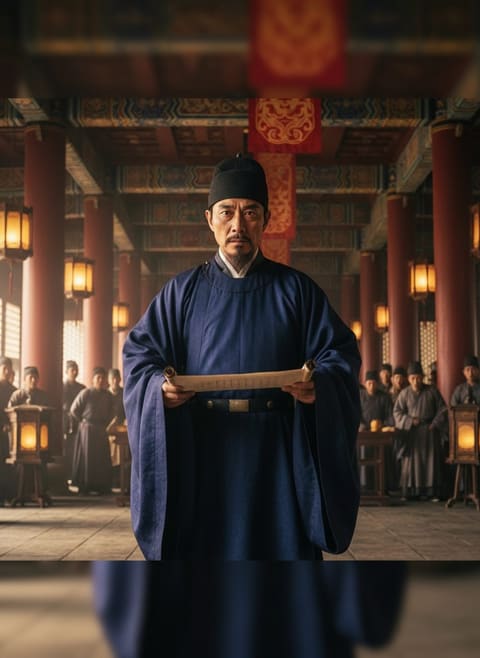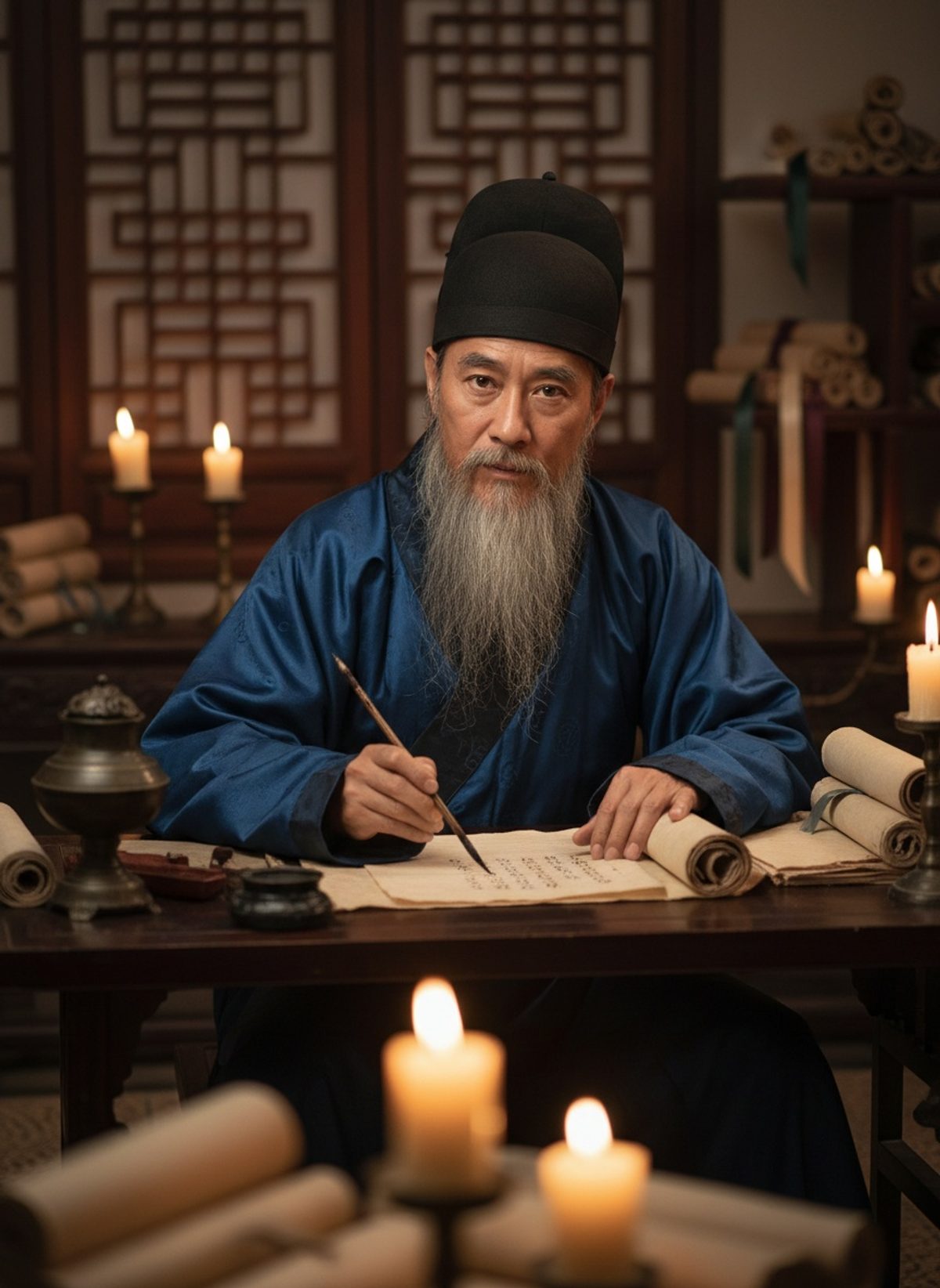
1070 AD. The dense mist of the morning hung low over the imperial city of Bianjing, capital of the Song Dynasty. Its tendrils brushed through alleyways and around the statues of dragons guarding palatial gates, silently witnessing the dawn of a new chapter in Chinese governance.
The Emperor's Grand Reforms
The atmosphere was charged with whispers of unprecedented change. Emperor Shenzong, young yet keen for reform, had embraced the daring vision of his chief minister, Wang Anshi. Their policies, known as the New Policies, aimed to invigorate the state by overhauling its economic and military structures. These reforms promised renewed prosperity through initiatives such as a state monopoly on salt, government loans to farmers, and the establishment of local militia groups, all intended to reduce the financial burden on the peasantry and centralize state power.
In the grand halls of the imperial court, ministers and officials echoed their support, keen to secure the emperor's favor. But amid this chorus of approval, one voice remained defiantly silent—Sima Guang. A man of profound intellect and unyielding conviction, Sima had served the Song state with excellence, yet he opposed the changes. Where others saw opportunity, he foresaw calamity. Sima believed deeply in the stability of the traditional order, fearing that the rapid shifts proposed by the New Policies would unravel the social fabric and provoke chaos.
Born on November 17, 1019, in Guang Prefecture, Sima had risen through the ranks not just by birthright but by merit, having passed the prestigious Imperial examination with high honors. His approach to governance was guided by a belief in moral virtue over legislative innovation—a static perfection over dynamic progress. For Sima, the true measure of a regime was its adherence to a moral compass and the proven lessons of history rather than drastic reforms rooted in theoretical constructs.
Read next: Xu Youren Held the Edict. He Fed the Dying Instead.
So, in 1070, when confronted with the tide of change sweeping through his beloved empire, Sima took a stance rarely seen in such a hierarchical society. He resigned his post, stepping away from the sprawling influence of the court to pursue a different kind of power—the power of the written word.
The Monumental Task of History
Leaving the clamoring capital, Sima retreated into the quietude of scholarly study. This was a journey not just of discontent but of duty. He saw history as a guide, a repository of human experience that could illuminate the errors and successes of the past. It was this ideal that propelled him to undertake the colossal task of writing the Zizhi Tongjian, or the Comprehensive Mirror to Aid in Government.
Over the next nineteen years, Sima committed himself to this endeavor with monastic discipline. He transformed his home into a sanctum of history, surrounded by scrolls and texts, poring over every detail of China's past. His work spanned 1,362 volumes in sixty-five books, documenting the history of China from the Warring States period (403 BC) to the beginning of the Song Dynasty (959 AD). Despite being removed from the court’s inner sanctum, Sima maintained correspondence with his allies, many of whom feared the ramifications of the New Policies yet lacked the fortitude, or perhaps the means, to oppose them outright.
The process was not one of isolation, for Sima marshaled the efforts of numerous scholars who shared his vision—an effort unified under the guiding wisdom of a single meticulous mind. His work was not just a chronological account; it was a narrative steeped in the intricacies of governance, a mirror for rulers designed to reflect both the achievements and follies of their predecessors.
In dedicating himself to narrating the past, Sima aimed not merely to preserve it but to serve as a voice of sagacity for future emperors. He believed that the proper lessons, if heeded, could guide the empire through the tumultuous winds of change without sacrificing its core values and societal harmony.
Read next: Qin Liangyu Led the Army. She Did It Herself.
The Legacy of Moral Conviction
On October 11, 1086, Sima Guang passed away, leaving behind a legacy grounded not in temporal power but in intellectual reverence. The Zizhi Tongjian was completed and delivered to Emperor Shenzong in 1084, a monumental testament to Sima's unwavering dedication to truth as he saw it. Despite the initial support for the New Policies, history would reveal their mixed outcomes; some succeeded in alleviating economic hardships, while others, like the new tax systems, eventually triggered unrest among the populace.
In the years that followed, the intellectual discourse within the court and the broader scholarly community frequently returned to Sima's writings. His conservative outlook and critique of state overreach found resonance with those advocating for stability over reform. Yet, perhaps more enduring than his political stances was his belief in the power of history as a teacher—a concept that transcended the boundaries of his own time.
The story of Sima Guang is compelling not solely for his opposition to Wang Anshi's reforms but for his embodiment of principle in the face of overwhelming pressure. His life's work transcended mere political maneuvering, embedding itself in the cultural consciousness of China and serving as a reminder of the enduring power of the written word in shaping the future.
Today, as we navigate the complexities of our own societal changes, Sima Guang's legacy prompts reflection: what are the guiding principles that should remain inviolable? In a world continuously reshaped by new ideologies and technologies, his steadfast dedication to principle encourages us to pause and consider the wisdom of the past as a necessary compass for the uncertain journeys ahead.