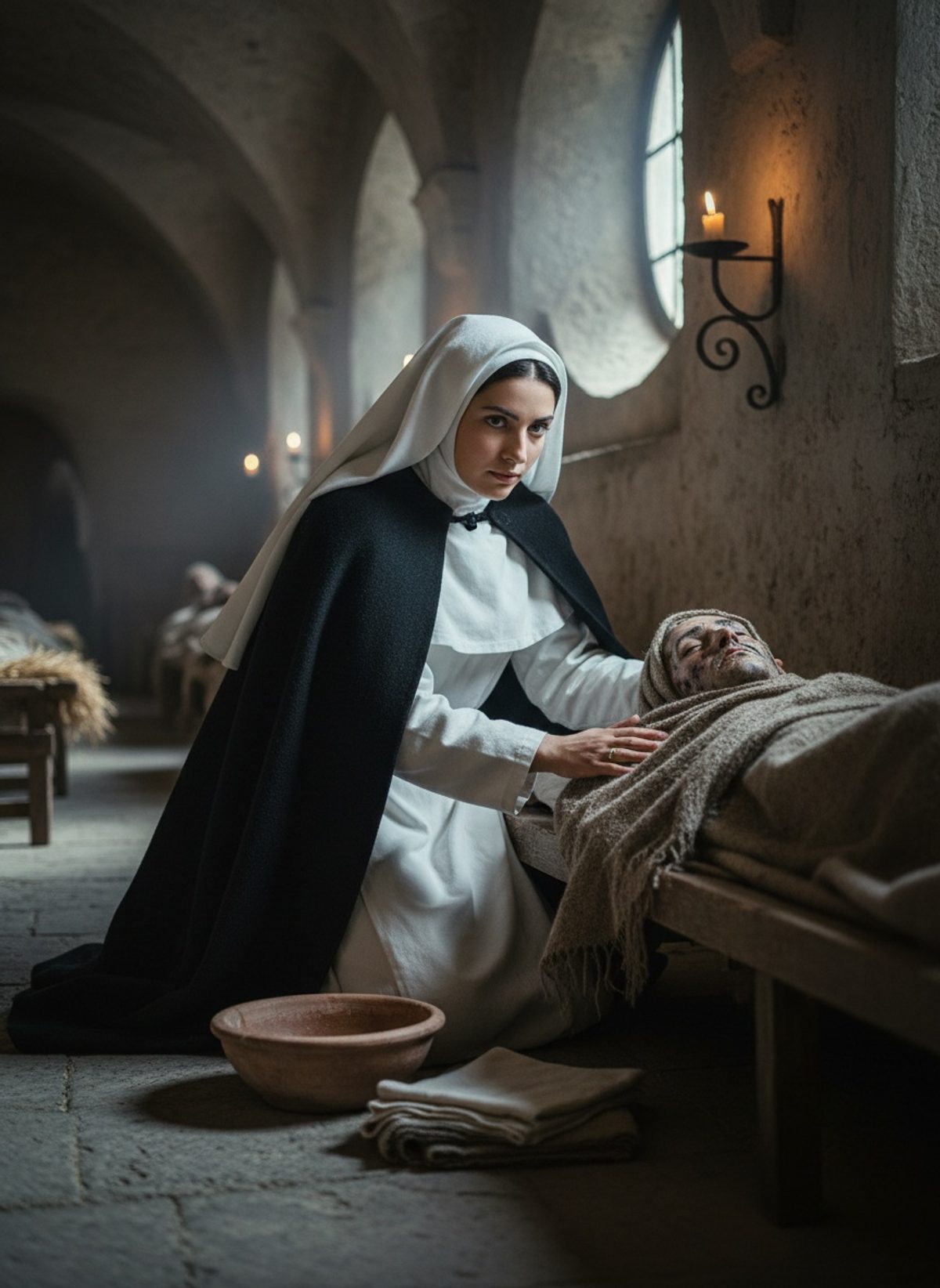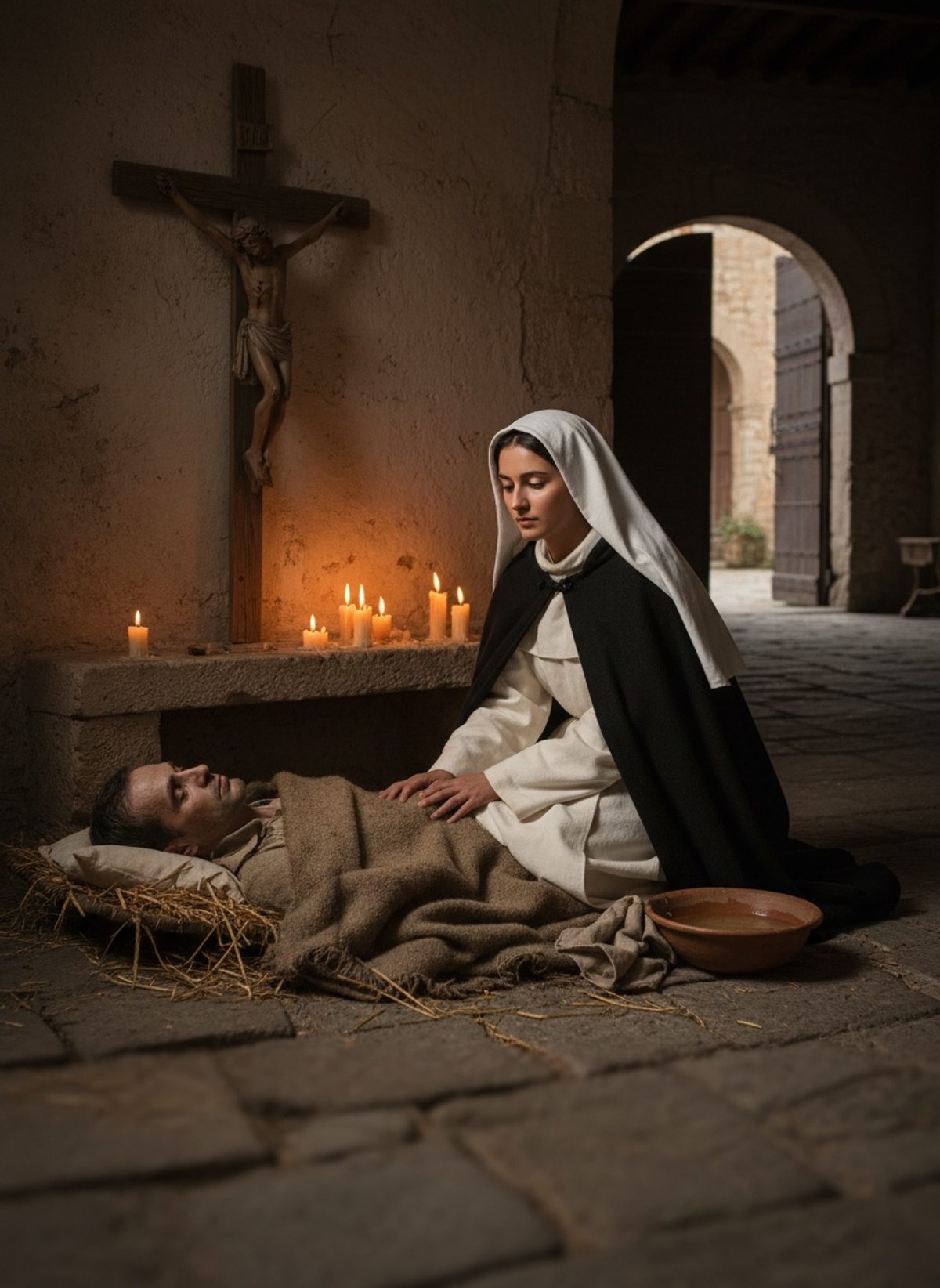
The skies over Siena in 1374, a city renowned for its art and architecture, were shrouded in shadowy clouds, a murky echo of the calamity descending upon it. The clangor of distant church bells tolled in the damp air, tolls that danced off cobblestone streets littered with debris and whispers of despair. The plague had returned to this medieval jewel with a vengeance. While most locals shuttered their homes and the cathedral's echoes faded with the departure of its bishop, a solitary figure moved against the exodus. Catherine of Siena, a young Dominican laywoman, stepped into the swirling heart of the city's newest nightmare. Where others saw desolation, Catherine saw her divine calling.
Between Faith and Fear
The return of the Black Death to Siena was not just a recurrence of the disease but a resurgence of fear. The city, already battered by a previous wave of the epidemic some years earlier, found few willing to face the grim specter again. The bishop, a man credited with spiritual guidance, chose self-preservation over leadership and fled, leaving a void not just in ecclesiastical authority but in the very soul of Siena. The nobility followed suit, retreating to the fortified comforts of their country estates. Streets were eerily emptied of status and privilege, left to the cries of the sick and the hollow shuffling of those who dared still move among them.
In stark contrast to the panic that surrounded her, Catherine walked with serenity, her eyes reflecting not fear but a warm earnestness. Her mission was resolute, driven by a faith that seemed to transcend mortal apprehension. Her daily tasks became a crucible of compassion: she nursed the dying with her bare hands, her own health a secondary concern. In those moments, when life flickered in the eyes of the stricken, she whispered prayers that wove a thin rope of hope, binding their faltering spirits.
The Warded Stages
The plague wards of Siena were harrowing enclaves, places where the inhalation of each breath was a lottery between life and infection. Yet, among these foreboding walls, the presence of Catherine was a beacon. Her work transcended mere physical care; it was as much about restoring dignity as it was about alleviating suffering. To lie in those wards was to be seen through her eyes not as a plague victim but as a soul worthy of empathy.
Read next: He Walked Into the Khan's Tent. He Never Bowed.
She moved between the beds, changing sheets, offering sips of water, and saying simple but profound words of comfort. Those who lingered near consciousness would later recount how her voice, a gentle but firm balm, was often the last they heard, whispered above the dissonant groans of disease. Through Catherine’s intercession, those wards became places of strange holiness amidst horror.
It was said that she was often seen praying, her head bowed in deep reflection, a silent conversation with a deity she believed was intimately intertwined with every suffering soul she cradled. Even as her own body must have screamed for rest and solace, she never wavered, never relented in her quest to provide a thread of humanity in a place defined by its absence.
Defying the Orders of Men
Despite immediate danger, pressure bore down from those determined to see her retreat from this dangerous vocation. Orders came—not once, but repeatedly—for her to cease her work, citing risks too great, demands too perilous. Yet Catherine's will proved as unfaltering as her faith. She answered these demands with silence or with humble but firm refusals. To her, the mandate she heeded was a higher one, a divine mission trumping human edicts.
Her resilience in defiance of authority underscored a personal belief system that found strength not in the dictates of men, but in the whispers of her conscience. She maintained a distinct separation from the church hierarchy, embodying a spirituality rooted in personal commitment and action. Her refusal to abandon Siena was not an act of rebellion, but rather an unwavering testimony to her convictions.
To those who witnessed it, her courage was formidable and transformative. For some, her actions were a touchstone for a faith tested by adversity. For others, they posed uncomfortable questions about duty, power, and the true nature of service.
The Enduring Echo
Catherine's work amidst the plague-stricken shadows carved out a legacy not written in chronicles, but in the memory of those who felt her touch and heard her prayer. She emerged as a figure emblematic of personal sacrifice, an enduring icon of selfless heroism amidst calamity. Her story is one that stretches beyond religious devotion or medical care—it resonates as a narrative about humanity itself, faced with its greatest existential threats.
Today, in a world where healers continue to tread paths fraught with peril, Catherine of Siena’s legacy looms large. Her compassion wasn't merely an act of kindness, but a challenge to those who seek solace in the comfort of retreat. The plague wards of 1374 may seem distant in both time and circumstance, yet the echoes of her footsteps in those silent streets still speak, calling forth an enduring question: When faced with the abyss, will we too have the courage to step forward into the darkness and lend our light?