He was a prince, cradled in luxury and expectation. Yet for years, Sundiata Keita could not walk a single step.
The Silent Struggles of a Future Emperor
In the 13th-century Mandinka court, nestled in what is now Mali, the birth of a prince should have heralded celebration. Instead, Sundiata Keita's entry into the world was marked by whispers and doubt. Born around 1217, Sundiata's childhood was marred by a mysterious crippling ailment that left him unable to stand. This disability became a source of ridicule for his mother, Sogolon Condé, tormenting her amidst the courtiers who viewed her son as a sign of her inadequacy.
Sogolon, the daughter of the legendary "buffalo woman," endured the taunts of her co-wives who mockingly referred to her son as "the lion who crawls." Among them was Sassouma Bereté, whose own son, Dankaran Touman, posed a direct threat to Sundiata’s future. Yet amid courtly scorn and maternal tears, a different force was at play—one of quiet determination.
A Miraculous Awakening
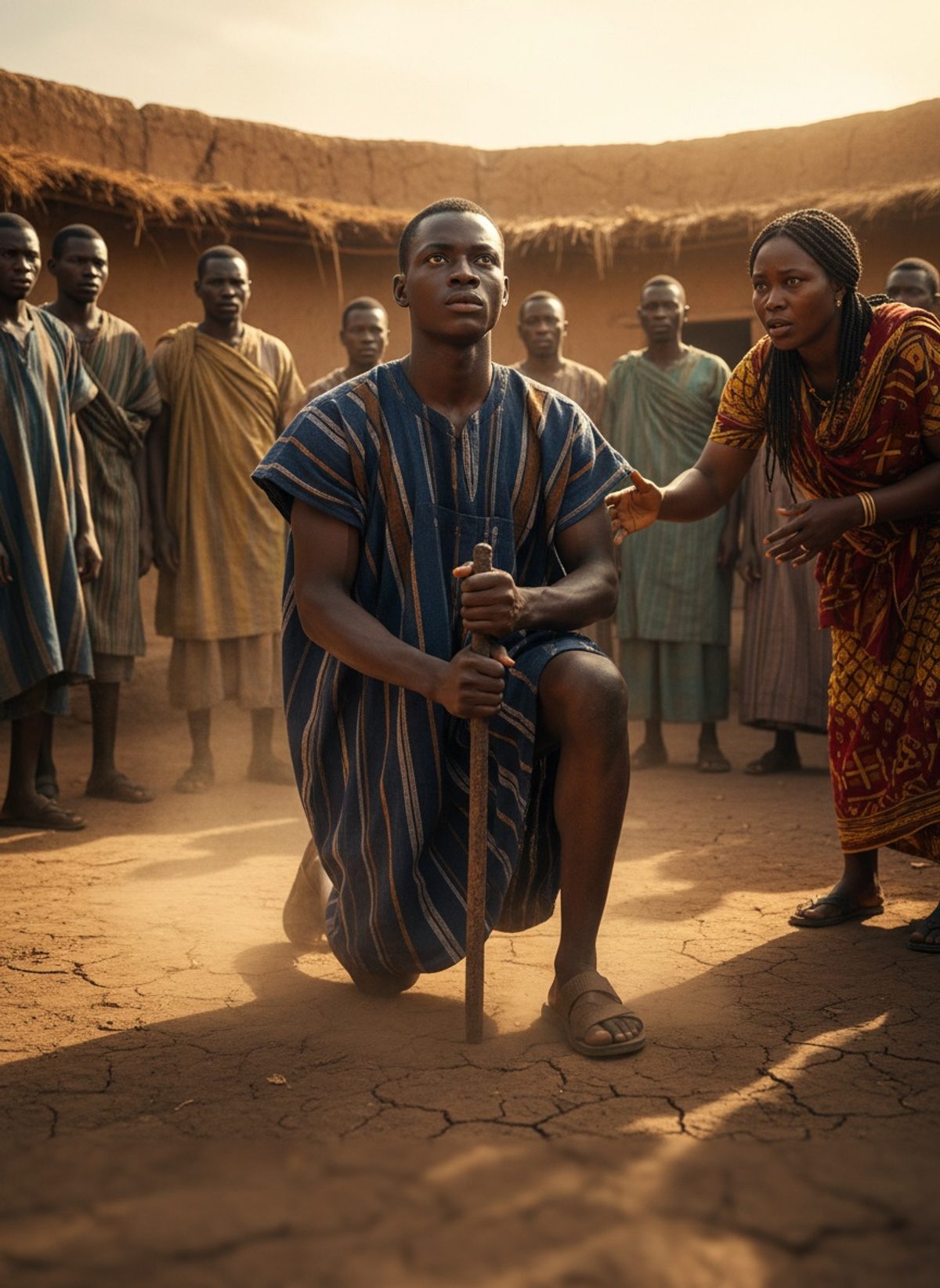
The turning point for Sundiata came when desperation met unyielding resolve. One morning, as his mother wept over his incapacity, Sundiata reached for an iron rod out of sheer need. Seizing it with all the determination of a young soul fighting against his limitations, he pulled himself upright and took an auspicious first step, then another, until he was walking without the crutch. The court, once filled with whispers of derision, was stunned into silence as Sundiata stood, embodying the strength of his lineage.
Read next: Hypatia's Student Crossed the Desert to Save Her Books
This sudden transformation was more than just physical. It ignited in him the spirit of a leader—a deep-seated resolve that became the bedrock for future greatness. His newfound ability to walk was a potent symbol of the determination that would see him transmute from a boy cloaked in doubt to a man destined to unite a continent.
Exile and Formation
In the wake of his father's death, the political climate within Mali's court turned dangerously turbulent. Sassouma Bereté’s resentment, coupled with Dankaran Touman’s ascension, threatened Sundiata's life, forcing Sogolon to make a painful decision. Sundiata and his family were to go into exile. Their harrowing journey took them across the fractal beauty of medieval West Africa—from the savannas of the Ghana Empire to the kingdom of Mema.
In the royal court of Mema, Sundiata found sanctuary and more—recognition. The King of Mema recognized the fire in Sundiata’s spirit, elevating him to a prominent position within the kingdom. Here, under the African sun, his latent leadership qualities blossomed. This period of exile was not just survival; it was a crucible for Sundiata, fostering alliances that would later prove crucial in his return to power.
The Call to Destiny
Sundiata's destiny was whispered by griots and predicted by prophets. When news came of King Soumaoro Kanté of Sosso's conquest over the Mandinka homeland, it catalyzed a series of events that would culminate in the reclamation of Mali. The emissaries from his homeland found Sundiata entrenched in Mema and pleaded for his return. They invoked not just his royal blood but the prophecy that he alone could counter the tyranny sweeping their lands.
True to his pastoral wisdom and warrior courage, Sundiata agreed. Accompanied by a formidable army from Mema, he began the arduous journey back, complemented by the camaraderie of warriors such as Tabon Wana, Kamadia Kamara, and Tiramakhan Traore. This formidable alliance forged at the plain of Siby, blossomed into a brotherhood of liberation.
A Battle for the Ages
The stage was set on the plains of Kirina, where Sundiata faced Soumaoro, the tyrant whose supernatural reputation was as terrifying as his military prowess. In 1235 AD, the Battle of Kirina was not just a clash of swords but a clash of destinies. The sun bore witness to Sundiata's strategic brilliance and unyielding spirit, as he led his forces with precision and passion fueled by years of exile, hardship, and preparation.
Victory at Kirina did more than establish Sundiata as the first emperor of the Mali Empire; it sowed the seeds of a powerful union that would dominate West African politics, culture, and economics for generations. This unlikely journey from paralysis to power immortalized him as “Manding Diara”—the Lion of Mali.
The epic tale of Sundiata Keita isn't just about overcoming the physical confines of infirmity, nor the intricate dance of politics in medieval Africa. It speaks to the invincible spirit of human resilience, a testament to how innate determination can sculpt destinies. In understanding Sundiata's story, we unravel the tapestry of history itself—a confluence of personal grit and communal legacy, where the impossible becomes possible. By standing tall despite life's adversities, Sundiata forged an empire not just of lands, but of unyielding hope.