Early 248 AD. The sun rose over the lush, green hillsides of ancient Vietnam, casting long shadows across the rice fields.
The Chains of Empire
In 248 AD, Vietnam found itself under the oppressive rule of the Chinese Wu dynasty. The Vietnamese people, brimming with cultural pride and a relentless spirit, struggled against foreign domination. The Chinese control over Vietnam was suffocating, as they imposed tributary demands and cultural assimilation. The Vietnamese, rich in tradition and identity, sought autonomy. But resistance was perilous. Punishments were severe, and any scent of rebellion was swiftly met with brutal suppression.
Yet, like sprouts through cracks, resistance continued to rise, invigorated by those who refused to bow. Among these resistant pockets, tales whispered by hearthsides told of a fierce determination that lay in the heart of the people. This burgeoning discontent simmered, waiting for a spark to ignite the flames of rebellion—an unlikely leader who would rise from the folds of anonymity and step into legend.
The Rise of Lady Triệu
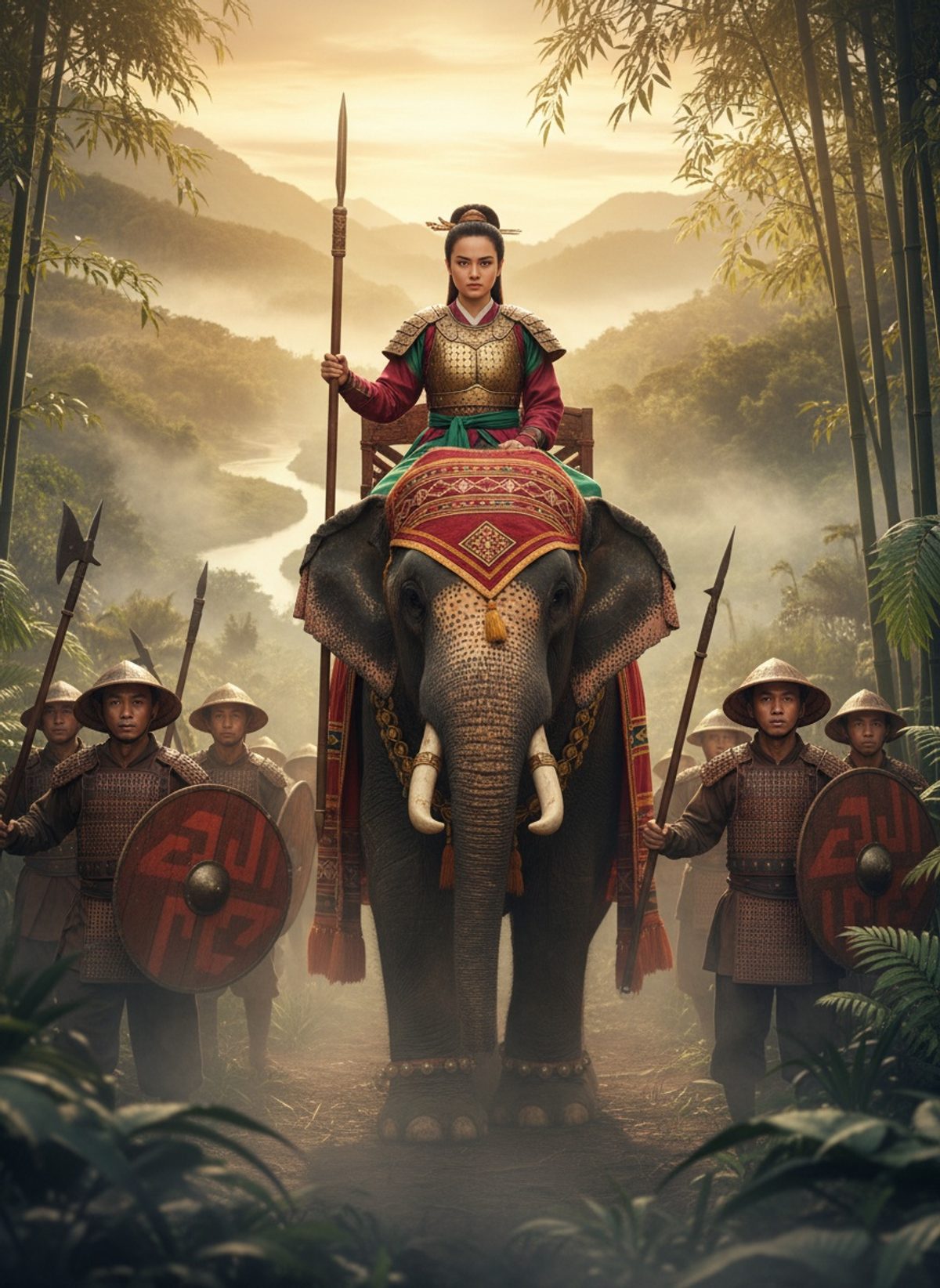
Enter Lady Triệu, a young woman of merely nineteen years, whose vision would inspire a nation. The daughter of the mountain respired the spirit of her land—resilient, indomitable, and fierce. She armed herself in gold as much for protection as to embody the strength and purity of heart she wished to convey. Astride a colossal war elephant, she was a formidable sight, commanding both awe and emulation from those around her.
Read next: Sophonisba Refused the Chains. She Chose the Cup.
Lady Triệu’s choice to ride an elephant had profound implications. Symbolically, the elephant—intelligent and loyal—represented the might of the Vietnamese spirit. In a time dominated by foot soldiers and horses, her preference for elephants was not only bold but a majestic declaration of indigenous strength and adaptability.
Her courage was not just in her battle cries and armor but in her defiance. She declared she would never again submit to slavery, an oath that resonated deeply with the hearts of her compatriots. The rallying cry was heard far and wide, and soon, Lady Triệu had amassed a following of nearly thirty thousand—a staggering number for any force to reckon with.
The Battle for Freedom
Under an overcast sky, the armies clashed. The air was thick with the scent of rain-soaked earth and the tension of imminent conflict. The chorus of elephantine trumpeting echoed across the battlefields, a prelude to the fury that each side would unleash. Despite being heavily outnumbered and often disadvantaged by better-equipped Chinese forces, Lady Triệu and her followers held their ground not with sheer force but with strategic maneuvers and an unmatched resolve.
Her campaign to loosen the Chinese grip on Vietnam was not a mere skirmish but a drawn-out series of engagements spanning several months. The endurance and tenacity of her troops wore down the seasoned ranks of her adversaries. Her leadership was a beacon radiating determination and valor to her supporters, inspiring them to press forward despite overwhelming odds. Aspiring warriors and seasoned soldiers alike idolized Lady Triệu, her very name spoken with a reverence usually reserved for deities.
Each clash in the rolling hills and dense jungles was more than a battle of weapons— it was a contest of wits and wills. Lady Triệu capitalized on her knowledge of the rugged terrain, transforming the natural landscape into both ally and shield against the imperial forces. The prolonged resistance became a cause célèbre across Vietnam, and Lady Triệu was no longer merely a general, but a living embodiment of resistance.
Legacy and Reflection
Though her rebellion was eventually quelled, and Lady Triệu was confronted with the might of a relentless empire, her legacy endured far beyond the battlegrounds. Her story is told in folklore, her voice carried on in narratives of defiance. Like the thick tropical forests of her homeland, Lady Triệu’s memory is interwoven with the cultural tapestry of Vietnam, an evergreen inspiration for future generations.
Lady Triệu’s tale matters profoundly even today, not just as an account of resistance but as a powerful narrative of independence and identity. She rose from the rice fields to challenge an empire and champion her people's right to self-rule. In a world where might often stifled the voice of many, Lady Triệu articulated the unwavering will of a nation. Her story, as told in the annals of Vietnam, serves as a reminder that the spirit of resistance knows no bounds— in age, gender, or circumstance.